Feb 18, 2015

22nd Feb 2015 ; Luis Bunuel's THE EXTERMINATING ANGEL


THE EXTERMINATING ANGEL
A film by Luis Bunuel
1962/ Mexico / 93 minutes
22nd Feb 2015; 5.45pm / Perks Mini Theater


The dinner guests arrive twice. They ascend the stairs and walk through the wide doorway, and then they arrive again--the same guests, seen from a higher camera angle. This is a joke and soon we will understand the punch line: The guests, having so thoroughly arrived, are incapable of leaving.

Luis Bunuel's "The Exterminating Angel" (1962) is a macabre comedy, a mordant view of human nature that suggests we harbor savage instincts and unspeakable secrets. Take a group of prosperous dinner guests and pen them up long enough, he suggests, and they'll turn on one another like rats in an overpopulation study.

Bunuel begins with small, alarming portents. The cook and the servants suddenly put on their coats and escape, just as the dinner guests are arriving. The hostess is furious; she planned an after-dinner entertainment involving a bear and two sheep. Now it will have to be canceled. It is typical of Bunuel that such surrealistic touches are dropped in without comment.

By setting up a plot where wealthy people become captives, Bunuel is creating an environment reminiscent of a concentration camp to draw a parallel between literal captivity and the societal trappings associated with social roles among the wealthy.  It is interesting to see that the answer to set themselves free derives from their ability to think their way back to how the past led to this point.

On poetic and literate level, The Exterminating Angel is masterful, well paced and brilliant at establishing suspense despite the absence of a hard reason to explain why the guests are unable to leave the home.  The acting is flawless, as nothing less than great acting is required to immerse us in a situation that clearly doesn’t make sense at first.  The tone of the film is serious but it carries a high degree of black comedy.
(Source: Internet)


LUIS BUNUEL

The father of cinematic Surrealism and one of the most original directors in the history of the film medium, Luis Buñuel was given a strict Jesuit education (which sowed the seeds of his obsession with both religion and subversive behavior), and subsequently moved to Madrid to study at the university there, where his close friends included Salvador Dalí and Federico García Lorca. 

After moving to Paris, with financial assistance from his mother and creative assistance from Dalí, he made his first film, the 17-minute Un Chien Andalou (1929), in 1929, and immediately catapulted himself into film history.The following year, he made his first feature, the scabrous witty and violent L'Age d'Or (1930), which mercilessly attacked the church and the middle classes, themes that would preoccupy Buñuel for the rest of his career. 

Moving to Mexico in the late 1940s he made Los Olvidados (1950), winning him the Best Director award at the Cannes Film Festival. In 1961, General Franco, anxious to be seen to be supporting Spanish culture invited Buñuel. In Sapin Bunuel  made Viridiana (1961), which was banned in Spain on the grounds of blasphemy, though it won the Palme d'Or at the Cannes Film Festival. 

With writer Jean-Claude Carrière he made seven extraordinary late masterpieces, starting with Diary of a Chambermaid (1964). After saying that every one of his films from Belle de Jour (1967) onwards would be his last, he finally kept his promise with That Obscure Object of Desire (1977), after which he wrote a memorable (if factually dubious) autobiography, in which he said he'd be happy to burn all the prints of all his films


Feb 11, 2015


Breaker Morant
A film by Bruce Beresford
1980/ Australia / 107 mins / Col
5.45 pm; 15th Feb ; Perks Mini Theater


When war breaks out in 1899 between Great Britain and the Boers (African settlers of Dutch heritage), a number of Australians volunteer to serve in the British army. In the heat of battle, a group of Boer prisoners and a German missionary are killed by an Australian unit, and three men – including Lieutenant Harry "Breaker" Morant (Woodward) – are court-martialed for murder, to placate both the Germans and the Boers, who may be ready to make peace.
The film is impressively and seductively structured, built around the court martial and employing flashbacks to gradually reveal the truth or otherwise of witness statements. An instant engagement with the characters is helped in part by their status as prisoners and victims of the system, brought home by the bumbling inexperience of their assigned defense lawyer, Major J.F. Thomas (Jack Thompson).


One of the high points in Australian cinema, Beresford's devastating film accurately depicts the injustice visited upon these three "colonials" by their British commanders.  "Morant" is also a magnificent character study. Thompson is terrific as the lawyer who defends the men, but Woodward's resonant, heart-rending performance in the title role is reason enough to see this stunning film.
 
Handsomely directed, brilliantly edited by William Anderson (four times winner of the AFI award for Best Achievement in Editing, including for this film), it pulls off that rare trick of telling a dramatically compelling true story without ever wandering that far from the facts, right up to the emotionally stunning (and accurate) ending.

Breaker Morant remains to this day one of the shining examples of the New Australian Cinema of the late 70s and early 80s, a beautifully executed and performed tale of injustice in an unjust world, and one that, as nations continue to do battle and place young men in positions of potentially abusive power then play politics with the results, is as relevant as it ever was.


Bruce Beresford

Bruce Beresford was born in Australia and graduated from Sydney University in 1962. He served as Film Officer for the British Film Institute Production Board from 1966-1971 and as a Film Advisor to the Arts Council of Great Britain.  Beresford returned to Australia in 1970 to make his first feature film, The Adventures of Barry McKenzie, and spent the next 10 years working in Australia's developing film industry. He established his reputation as one of Australia's best directors with a series of notable films in the 1970s, including Don's Party, The Getting of Wisdom, The Club and Breaker Morant.

Following the critical success of Breaker Morant (widely regarded as a classic of Australian cinema) Beresford moved to Hollywood. His first film made in the US was Tender Mercies in 1984. He also directed Driving Miss Daisy which won the Academy Award in 1989, and Black Robe, considered one of the best of his later films. In 1995, his film Silent Fall was nominated for the Golden Bear at the 45th Berlin International Film Festival.


After what might fairly be called a lean patch in his career, at least in comparison with his earlier output, the 2009 film, Mao's Last Dancer broke records at the Australian box office and won numerous film-festival honors.  In addition to films, Bruce Beresford has also directed several operas and theatre productions.

Jan 21, 2015

25th Jan 2015;Kurosawa's I LIVE IN FEAR


I LIVE IN FEAR
A film by Akira Kurosawa
Japan /1955 /103 mins
5.45 pm / 25th Jan 2015 / Perks Mini Theater


Kurosawa takes us back to the period when Japan was limping back to normalcy after the disastrous second world war and the nuclear bombing of Hiroshima and Nagasaki. 


The film opens in a dental office, where Dr. Harada who is an honorary family  court mediator receiving a call asking him to report to the court in the afternoon. The case he will help mediate is of a family trying to have their patriarch, Kiichi Nakajima , declared incompetent.


Mr. Nakajima, used to calling the shots after years of ruling his steel foundry with an iron fist, is facing unexpected opposition by his own sons, Ichiro and Jiro, who serve as spokesmen for the rest of the family. They oppose the old man’s desire to sell off the family assets and relocate the whole bunch of them to, of all places, Brazil. But no one realizes that Mr. Nakajima is living in fear. Nakajima’s fear, though based upon a real, imminent event, intensified because of posttraumatic stress brought on by the atomic bombs dropped on Japan during World War II. 


Clearly, in 1955, Japanese society is at a different place than it was in the past, as recently as the war years, when solemn paternal decrees were issued and obeyed without question. I Live in Fear is, among other things, an attempt to grapple with new ways of coping with families in turmoil. It powerfully captures the genuine anxiety and uncertainty that beset a nation at a critical juncture in its history. This is the final film of this period in which Akira Kurosawa would directly wrestle with the demons of the Second World War and his most literal representation of living in an atomic age. (Source: Internet)


Akira Kurosawa

Akira Kurosawa was the youngest of seven children, born in Tokyo on 23 March 1910. A talented painter, he enrolled in an art school that emphasized Western styles. Around this time he also joined an artists' group with a great enthusiasm for nineteenth-century Russian literature, with Dostoevsky a particular favourite. Another influence was Heigo, one of his brothers, who loved film and worked as a benshi, a film narrator/commentator for foreign silent films. His suicide deeply affected the director's sensibilities.

In 1930 he responded to a newspaper advertisement for assistant directors at a film studio and began assisting Kajiro Yamamoto, who liked the fact he knew 'a lot about things other than movies'. Within five years he was writing scripts and directing whole sequences for Yamamoto films. In 1943 he made his debut as a director with Judo Saga (Sanshiro Sugata), with a magnificent martial-arts sequence.
His early films were produced during the Second World War, so had to comply to themes prescribed by official state propaganda policy. It was Drunken Angel which was Kurosawa's first personally expressive work, made in 1948 and featuring Toshiro Mifune who became Kurosawa's favourite leading man.

For those who discover Kurosawa, they will find a master technician and stylist, with a deep humanism and compassion for his characters and an awe of the enormity of nature. He awakened the West to Japanese cinema with Rashomon, which won the top prize in the Venice Film Festival of 1951, and also a special Oscar for best foreign film. A golden period followed, with the West enthralled by his work. Seven Samurai, Yojimbo etc.

Following Red Beard (Akahige) in 1965 he entered a frustrating period of aborted projects and forced inactivity and when in 1970 his first film in five years (Dodeska-den) failed at the box office, he attempted suicide. Directing a Soviet-Japanese production, Dersu Uzala helped him to recover and took four years to make. It won the Oscar for Best Foreign Film in 1975 and a gold medal at the Moscow Film Festival.

A true auteur, he supervised the editing of nearly all his films and wrote or collaborated on the scripts of most. His memoirs were published in 1982, titled Something like an Autobiography. In 1989 he won an Oscar for Lifetime Achievement. Kurosawa died in 1998.

Jan 7, 2015

11th Jan 2015 ; Ann Hui's THE SIMPLE LIFE


A Simple Life

A film by Ann Hui
2011 / Hong Kong / 118 mins
5.45 pm /11th Jan 2015
Perks Mini Theater
http://konangalfilmsociety.blogspot.in/


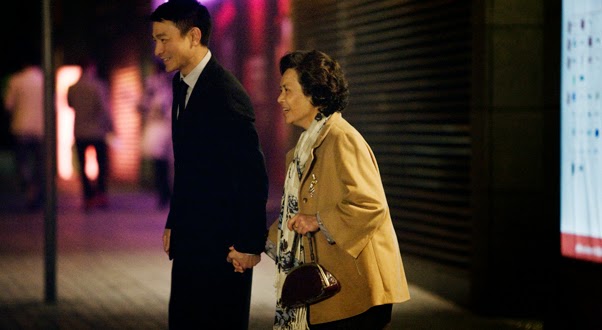
"A Simple Life" paints portraits of two good people in gentle humanist terms. Here is a film with the clarity of fresh stream water, flowing without turmoil to shared destiny. No plot gimmicks. No twists and turns. Just a simple life.

The life is that of Ah Tao, who was orphaned during the Japanese occupation of Hong Kong, spent her entire life in the service of four generations of a Chinese family, and is now the servant of the only family member still living in China. He is Roger, a movie producer. They have a settled routine. Ah Tao suffers a stroke, and Roger  takes charge of her care.

She doesn't complain. Throughout the film, she resists his money, protests that his presents cost too much, tells him to spend more time at his job and less on his visits to her. This despite the fact that she literally has no one else in her life (all the members of Roger's family now live in America).

We see that although they have never articulated it, they have become dependent on each other. She raised him from infancy. When we meet his mother, she seems perfectly nice, but there isn't the same unspoken bond. Neither Ah Tao nor Roger is demonstrative; But they care. The movie has an emotional payoff; It expresses hope in human nature.
(Excerpts from Roger Ebert’s review )

Ann Hui

One of the most important figures of Hong Kong cinema, Ann Hui was born in Manchuria in 1947 and moved to Hong Kong when she was five years old. She studied English language and literature and comparative literary studies until 1972, then spent two years at the London Film School. Upon returning to Hong Kong, Hui became an assistant to the veteran director King Hu and then joined TVB, where she directed serials and documentaries on 16 mm. In 1977, she joined the ICAC (Independent Commission for Anti-Corruption) and made seven TV episodes for its drama series, two of which were banned from airing because of the sensitive subject matter. She then joined the government TV network RTHK in 1978 and made three featurettes for the series Below the Lion Rock, The other two films were Huyue de Gushi (The Story of Wu Viet) (1981), which was screened at the Director's Fortnight of the Cannes Film Festival, and Tuo Pen Hu Hai (The Boat People) (1982), an Official Selection at Cannes and Best Film at the Hong Kong Film Awards.


Hui left television and made her first feature film, Feng Jie (The Secret), in 1979. Zhuang Dao Zheng (The Spooky Bunch, 1980) was her venture into a popular genre in Chinese literature and film, the ghost story. Quing Cheng Zhi Lian.  Ke Tu Chin Hen (Song of the Exile) (1990), which is somewhat autobiographical, won the Best Film prize both at the Asian Pacific Film Festival and Rimini Film Festival. Hui executive producedYim Ho's The Day the Sun Turned Cold (1994), Best Film at the Tokyo International Film Festival.

Dec 24, 2014

28th Dec 2014; Woody Allen's THE PURPLE ROSE OF CAIRO


THE PURPLE ROSE OF CAIRO
1985 / USA / 82 mins
5.45pm/ 28th Dec 2014 /  Perks Mini Theater / Coimbatore


The best thing about the movie is the way Woody Allen uses it to toy with the very essence of reality and fantasy. The woman- Cecilia -  in the movie is played by Mia Farrow as a sweet, rather baffled small-town waitress whose big, shiftless lug of a husband bats her around. She is a good candidate for the magic of the movies. Up on the screen, sophisticated people have cocktails and plan trips down the Nile and are recognized by the doormen in nightclubs.

 
Everything about Cecilia (Mia Farrow) is tinged with melancholy, including the time - the depressed 1930's - and the place, a drab little New Jersey town where even the sunlight looks gray. 
One day, after going through a bad patch at the diner and with her husband Monk, she is sitting in the Jewel Theater, watching something called ''The Purple Rose of Cairo'' for the umpteenth time, when the film's handsome, four-square juvenile, a pith-helmeted character named Tom Baxter (Jeff Daniels), steps down from the screen and into Cecilia's life.
 ''The Purple Rose of Cairo'' is pure enchantment. It's a sweet, lyrically funny, multi- layered work. The movie is so intelligent. No one in the whole movie speaks with more complexity than your average 1930s movie hero—but the movie is filled with wit and invention, and Allen trusts us to find the ironies, relish the contradictions, and figure things out for ourselves. While we do that, he makes us laugh and he makes us think, and when you get right down to it, forget about the fantasies; those are two of the most exciting things that could happen to anybody in a movie. (Source: Internet)


Woody Allen

Woody Allen is one of the most well known and respected names in the movie industry. His career of being a writer, director, actor and producer spans over 30 years and still thrives.Woody Allen was born on December 1, 1935 in Brooklyn, New York, As a young boy, he became intrigued with magic tricks and playing the clarinet, two hobbies that he continues today.Allen broke into show business at 15 years when he started writing jokes for a local paper, receiving $200 a week. He later moved on to write jokes for talk shows

Woody's theoretical directorial debut was in What's Up, Tiger Lily? (1966); a Japanese spy flick.  His real directorial debut came the next year in the mockumentary "Take the Money and Run." He has written, directed and, more often than not, starred in about a film a year ever since, while simultaneously writing more than a dozen plays and several books of comedy.

While best known for his romantic comedies Annie Hall (1977) and Manhattan (1979), Woody has made many transitions in his films throughout the years, transitioning from his "early, funny ones" of "Bananas," "Love and Death" and "Everything You Always Wanted To Know About Sex But Were Afraid To Ask;" to his more storied and romantic comedies of "Annie Hall," "Manhattan" and "Hannah and Her Sisters;" to the Bergmanesque films of "Stardust Memories" and "Interiors;" and then on to the more recent, but varied works of "Crimes and Misdemeanors," "Husbands and Wives," "Mighty Aphrodite," "Celebrity" and "Deconstructing Harry;" and finally to his film of the last decade, which vary from the light comedy of "Scoop," to the self-destructive darkness of "Match Point" and, most recently, to the cinematically beautiful tale of "Vicky Cristina Barcelona." Although his stories and style have changed over the years, he is regarded as one of the best filmmakers of our time because of his views on art and his mastery of filmmaking.


Dec 5, 2014

7th Dec 2014; Koreeda's Like Father, Like Son


Like Father, Like Son
A film by  Hirokazu Koreeda
2013 / Japan / 121 mins
5.45pm/Peks Mini Theater

 In contemporary Japan, the echoes of old Japanese gender culture lingers like a ghost, with the added layers of corporate pressure, sometime self imposed. But Hirokazu Kore-eda's focus here is on the theme of fatherhood, coupled with the theme of parenthood as a biological or nurturing drive.

The film begins with a clean palate, straight lines, neat apartment and absence of chaos as the Nonomaya nuclear family skates through life, balanced on the edge of workaholism. Ryota Nonomya (Masaharu Fukuyama) is a talented architect with a large firm, his wife Midori (Machiko Ono) in captivity as the mother at home, their 6 year old son Keita (Keita Ninomya) content in the safety of their comforts.

We meet that other family, the Saikis, a happily disheveled  shopkeeper (a devoted father) and his take away food shop waitress wife. They have three kids, the 6 year old Ryusei (Shogen Hwang) the eldest. This movie deals with an important  settlement happening between these two families. The contrast between the families' lifestyles and paternal attitudes plays on the dilemma facing them. Sensitively performed and directed, Like Father, Like Son is a series of acutely observed insights into its themes and its social setting, as well as a close study of human nature faced with some complex issues that go to the heart of our natural genetic urges.

The film won the Cannes Jury Prize and was nominated for Best Picture by the Japanese Academy, among a raft of awards and nominations including several from the Asia Pacific Screen Awards held on the Gold Coast.  
(Source: Internet)


Hirokazu Koreeda

Japanese auteur Hirokazu Kore-eda was born in Tokyo in 1962. Originally intended to be a novelist, but after graduating from Waseda University in 1987 went on to become an assistant director at TV Man Union. Sneaked off set to film Lessons from a Calf (1991) is first feature, Maboroshi no hikari (1995), based on a Teru Miyamoto novel and drawn from his own experiences whilst filming _August Without Him (1994), won jury prizes at Venice and Chicago. The main themes of his oeuvre include memory and loss, death and loss, and the intersection of documentary and fictional narratives. 

In a short period of time, Hirozaku Koreeda has gained a solid reputation as one of the most significant figures of contemporary Japanese cinema. His oeuvre is currently comprised of eight films including his television documentary work with TV Man Union, Inc. and his narrative films (After Life, Maborosi) which reflect the contemplative style and pacing of such luminaries as Hou Hsiao-Hsien and Tsai Ming-liang. He has become a cinematographic tightrope walker who almost unnoticeably switches between fictitious and real territories, between narration and invention, the private and the public.


Nov 2, 2014

2nd Nov 2014; Nagraj Manjule's FANDRY


FANDRY
A film by Nagraj Manjule
2013/ Marathi with English subtitles/ 103 minutes
2nd Nov 2014/ 5.45pm/ Perks Mini Theater


This is  not a story of adolescent love, nor is it a satire on the haves and have nots. Yes, there are a few funny incidents in the film, but they are hardly worth laughing at because the jokes are always against the backdrop of the shattered dreams of the downtrodden. Everyone has a right to dream. And everyone aspires for, desires a better life.Fandry is the story of Jabya's dreams, his impossible, one-sided attraction towards an upper caste girl from his class—the right to education has put them both in the same classroom, but it has done nothing to erase deep-rooted social prejudices.


The symbolism of the final kill and carrying of the pig’s carcass in front of portraits of the very social reformers who fought against untouchability such as Savitribai Phule and Dr. Babasaheb Ambedkar, is just one of Manjule’s angry flourishes.


As is the token respect to the national anthem—a slap on the face of a state that doesn’t value these people but extracts unquestioning loyalty from them anyway


 Manjule tells his poignant tale with elegance, capturing the beauty of the rugged countryside in Maharashtra, the simple dialect of the community (which the younger generation is trying to shake off), the picture of absolute poverty. It’s all so real, it breaks your heart. Most of the actors are non-professional (including the director himself), with the notable exception of Kishore Kadam who blends seamlessly with the rest of the cast.


Fandry is a contemporary film on a subject that should have become history by now. Unfortunately though there are people in shining India who are still treated like pigs and there seems no end in sight to their suffering. Manjule makes a fervent appeal to the humanity we seem to have left behind somewhere.   


Nagraj Manjule

Nagraj Manjule is a National Award-winning Indian filmmaker and screenwriter known for his first short film Pistulya. He hails from a small village in Maharashtra and has written and directed his first Feature film called Fandry. He is a writer and a poet and has published a book of poetry in Marathi called Unhachya Katavirudhha which won very prestigious award called " Bhairuratan Damani Sahitya Puraskar. At the 61st National Film Awards, Fandry won the Indira Gandhi Award for Best First Film of a Director while Somnath Awghade was awarded with best child actor prize. And also his First Short Film Pistulya won Best First Non-Feature Film and Special Mention For the Suraj Pawar at 58th National Film Awards.

Born and brought up in Jeur Tal village in Karmala taluka, a small town of Solapur district in Maharashtra, Manjule has closely seen how one has to struggle while getting an education if one belongs to a poor, backward family of a rural India. He has pursued his M.A. in Marathi literature from University of Pune, followed by Masters in communication studies from New Arts, Science and Commerce College, Ahmednagar

His first National Award winning short film Pistulya is a reflection of his 'felt experience',[1] Thereafter he made his debut feature film, Fandry in 2014, which was commercially released in February 2014. Fandry' literally means pig in the Kaikadi language, spoken by nomadic Kaikadi tribe, which is considered untouchable in Maharashtra and film deals with the issue of caste system-based discrimination.

He is one of the important poets in Marathi literature in the last decade. His collection of poems 'Unhachya Kataviruddha' has received a very warm welcome in contemporary Marathi literature, and book won very renowned 'Damani literary Award', also praised by the stalwarts from Marathi literature.