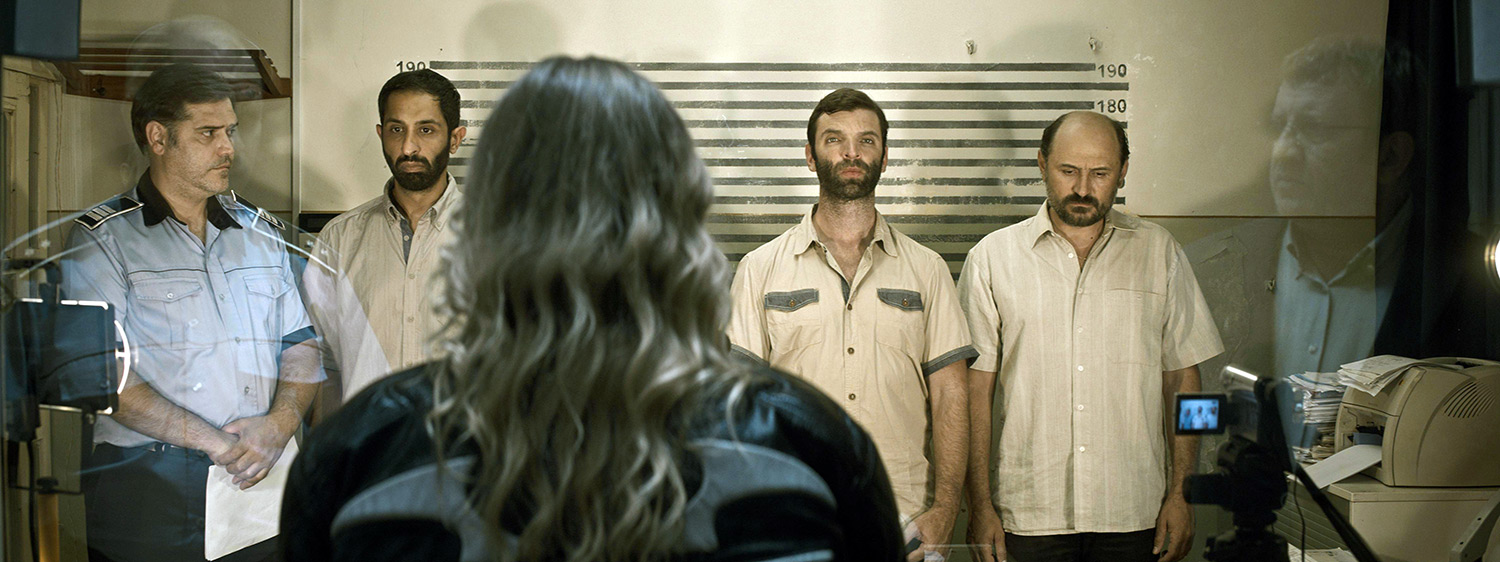
A film by Henri-Georges Clouzot
Henri-Georges Clouzot
FORUM FOR GOOD CINEMA
I don't like the idea of 'understanding' a film. I don't believe that rational understanding is an essential element in the reception of any work of art. Either a film has something to say to you or it hasn't. If you are moved by it, you don't need to have it explained to you. If not, no explanation can make you moved by it.
- Frederico Fellini
ESSENTIAL CINEMA
3. Click here for Guardian's list of 1000 films you must see before you die !
Excel lists 1&4 - thanks to
http://www.theyshootpictures.com/
Good-night sweet prince,
And flights of angels
sing thee to thy rest ...
M.F HUSSAIN
1915 - 2011
The doyen of
Indian art
dies in exile in London
M.Krishnan
Memorial Lecture
Wildlife Photo Exhibition
29th&30th June 2011
10.30 am to 7.30pm
Remembering
elephant doctor
V.Krishnamoorthy
30 th June 5.15pm
M.Krishnan Memorial Lecture
by T.N.A.Perumal
30th June 6.30pm
Venue:
PSG Institute of
Management
For me the camera is exactly like a pen. It can be used by the common person, or it can be used by Baudelaire to create a great poem. We have an Iranian saying that if you want to become a good writer, you just keep writing and writing and writing. So in response to the question of how to develop a good aesthetic vision, I can say that you have to keep seeing and seeing and seeing.
Abbas Kiarostami
For your reading pleasure..
Download film books here…
This is for those who are in a hurry and who have no time
to browse our earlier link in this page – where all these
links can be found.
* Béla Balázs, Theory of the Film
* Charles Musser, Before the Nickelodeon:
* Donald Richie - Japanese Cinema
* Gene Youngblood - Expanded Cinema
* Hugo Münsterberg - The Photoplay
Moving Places: A Life at the Movies
*Paul Rotha- Rotha On The Film
A Selection Of Writings About The Cinema
*Paul Rotha- The Film Till Now:
*Ronald Duncan, Jean Cocteau: Diary of a Film
BBC
Documentary
Contest

![]() Ramakrishana Behera, "Deepak Tal", 2008; Oil on linen;56" X 66" (142 X 168 cms) |
Screening of documentary film on
JOHN ABRAHAM
30th May 2009 6 pm
Screens
City Of
3rd Oct 2009 ; 3 pm
(0422) 4204804
A.P.SANTHANARAJ
One of the most influential artists from Tamilnad , A.P.Santhanaraj passed away on May 24th 2009
Read more at ,Jeyamohan’s Blog
Controversial in
Click here to listen to it’s director Danny Boyle
Danny Boyle is the one who gave us Irwin Welsh’s “Trainspotting" in celluloid.
K.Hariharan's article in Hindu.
Commentary on and links to online open-access film studies resources of note, by Catherine Grant
Online and Open-Access Film and Moving-Image Studies Writing Of Note (by Individual Named Authors)
Celebrating our city
3rd to 11th Jan 2009
Konangal event on
Cinema and
11th Jan 2009
: 9.30 am to 6.30 pm
G D Naidu Auditorium
With
Theodore Baskaran
http://www.coimbatorevizha.com
Great Movie Makers
Original and path breaking
film makers of our times
TERRANCE MALICK

The Shape of Fear: The Thin Red Line
Death Comes as an End: Badlands
FOR YOUR READING PLEASURE . . . .
DOWNLOAD THE COMPLETE BOOK
Ozu and the
Poetics of Cinema
By David Bordwell,
with a new introduction by the author
Read about the book from Amazon
Download entire book
(pdf format ) -Click fere
Download new introduction to the Michigan Electronic Reprint- Click here
We are grateful to David Bordwell and The Center for Japanese Studies for this great gift of a classic work on one of the greatest masters of our times , Yasujiro OzuFrom David Bordwell :
Some cuts I have known and loved
Ritwik Daa, I know that you are no more. But I am, alive for you Believe me. When the seventh seal is opened I will use my camera as my gun and I am sure the echo of the sound will reverberate in your bones, and feed back to me for my inspiration. . . . . .
(thanks to Girish for the links )
3rd International Film Festival on Water
We are very happy to let you know that the 3rd International Film Festival on Water titled Voices from the Waters is getting tremendous responses from across the globe. We are also happy to invite you to this festival at the Jnana Jyothi auditorium, Central college campus,
Georgekutty
Festival Coordinator
Contact
Siddharth
Associate Festival Coordinator
Tel: 91-80-25493705/ 91-9886213516
E-mail: bangalorefilmsociety@gmail.com
On Maborosi, Nobody Knows
and Other Pleasures

Click on the captions below –
Indiewire interview with Koreeda
Midnight Eye interviewwith Kore-eda
For your reading pleasure
Links for you
Kathleen Murphy on Last Year at Marienbad
Dan in a post about Nakahira, Vadim, and composition:
"When I watch a movie and think, “These images are intrinsically beautiful – this director really knows how to compose,” and then try to analyze the visual style, I often conclude that the compositions are balanced between two functions: showing the figure in the foreground, and showing the world. The balance is always managed in such a way that the shot can still function in the mind of the viewer as a depiction of the foreground figure; and yet the room or landscape is presented with some spatial integrity.
(Thanks to Girish for the links)
The screen’s white eyelid would only need to be able to reflect the light that is its own, and it would blow up the Universe.
Luis Buñuel
(Thanks to Girish for the link )


It is thumbs up for Konangal Film Society which screened three classics — Pather Panchali (Song of the little road), Charulata (The lonely wife) and Shatranj Ke Khilari (The chess players). Pather Panchali introduces you to life in Bengal in the early 20th century. Harihar, a priest, his wife Sarbajaya, daughter Durga, son Apu and a cousin, Indir Thakur, struggle to make ends meet. But, Durga and Apu share innocent pleasures, such as following a candy seller (though they can’t afford to buy candies), enjoying theatre, racing a train and participating in a cousin’s wedding.
Documenting changeDurga falls ill after a joyous dance in the rains, and dies. The family leaves their ancestral village in search of a new life in Benares, an indication of change in the then stagnant Bengal society.
The film got debut cinematographer Subrata Mitra an award at Cannes. The train is used as a motif, symbolising power and industrialisation. Referring to the visuals, film buff D Anandan observed: “Durga is ecstatic when dancing in the rain, and the visuals convey the emotion. So do the shots that capture the arrival of the monsoons”. Pandit Ravishankar’s music highlights the changes taking place at various points.
Charulata, an adaptation of Rabindrantah Tagore’s ‘The ruined nest’, is the director’s favourite. He had once said: “Well, the one film that I would make the same way, if I had to do it again, is Charulata.” Every frame in the movie tells a story.The location is Calcutta in the 1880s. Bhupathi is the editor and publisher of a political magazine The Sentinel. His wife Charulata lives in her own world of books, and loves poetry and literature, especially that of ‘Bankim babu’. She yearns for intellectual company. Bhupathi asks his cousin Amol who comes to live with them, to encourage Charu’s love for art and literature. He does, and their shared artistic interests and love for writing draws them close.
Meanwhile, a family member betrays Bhupati’s trust when he embezzles funds from the newspaper. This is juxtaposed with another apparent breach of trust by Charulata and Amol and their feelings for each other. Charulata’s angst, captured in close-up shots through the movie, lingers long after the movie is over.
A breathtaking play of light and shadow, beautiful upper middle class Bengali homes, songs (composed by Ray) and power-packed performances make this a classic. Charu conveys her deep love and emotional attachment, without saying ‘I love you’. But the intense looks and the liberties she takes with Amol (liking making paan for him) speak volumes. Yet, Ray was criticised for making the relationship too explicit. But he defended himself saying, “… When you transfer poetic language to cinematic language, changes are inevitable...”
Ray believed women were more honest, more direct, and by and large, the stronger of the sexes. And, it was this type of woman which fascinated him. And, Charulata is the archetypal Ray woman.
In the final shot, he freezes the frames of Bhupathi and Charulata as they reach out to clasp each other’s hands. A light shines on them. “That is the silver lining and their relationship will survive,” observed a film buff.
Shatranj Ke Khilari… opens with two friends playing chess. Amitabh Bachchan’s magnificent voice narrates the story. The film, based on a short story by Munshi Premchand, draws a parallel between chess games of feudal lords Mirza Sajjad Ali (Sanjeev Kumar) and Mir Roshan Ali (Saeed Jaffrey), and the crafty moves of the British to capture Awadh. General Outram is on a mission to revoke an existing treaty, and demand the abdication of Nawab Wajid Ali Shah (Amjad Ali Khan). The detailed visuals, elaborate costumes and sets, the script and the performances brought the Lucknow of 1856 alive.Konangal’s determination to take film appreciation to the next level has worked. Many turned up for the screening at the Cosmopolitan Club and stayed on to discuss Satyajit Ray and his art.
Courtesy : Hindu Metroplus
K M Adhimoolam
1938 – 2008
1937 - 2008
கலாச்சாரத்தின் நாண் பற்றி நேரத்தை நிற்க வைக்கும் கலைஞர்களுக்கு
சாவேது ?
The four-day Film festival is not only a treat of brilliant films but an interface with filmmakers, activists, people’s movement leaders, academicians, youth and common people from as divergent streams of life and activities. It includes talks, discussions, cultural programmes and informal exchanges.
Global Concerns: Fourteen Short and documentary films based on `Human Rights', `Health & HIV/AIDS', `Migration' and other significant themes produced in contemporary times will be screened.
Retrospectives: As part of honoring the filmmakers who have made great contributions to the short and documentary filmmaking, fifteen films by three great filmmakers will be screened in this section.Animation, Music Videos and Spots: Both national and international entries will be selected, keeping in mind the general theme of ViBGYOR. Open Forum: On all three days Open Forum will be held on topics related to film making and social issues in which special guests from film, academic and activist circles will be invited as panelists. Media Exhibition: Documentary filmmakers will have an opportunity to interact with various film distributing ventures in the country. Also NGOs in
For accommodation at Tirussur for the Film festival and other details call : 94430 39630
THE PLEASURE OF SEEING:
THE SUBLIME CINEMA OF
MAX OPHÜLS
“His camera could pass through walls.” -
The word “sublime” might have been invented to describe the films of Max Ophüls (1902-1957). Ophüls, initially a theatre critic, called one of his magazine essays “The Pleasure of Seeing,” a title that summons the sensory pleasure his cinema was designed to supply.
Read more -click here for article 1
Article 2

Sheer poetry — when cinematographer Sven Nykvist illuminated Ingmar Bergman’s greatest films with his lyrical use of light. He pioneered the use of naturalistic light in filmmaking and won two Academy awards. Best cinematography for Bergm an’s Cries and Whispers and Fanny and Alexander.
For Vittorio Storaro, a living legend in cinematography, Italian filmmaker Bernardo Bertolucci’s The Conformist was an exercise in shadow and light. To convey the sense of claustrophobia, he used light to show consciousness and darkness to portray unconsciousness. His photography attained lyrical heights and won him the Oscars for Apocalypse Now, Reds and The Last Emperor. Closer home, Subrata Mitra worked magic in Satyajit Ray’s films starting with Pather Panchali.
Cinematographers are considered the director’s second pair of eyes. It is they who interpret and capture his vision. And, to illustrate the importance of lighting in cinema, Konangal screened ‘Light and shadow’, a film on the making of The Conformist, and ‘Visions of Light’, a film about cinematography, that had great shots and sequences and comments by those who photographed them.
Masters speak
Great cinematographers speak of their relationships with directors. They talk of shots, and the light; from photography in the black and white era to the colour and, dramatic and expressionistic lighting techniques.
“It’s like a book for us,” say the cinematographers referring to the influence of Orson Welles’ Citizen Kane, photographed by Gregg Toland. “They broke all the rules and tried different things, in texture and contrasts,” they say about the magnitude of photographic innovations in the film.
Ace cinematographer Gordon Willis talks about the Godfather films, which earned him the nickname ‘Prince of Darkness.’ Willis says he was criticised for the use of deep shadows when lighting Marlon Brando, but many contemporaries also felt he had mastered the art of underexposure.
Gone with the Wind set the trend for colour films. Clippings from movies such as Annie Hall, Jaws, Blue Velvet, and Goodfellas detailed various techniques use In Cold Blood, photographed by Conrad Hall, a sad scene finds actor Robert Blake’s character talking to a priest about his father. Hall discovered that the light through the window caught the shadows of raindrops as they trickled down the glass. He projected them against Blake’s face, creating the illusion of ghostly tears. “The visuals were crying for him….it was truly a visual accident…” the cinematographer says.William Fraker, cinematographer of Roman Polanski’s Rosemary’s Baby, says that in the scene in which the character played by Ruth Gordon is on the telephone, Polanski wanted him not to show the face of the actress. He didn’t, but when that shot played, everyone in the theatre unconsciously shifted to one side, trying to see around that door. As Fraker simply says, ‘That’s Roman Polanski!’
K.JESHI

Says director Mysskin of Chithiram Pesuthadi fame: “Violence is not a new trend; it has always been part of our lives. Even the Ramayana and the Mahabharata had their share of battles and bloodshed. You need bullets and blood to show how serious the repercussions of violence are.”
Film buffs say that as long as it is realistic, violence is acceptable. “Out of every 100 movies, 20 are based on gangster themes. In movies such as Thotti Jaya and Pudupettai, personal vendetta is the reason for violence. But in Vettaiyadu Vilayadu, violence is glorified for no reason. There is no justification for the characters in the film taking pleasure in chopping fingers off and murdering people,” says S. Kamala Kannan, president, Cinema Club of Coimbatore. He has worked as an assistant director for filmmaker Seenu Ramasamy, who made Koodal Nagar.
The time factorAccording to Mysskin, while in real time, stabbing or roughing up someone lasts only a few minutes, in movies, the time is stretched and it gets exaggerated.
Violence in mass appeal movies, such as Sami or Pokkiri, tends to have a limited impact on the audience.
“Because, there is no element of realism in such movies. Everyone knows it is impossible for a man to beat up 50 people,” he adds.
Not just the portrayal of violence, justifying it is also a cause for concern. If movies such as Thulluvatho Ilamai portray sexual violence and target teenagers, Kaakha Kaakha and Vettaiyadu… justify encounter-based violence. Exaggerated physical violence also promotes the trend of verbal violence.
Highlight emotionsThere are fine human emotions and societal values, why aren’t these highlighted, asks filmmaker R.R.Srinivasan, who is involved in the film appreciation movement in South India.
“Be it Veyil, Pithamagan or Paruththi Veeran, the films use violence as a tool to lure the youth. When physical violence is exaggerated on screen, it increases violence in society. Some movies promote caste-based violence too,” he adds. So, the onus is on the filmmakers to choose the right theme. “They choose violence because it sells,” says Srinivasan.
Resolving conflictsFilms promote violence as a tool to resolve conflicts, says Rakesh S. Katarey of the Amrita Institute of Communication, who is also a documentary filmmaker. “In Ram Gopal Varma’s films, a pistol is not just an inanimate object of violence, it is called a ghoda or horse, a creature of supreme grace,” he points out.
Alternative cinemaIf alternative cinema works towards removing violence from society, commercial cinema promotes it.
“In Govind Nihalani’s Ardh Satya, the filmmaker delves deep into the psyche of the protagonist (the violent policeman played by Om Puri), and analyses the unorganised police system that breeds such policemen. His film Aaghat handled violence in labour union politics. Shyam Benegal’s Ankur is another example. Such films deal with structural and systematic differences in society that give birth to violence,” says Katarey. Death and violence arise out of a systematic denial of land, food, health and education on the basis of caste, class, gender and governance or the lack of it, and this remains largely unexplored, he says.
Promote peaceBut, there is hope. “Lage Raho Munnabhai is a shining example. Unless commercial films popularise peace as a tool to resolve conflict, people will continue to believe only in violence,” he adds. “As long as the creator gives a sincere presentation, it is acceptable,” says T.S. Prabhu, programme producer, Sun TV, who made Kathiyinri Rathaminri Oru Thirai Kalam, a short film on the growing violence in Tamil films.
In Mysskin’s words, everything depends on the creator’s ability. “Akira Kurosawa’s Seven Samurai portrays violence in a subtle way and Steven Spielberg’s Schindler’s List leaves a direct stamp of violence. I refrained from showing blood in my film. I projected vanmurai as menmurai.”

Nevertheless, it made one think — about the large chunk of humanity called kids, and the institutions we send them to, called schools.
The story Les Choristes is set in a boarding school for ‘delinquents’. The school authorities believe in swift retribution to the slightest contrariness.
New teacher Clement Mathieu is told he can look forward to a class of thieves, inveterate liars and souls beyond reach. Mathieu is clueless has taken the job only because he doesn’t know what else to do.
The kids are everything the authorities said they would be. And, Mathieu faces his share of obscene graffiti and practical jokes. Still, his decent soul revolts at treatment meted out to the children.
One day, Mathieu overhears the children singing a rude song about him, and he has an idea. A musician, albeit an unsuccessful one, he decides to teach his ‘savages’ music. He divides his class into baritones, altos, sopranos, and forms a choir. The children respond beautifully, and turn out to be angelic singers. While the film is hardly original, (there have been many with the ‘teacher-meets-impossible-students’, ‘teacher-reforms-impossible-students’ theme; To Sir with Love, Mr. Holland’s Opus, Dangerous Minds, The Freedom Writers’ Diary, etc.), there are bits that are telling.
Their dreams
When Mathieu asks the children what they want to become, not one wants to be a teacher. For them, a cowboy, a pilot or a hot air balloonist is a hero. Teachers are despicable.
Is that how children view teachers?
Is that why no one is beating down the doors to apply for a teacher’s job?
Are the authorities taking note?
The metaphor in The Chorus is obvious. The school system is constantly straight-jacketing kids in the name of discipline.
Everyone is tarred with the same brush. There is no place for individuality or creativity.
“Les Choristes” sends a message that having different voices doesn’t amount to indiscipline.
With care, even discordant notes can be unified into a beautiful symphony; a good teacher can make a profound difference in a child’s life (one of the delinquents goes on to become a world famous music conductor).


PURPLE ROSE OF CAIRO
Reality check
The real and the imaginary merge in The Purple Rose of Cairo

Her country is in depression, and she is saddled with a jobless husband and a job as a waitress where the cutlery finds a way to slip off her hands. And so, Cecilia (a fragile Mia Farrow) of Woody Allen’s The Purple Rose of Cairo, loses herself in the world of movies.
Magic in the air
Suddenly, there’s magic in the air. Tom Baxter (Jeff Bridges), the swashbuckling adventurer from the film ‘The Purple Rose of Cairo’ steps out of the screen, bored with repeat performances and impressed that Cecilia has watched the film five times.
Cecilia is torn between the imaginary character who loves her (“even kisses perfectly”), and her husband Monk (Danny Aiello), who gambles and cheats on her, and even beats her (“but, only after warning”).
Meanwhile, Tom tries to escape from other theatres as well, and the producers are in panic. So are the actors on screen, who wait impatiently for the show to continue.
Completing the triangle is actor Gil Shepherd who plays Tom’s character. He is afraid for his career, and tries to get Tom to return. He meets Cecilia, and promises her a wonderful life together.
Convinced, Cecilia (“A week ago I was unloved, now two people love me. Only, they are the same two people”) convinces a heartbroken Tom to return to the screen, and goes home to pack her bags.
On reaching the theatre, their meeting spot, she realises the
Konangal Film Society recently screened the film, placed in TIME magazines list of 100 best films, where Woody Allen’s humour is a constant presence.
When Tom is invited to a brothel, he charms all the inmates with his gentlemanly behaviour, and convinces them that ‘being in love’ and ‘making love’ are not different.
And, the waitress in Cecilia comes alive when she is taken into the screen, and to a club by Tom – “I don’t know how much you are paying, but the champagne bottle is filled with ginger-ale.”
Gautaman, who makes short films, said the film conveyed a simple idea beautifully, and showed that we can all get away from reality, but only for a while.
SUBHA J RAO
YOU ARE INVITED
To attend the general body meeting of Konangal , on 21stOct 2007 at 3 PM at
The English movie Kes captures a slice of happiness and sorrow
A tiny bird enters his life, changes it dramatically, only to leave. Kes is the story of a ‘hopeless boy’, beautifully told. Thanks to Konangal Film Society, Coimbatoreans got to watch this English film. Ignored by his mother, and bullied by both his brother Jud and peers at school, Billy Casper is not the happiest of children. Very distracted, Casper finds life utterly grim. Of course, he has his share of mischief too: he steals milk and books, fights with other boys, and smokes. And, then he discovers a kestrel. Casper finds a new purpose in life now as he trains Kes (the bird). This is a far cry from the moments at school, reeling under the taunts of his sports teacher. He even shares his experience with his classmates. Life goes on well for Casper, till one day when he is asked to place a bet on a horse for Jud. Casper decides the horse is not likely to win, and keeps the money. Unfortunately for him, the horse wins, and an enraged Jud gets his revenge and kills Kes. Director Ken Loach could not have chosen a better person to play Casper. Poker-faced and with none of the theatrics or cutesy ways, David Bradley as Casper has played his part to perfection. When he tells his master “I think she (Kes) has done me a favour, letting me watch her” or when he gives Kes a silent burial, you want to put a comforting arm around him. The film portrays life in the mining areas of Yorkshire, and ah, the delightful Yorkshire dialect! Every time you hear some one say shoot up for shut up and glooves for gloves, you can’t but help think of Geoffrey Boycott saying ‘my moother cin bat better’! Ken Loach wins applause for his natural scene presentation with no exaggerated tones. A few of the lines laced with humour stand out. For instance, when Casper says “I haven’t been in trouble since the last time” or when the headmaster chides a student: “A regular little cigarette factory, aren’t you?” Says a homoeopathic doctor Sivakumar: “The film is an example of how real education should be, how a teacher should learn, and how a student should be allowed to teach.” On being applauded at Beverly Hills, David Bradley said: “I walked into a charity reception at the Beverly Wilshire Hotel and a thousand people were all standing up applauding. I thought, oh-oh, someone’s coming. I thought Burt Lancaster or Tony Curtis had walked in behind me so I made way for this big star I thought had followed me into the room. I felt incredibly embarrassed.” W. SREELALITHA

Nineteen-year-old Alyosha Skvortsov (played by the oh-so-cute Vladimir Ivashov) gets a six-day break from the front after he destroys two Nazi tanks, ‘out of fright’. He sets off to see his mother, loaded with canned beef, and two cakes of soap from another soldier, a luxurious gift to his ‘beloved’ wife!
Myriad experiencesBy the time he meets his mother, Alyosha has missed many a train, seen the unconditional bond between a handicapped man and his wife, infidelity (he snatches back the soap from the soldier’s ‘beloved’ wife!), the brutality of the war on civilians, and above all, he has fallen hopelessly in love with a refugee, Shura. The encounter with his mother is ridiculously brief. He leaves, never to return.
Ballad of a Soldier, screened by Konangal Film Society, sums up the lives of soldiers in war-ravaged Russia during the Second World War. However, much to director Grigori Chukhrai’s credit, there hardly are any scenes on the front.In addition to a poignant tale, Chukhrai packs in plenty of beautiful moments. Such as when Shura (a lovely Zhanna Prokhorenko) wants to know for whom Alyosha had bought a handkerchief or the scene where one child plays with soap bubbles and another with an alarm salvaged from rubble.
Chukhrai fills the scenes lavishly with messages, almost always shrewdly. For instance, when Alyosha travels with another soldier Vasya, the compartment is bursting with soldiers, war veterans, smoke, laughter, amicable jibes and bawdy man-talk. But, behind every face is a saga of sorrow, yearning and hope, waiting to be told.
A good music director is one that knows best when to stop the music. The only thing that is loud when Alyosha meets his mother is the silence, marred not even by the two rivulets of tears streaming down her joyous eyes.
Film buff D. Anandan says the film is a subtle propaganda against war. “With the magical use of black and white, the director has juxtaposed poetry with the intensity of war”. The film tells you that when there is destruction all around, the only thing that remains is love, says Pon Chandran, president of Konangal.
TRIVIAAfter changing his mind on using professional actors, director Chukhrai picked two very young, unknown acting students (Vladimir Ivashov and Zhanna Prokhorenko) for the lead roles

Molly, her sister Daisy and cousin Gracie (Evelyn Sampi, Tianna Sansbury and Laura Monaghan) are forcibly removed from their families in Western Australia to a camp at Moore River in north of Perth, 1500 miles away, to be trained as domestic servants. Molly leads the girls on a daring escape following on foot — the rabbit proof fence that cuts across the Gibson Desert and towards Jigalong. In the 1930s, as part of Government policy (active till 1970), special detention centres were set up across the continent to prevent mixed race children from ‘contaminating’ the rest of Australian society. After the training, they were integrated as domestic workers into white society.
Rabbit-Proof Fence (2002) by Australian film-maker Philip Noyce records the history of racial prejudices based on true events. Adapted from the book, ‘Follow The Rabbit Proof Fence’ by Doris Pilkington Garimara, it traces the nine-week journey of the author’s mother (Molly), and the other two girls, who ran away from the settlement in 1931 to return to their families.
The chief protector of Aborigines, A.O. Neville (Kenneth Branagh), who has the right to remove any half-caste from their families, does his best to recapture them, with help from black tracker David Moodoo (David Gulpilil). But the endurance and the undying spirit of the children wins.
“The film deals with power dynamics of the whites and the absolute lack of sensitivity in them,” says D. Anandan, film buff. The scene in which Neville checks the children’s skin colour by lifting their shirts is an example. The fairer the skin, the better the prospects of a good education. “The girls love freedom and their resilience brings in a psychological transformation in the minds of the audience,” he adds.
Noyce, known for his swift narrative style, resorts to poetry here. Sample this: When the girls touch the steel fence with the hope of re-uniting with their mother, the mother on the other side is able to feel the vibration. The spirit bird is used as a motif in the movie. A film lover cited the example of an aboriginal athlete, who lit the Sydney Olympic torch in 2000, as an indication of the changing times. “But, racism still continues. It is vehement in Australia, especially against Asians and Aborigines,” observed Pon. Chandran.

It is their story. And, the camera follows the characters to record the truth. Coimbatore Sandhippu, a documentary on street children directed by the children of Don Bosco Anbu Illam is a slice of their life, their struggles, their dreams and aspirations.
Ray of hope
When G. Krishnamoorthi from Krishnagiri says he was ill-treated by his parents, it leaves you unsettled.
“My father used to spend his daily wage on liquor, and harass me to seek alms. I ended up on the streets,” he says.
But, there is a glimmer of hope when he says: “Now, I am studying in Class V, and I want to make it big in life.”
The documentary was screened at
“‘Our life is a story’ is what the students had to say when we asked them to make a film as part of their development activities project,” says Fr. C. Jayaraj, director of Don Bosco Anbu Illam Social Service Society, a centre for street and working children.
Understanding cinema
“Though, in most cases, it is poverty and harassment that drives the children to run away, some of them also end up on the streets because of their aspiration to become film stars. The film gave them an opportunity to understand cinema, and also get their minutes of fame as actors,” he adds.
The film was edited at Alaihal Media, Tiruchi.
Be it R. Gopal from Madhya Pradesh, who took up menial jobs in trains for months together or Sonu from Mumbai who used to live on trains, their stories end on a positive note. But, raise a few questions on the need for societal change.
Abandoned by parents
S. Essakki Muthu from Tirunelveli, S. Shyam from
“Why do elders ill-treat us?” asks John Peter and adds: “I will become a filmmaker, educate the public, and bring about a change in society through my films.”
The filmmaking experience has boosted their confidence levels immensely.
“We thought cinema was all about superstar Rajnikant and Vijay. But, we learnt that it can be used as a powerful tool to convey strong social messages,” says S. Siva from Tirunelveli.
Potential filmmakers
A total of 25 students (between 10 and 17 years) have put their heads and hearts together for the project.
The documentary has been shot at the Don Bosco Illam in Ukkadam and the Coimbatore Railway Station.
“I see potential filmmakers in them. They easily picked up the nuances of film-making, camera movements, lighting and editing,” says R.R. Srinivasan, documentary filmmaker, who guided them.
Honing the skills
As in any film education, he took them through film theory, and followed it with the screening of world classics, animation films and documentaries. To get acquainted with the camera, they went on an outdoor shoot to Vellakinaru.
Facing the world
The real stories are captured in black and white, and their filming experience in colour. A moving train follows the story, a reminder that it is these trains that the abandoned children take shelter in to escape their situation.
“They have gone through so much pain in their lives, but are confident to face the world with a smile,” he adds.
As D. Rajasekar, who is now in Class VIII puts it. “When I was a daily labourer, my future was bleak. Now, it is a new beginning. Our success stories will give a ray of hope to lots of children out there on the streets.”
Courtesy : Hindu Metroplus.
Udhiri Pookkal’s timeless beauty lies in its touch of reality and subtlety
Photo: M. Periasamy

Director Mani Ratnam once famously remarked: “If I get anywhere near what Mahendran did in Udhiri Pookkal, I’ll be a happy man.” Watch the film, and you’ll know what he meant.
Thanks to Konangal Film Society, many who had missed out on the timeless film got an opportunity to watch it, and those who had viewed it a dozen times over were only too glad for a once-more!
Village despot
It is the story of a despotic village school head Sundara Vadivelu (Vijayan), who is forced to end his life.
From Vijayan and Ashwini as his wife, to the village hairdresser and the conniving sakuni of a music teacher, each actor has played his role to perfection.
There’s perpetual fear and despondency on Ashwini’s beautiful face, so much so that the smiles that play up occasionally seem reluctant.
Mahendran sprinkles subtlety throughout the film, in characterisation, dialogues and visuals. Vijayan never raises his voice: a soft smile is his bludgeon; you don’t see him hitting Sarath Babu, only a bleeding lower lip.
When Vijayan refuses to let go of his second wife, the calm woman says, “I could poison your food, don’t make me a murderess.” And, the river flows quietly, not telling us it will take the protagonist’s life.
The director throws in a few powerful lines too. When Vijayan wants to marry his wife’s sister too, his father-in-law Charu Hassan says: “I’ll be a father, not a pimp,” or when Ashwini mutely wonders if any woman has the courage to ask for another husband.
Still relevant
Someone from the audience claimed that the film, released in 1979, ran for 25 weeks in a Coimbatore theatre. Nearly three decades later, if the film still strikes a chord with the audience, it is because of its proximity to reality — the innocence of the villagers and the condition of rural women.
For the current generation overfed on a diet of outrageously hyperbolic movies, this should be a breath of fresh air. The lower middle class family does not live in a stately mansion with designer furniture, there are no song sequences tearing between Australia and the Alps, and no inch-thick coats of shocking pink lipstick or purple eye shadow!
Ilayaraja’s music speaks for itself. Film buff D. Anand summed up the brilliance of Azhagiya kanne in three words: Monalisa of music.
Eye for detail
Mahendran’s eye for detail adds to the charm of the score: a cute (baby) Anju (of Keladi Kanmani fame) smiling for no reason; Ashwini pulling out a chewing gum from a stubborn Anju’s mouth or a thorn from her son’s foot, or Anju drying out her paavaadai only to drench it again.
W. SREELALITHA
Courtesy : The Hindu , Metroplus dated 06 09 2007
Michelangelo Antonioni, one of the most innovative and distinctive film-makers of the 20th century, has died at the age of 94. The Italian director died at his home in
In a generation of rule-breakers, Mr. Antonioni was one of the most subversive and venerated. He challenged moviegoers with an intense focus on intentionally vague characters and a disdain for such mainstream conventions as plot, pacing and clarity. Mr. Antonioni broke other conventions, too. Many of his editing cuts, angles and camera movements were intentionally odd, and he frequently posed his characters in a highly formalized way. He employed point-of-view shots only rarely, a practice that helped erect an emotional shield between the audience and his puzzling characters.
Mr. Antonioni remained not only enigmatic, but also unreachable to the end.
One interviewer asked him to look back over his life. “In a world without film, what would you have made?” he was asked.
Mr. Antonioni replied: “Film.”
"With Antonioni dies not only one of the greatest directors but also a master of modernity," said
Text of the Email received by Pon.Chandran from K.Hariharan, noted film director who gave us memorable films like GHASHIRAMKOTWAL (1976), EZHAVATHU MANITHAN (1982) , CURRENT (1992) and erstwhile president of Chennai Film Society. K.Hariharan was student at FTII, Pune while Ritwik Ghatak was teaching there as Vice Principal :
It warms my heart to note that you will be conducting a Ritwick Ghatak Film Festival.
At the outset, I will unabashedly admit that 'Meghe Daka Tara' is the greatest Indian Film ever made.
For all his anarchism Ritwick had his roots deep in an Asian culture enriched by a variety of myths, legends and folktales. And all his films resonated his understanding of our complex culture in many ways. Above all he was a melodramatist of the highest order. He gave the concept of melodrama its due honor and formalized its performative strategies in extremely indigenous ways. Unfortunately it was this melodrama which blockaded his recognition overseas and instead allowed his contemporary Satyajit Ray full reign over the western audience. Adding salt to his injured soul was the attitude of the Indian cinema intellectuals of that period who dismissed his works with equal force as the westerners. None of his films ever won national awards nor were they sent to any festival abroad! The condemnation of his works at that time is in fact a deep revelation of the bogus roots of our Indian New Wave origins which reflected nothing else but a sick post-colonial 'brown saheb' culture!
Recognition to this master truly came only after his tragic demise after years of alcoholic abuse. If he was really recognized as a master I would not have had the misfortune of seeing him drunk like a vagabond in the FTII campus in 1974, when I was student. So I am happy that you are ultimately giving this great master his due. All the best
Pon.Chandran attended the International Film Festival on Documentaries and Short Films in Thrissur in May, organised by VIBGYOR. This festival was mentioned in Hindu article - The magic of moving images ( posted in our blog also) .Here is a response from Rev. Father Benedict varghese Chiramel of VIBGYOR :
Dear Chandran,
Thanks for sending me the whole article...u know sometimes this type of reports, however small, comes back to us and tell us `what you are trying to do is something beautiful and meaningful'...sometimes in the tense moments of organizing an event we forget to relate to people, who are the most important than any event....at this VIBGYOR, your group, u THREE, were my special inspiration, though we didn't talk much.
It shows that we will connect again...if not sooner, surely later!
Regards,
Benny
K. JESHI
| Good films can teach us a few things. Check these out. |
The smiles and sorrows of Ali and Zohra in “Children of Heaven” speak volumes about the beauty of their brother-sister bonding. The selflessness and kindness of the blind boy Mohammed in “Color of Paradise” teaches you what unconditional love is all about. And, the nightmarish realities faced by a handful of orphaned children in “Turtles Can Fly”, set in a Kurdish refugee camp, immerse you in a flood of emotions.
Children are the centre of action in these Iranian films and they connect with their counterparts in Coimbatore through their electrifying performances. The moving images work magic and film appreciation is the key to introduce young minds to the world of meaningful cinema.
Though film societies in Coimbatore are showing the way by screening these films regularly, you can make a beginning with Iranian films, known for their sensitive portrayal of the emotions of children.
From Iraq
Kurdish director Bahman Ghobadi’s “Turtles Can Fly” is the first film to be made in Iraq since the fall of Saddam Hussein.
Set in a Kurdish refugee camp on the Iraqi-Turkish border just before the U.S. invasion period, it traces the lives of orphaned children, the entrepreneurial Satellite (Soran Ebrahim), the armless clairvoyant Henkov (Hirsh Feyssal), and his traumatised sister Agrin (Avaz Latif) and their efforts to survive the appalling conditions. There’s no running water or electricity, the fear of gas attacks is palpable, and kids use their bare-hands to defuse land mines in the surrounding fields, which they then trade for machine guns at a market.
The film has won the Glass Bear and Peace Film Award at Berlin International Film Festival and Golden Shell at San Sebastian International Film Festival.
Iranian film maker Majid Majidi’s “Children of Heaven is a simple story. While at market shopping, Ali loses his sister Zohre’s school shoes. After desperately trying in vain to find them, he decides that he and his sister will share his sneakers.
Later in the film, the loving brother enters a race in order to win a pair of brand new sneakers for his sister. Every frame in the movie sends across a message to the children. For instance, extra-curricular activities. It is not just about playing chess or cricket, but also helping out parents.
In “Color of Paradise”, Majidi again deals with children, this time focusing on Mohammed (Mohsen Ramezani), a young blind boy. The lad is a loving student of nature and longs for village life with his family.
"The magic of movements is fascinating," master filmmaker Ingmar Bergman says in a recorded interview. A packed audience in Coimbatore listens spellbound, as he introduces them to his magical world of filmmaking. The screen ing of his The Hour of the Wolf, Cries and Whispers and The Seventh Seal follows.
Next is the turn of Born into Brothels, the 77th Academy award-winning documentary feature written and directed by Ross Kauffman and Zana Briski on the children in Sonagachi. If this was not enough, promising directors such as Simbhu Devan (Imsai Arasan 23 aam Pulikesi), Seeman (Thambi), Sivakumar (Ayesha), Radha Mohan (Mozhi) and Vasantha Balan (Veyil), and ace editor B. Lenin and film critic Yamuna Rajendran enlighten them regularly on what meaningful cinema is all about.
Bonanza for film lovers
Film buffs in Coimbatore couldn't ask for more. A handful of societies, many of which have become more active in the last couple of years, have been working overtime to draw the attention of the public to parallel cinema. The results are beginning to show. The increasing membership base is proof enough of the growing excitement in this movement.
"Thanks to technology, serious cinema is now easily accessible," says Pon. Chandran of Konangal, which screens world cinema twice a month. He says running a film society has become easier now because of the availability of DVDs and VCDs. "Technology has made film-making easier. This, and the growing popularity of visual communication courses are the other major contributors," he adds. Earlier, filmmakers and social activists functioned as different entities. Now, a new breed of film activists, who make films and fight for social change, is emerging. Chandran quotes the recently concluded International Film Festival on Documentaries and Short Films in Thrissur as an example. "The theme this year is 'Earth' and more than 150 films which raised their voices against burning issues such as Plachimada, Nandigram and the Chhattisgarh environmental movement, were screened," he adds. Film societies, he says, have come to play a vital role in weaning away people 'lost' in commercial films and introducing them to good cinema. The impact will be significant if it begins at the school level. "The experience and exposure will kindle the required imagination and sensibilities, which will ultimately shape children's values and vision. Taking such films to smaller towns with Tamil subtitles will work magic," he adds.
"Ours is an elementary school," says writer Pamaran of Naaivaal. "We want to give people in the grassroots the basics; they can explore higher levels using this knowledge." Preparing the mind to appreciate films that portray issues that concern people is what Naaivaal is trying to achieve. "There is no admission for intellectuals here. For any social change to happen, people should be aware of issues. In the process, if they get inspired to become filmmakers, we are happy," he adds.
Naaivaal has screened Tamil short films such as Ayesha, Oormaatram (it won the Kalam award for the best environment film) and Acchupizhai, on the lives of transgenders. Priya Babu of the Sudar Foundation for Transgenders, Villupuram, was also invited for a discussion. He says film societies, with their distinct approach, have managed to draw the attention of the common man "polluted by the commercial mass media." For the Cinema Club of Coimbatore, the objective is to create awareness on films and to help budding filmmakers understand technology and aesthetics.
Their children's festival brought together an eclectic mix of movies on children such as Children of Heaven (Iranian), Way Home (Korean), Shwaas (Marathi) and Kutty (Tamil). "Now, people are able to differentiate good movies from bad," says S. Savitha, an active member.
Kalam Film Society, where membership comes at Re. 1, wants to focus on budding filmmakers. "They are the future. We want to guide them to come out with meaningful creations," says Anand of Kalam.
Despite all these, is there still a long way to go? "Once we start reaching out to people other than those who know, we can expect significant societal change. Of course, to sustain, we also require a projector, regular members and a permanent hall for screening," sums up Chandran.
Courtesy : The Hindu dated 19 05 2007.
Ingmar Bergman was born in 1918 in
As a director, Bergman favored intuition over intellect, and chose to be unaggressive in dealing with actors. He states that a director must be both honest and supportive to allow others their best work.
His films usually deal with existential questions of mortality, loneliness, and faith; they also tend to be direct and not overtly stylized. Bergman usually wrote his own scripts, thinking about them for months or years before starting the actual process of writing, which he views as somewhat tedious. Bergman began working with Sven Nykvist, his cinematographer, in 1953 who became a legend.
Konangal presented a retrospective of Ingmar Bergman in February 2007.
Konangal Film Society recently screened the film, which traces the tacit mind games between a young man and his father.
The movie begins with the death of Dreverhaven. The police suspect his son Jacob, as he is seen leaving Dreverhaven's office last. They finally learn that he was not murdered, after all.
Set in a series of flashbacks, the movie unfolds the life of Jacob, his struggles and success.
Stony-faced and indifferent, bailiff Dreverhaven's attempts to marry pregnant housekeeper Joba Katadreuffe fail. A reticent Joba brings up Jacob alone. However, self-taught Jacob's path is to cross his father's. Almost always close to losing, Jacob just about gets the better of his father in their incessant one-upmanship.
At one point, Jacob says: "He (Dreverhaven) just wanted to show me who is boss." Dreverhaven (Jan Decleir) comes across as a man with `motiveless malignity'. Nevertheless, when he signs the will as Vader (father), we see the human behind that cold face. Joba (Betty Schuurman) has a perpetual indignant silence to her; so you pay more attention every time she speaks. And it is worth it. The best line is her last: "You've been a big ass," she tells Jacob who fails to express his interest in a woman. De Gankelaar, as Jacob's boss, is a perfect entertainer with his deadpan humour.
Sample this: He tells Jacob: "You have managed to fascinate me but not to convince me". On the film's treatment, Rajkumar, cinematographer for the second half of Tamil flick Periyar, said "it only has shades of grey, middle grey and black, which bring out the conflict between the father and the son".
Director's cut
After he received the Oscar for Character, the director walked with it on the streets of Los Angeles, and said cheekily in an interview: "I guess you're not to supposed to carry the Oscar around with you, but, hey, I'm Dutch, I don't know the rules."
W. SREELALITHA
Courtesy :The Hindu
Children are the centre of action in Kurdish director Bahman Ghobadi's Turtles Can Fly, and they bring an electrifying authenticity to their roles. Set in a Kurdish refugee camp on the Iraqi-Turkish border just before the U.S. invasion in 2003, the movie captures the lives of a handful of orphaned children.
Dangerous liaisons
The enterprising Satellite (played by Soran Ebrahim) installs dishes and antennae for local villages looking for news of Saddam Hussain. He organises the dangerous but necessary task of sweeping and clearing the minefields, and arranges to trade unexploded mines for machine guns. He falls for an orphan Agrin (Avaz Latif), a sad-faced girl travelling with her disabled brother Henkov (Hirsh Feyssal), who has the gift of clairvoyance. The siblings take care of a three-year-old (Later revealed as Agrin's child, born out of a gang rape by soldiers). The predictions of Henkov are used as magical realism in the movie.
"Multiple readings are possible in the movie — the implications of attack using chemical weapons, the sufferings of the Kurds, the `psychic wreckage' in children shown through Agrin who has suicidal tendencies, the transformation of the community from a nomadic to a post-modern one, and the concept of profit over people. But there is a ray of hope as a leader is born in Satellite," says D. Anandan, member of Konangal, which screened the film.
Ray of hope
In the last frame, when the U.S. forces enter, Satellite walks in the opposite direction, an indication of hope for peace. This is the moment of relief in a film that shows the futility of war. "Because it is a resources war, the problems will never end for the Kurdish people," adds Anandan. "In countries like the U.S., war is a sport now," says Rakesh. S. Katarey, a film buff.
Devastating
Be it an Iran-Iraq conflict or the war in another 275 days as predicted by Henkov in the movie, it damages a society physically and mentally, says Pon. Chandran of Konangal. The movie has won 13 International awards and is the first film to be made in Iraq since Saddam Hussain's fall.
K. jeshi
Interpreting time
A young boy draws a watch on his arm, an elderly woman kneads, children play in the park, men scythe grass and a mother sleeps beside her newborn. Suddenly, a bloodstain appears on the baby's blanket (which later is shown as oozing from the umbilical cord) and the mother cries for help. Everyone rushes to save the child.
In between these visuals, the director brings in nostalgic family photographs from Cuba and a menacing newspaper article about the Nazis in Spain.
FILMOGRAPHY Jacques Tati (1909 - 1982) Jour de Fete, Les Vacances de Monsieur Hulot (Oscar nomination-for Best Screenplay), Mon Oncle (It won the Oscar for Best Foreign Film), Playtime, Traffic and Parade. Monsieur Hulot reappears in other films as well including Truffaut's Stolen Kisses.
It is a comedy. But not the kind where you will burst your sides with laughter. Yet, it is funny. Director Jacques Tati made only six films in his career spanning 20 years. But, his genius is undisputed. And, film buffs in Coimbatore enjoyed that as Konangal screened his film Les Vacances De Monsieur Hulot (Monsieur Hulot's Holiday) for them at Ashwin Hospital.
The tall, ungainly, Hulot (played by Jacques Tati himself) arrives a vacation at a seaside resort in an incongruous, noisy and battered rattletrap of a car that perches atop bicycle wheels!
There isn't a story line or a plot in the traditional sense. Actions of the holidaymakers, whether they are just eating, playing cards, swimming, strolling or working, become a reason for laughter, thanks to the bumbling, stumbling Mr Hulot. Unwittingly, he triggers off episodes that you can't help smiling at.
The holiday makers are the kinds you would meet in any vacation — the young attractive girl whom every young man in the vicinity is eyeing; the energetic campers, the `foreigner', the couple who don't move from their place by the window, the businessman with his family on holiday who keeps disappearing to attend to important telephone calls, the poker buddies, and so on. The hotel is typical too, with the annoying, creaking kitchen door, the bored waiter, the mischievous kids and stuck drawers. In the hustle and the bustle that fills every scene, the fact that there is barely any dialogue escapes notice. In the middle of all this, and yet apart, is Hulot, awkward, timid, unassertive and indecisive. His best intentions always go awry.
The movie also has its funny-sad moments. At the end of the vacation as everyone exchanges cards and goodbyes, only Hulot is ignored by all. He doesn't come up to scratch.
It is only an old man, the `foreigner' and some kids who come up to him to say goodbye.
One is used to comedies being exaggerated, in-your-face, anything-but-subtle affairs.
But, like a film critic said about this film, "It is not a comedy of hilarity but a comedy of memory, nostalgia, fondness and good cheer. There are some real laughs in it, but Mr. Hulot's Holiday gives us something rarer, an amused affection for human nature — so odd, so valuable, so particular... "
PANKAJA SRINIVASAN
Courtesy :The Hindu , Metro Plus
We are pleased to announce the launching of Konangal's Blog as a New Year memento to all our members. We would like to place on record the wonderful work done by Mr. Anand, one of our committed and active members, in getting this done. We request all the film enthusiasts to make good use of the site in dissiminating the vision and mission of Konangal. We also look forward to your comments and suggestions which will enrich the site further. Best Regards to all - PON.CHANDRAN, President, Konangal.