Aug 25, 2016


Embrace of the Serpent
A film by Ciro Guerra
2015/ Columbia/ 125 minutes /
5.45 pm /28th Aug 2016 / Perks Mini Theater


The ravages of colonialism cast a dark pall over the stunning South American landscape in “Embrace of the Serpent,” the latest visual astonishment from the gifted Colombian writer-director Ciro Guerra. Charting two parallel journeys deep into the Amazon, each one undertaken by a European explorer and a local shaman, this bifurcated narrative delivers a fairly comprehensive critique of the destruction of indigenous cultures at the hands of white invaders.


“Impossible to describe in words its beauty and splendor,” the Dutch explorer Theodor von Martins wrote of the Colombian Amazon in 1909, and no words are needed in light of David Gallego’s majestic lensing, his widescreen compositions capturing a lush rainforest setting in sharp, exquisitely subtle shades of monochrome.

The film’s central figure is A young shaman named Karamakate, last survivor of the Cohiuano, an Amazonian tribe killed off by the rubber barons. He is no innocent, noble savage but an angry, morally complex individual with a heart full of grief. It’s sometime during the early 1900s . Theo a German explorer with his local guide is searching for the Yakuna, an exceedingly rare flower that could heal him of his sickness with the help of Karamakate.

Every so often, the film jumps 40 years into the future to join a rugged American named Evan as he enlists an older Karamakate to retrace his steps on a hunt for the same flower plant — snaking together these parallel journeys into a mesmeric call and response. Towards the end the film moves to mystical higher ground, as abhorrence expands into awe. Shot in dreamy black and white, spoken in nine separate languages, and told with an unerring devotion to authenticity this film is a fitting requiem for the ravages of white hegemony (source: Internet)


Ciro Guerra
Colombian filmmaker Ciro Guerra wove magical realism into stories of his native country and its people into a trio of award-winning features, including the Oscar-nominated "Embrace of the Serpent" (2015). Born February 6, 1981 in the town of Rio de Oro, Colombia, Guerra studied film and television at the National University of Colombia before directing a trio of shorts - the live action "Silence" (1998) and "Alma" (2001) and the animated short "Intento" (2002) - and "Documental Siniestro: Jairo Pinilla, Cineasta" ("Sinister Documentary: Jairo Pinilla, Filmmaker," 1999), which focused on the eponymous Colombian cult director.
In 2004, Guerra released his first feature-length directorial effort, "Wandering Shadows," a drama about a disabled man whose Dickensian life in a Bogota barrio is improved by a mysterious stranger. "Shadows" won the Films in Progress award from the San Sebastian International Film Festival, and paved the way for his second feature, "Los viajes del viento" ("The Wind Journeys," 2009), with Colombian musician Marciano Martinez as a folk musician who embarks on a journey to return his accordion - an instrument supposedly won in a duel with the Devil - to his former master. Another critical success, the film earned Guerra the Award of the City of Rome at the 2009 Cannes Film
Shot on location in a remote corner of the Amazon River in Colombia, and photographed in stark black-and-white imagery, "Embrace of the Serpent" concerned a four-decade search for a legendary plant with alleged healing powers conducted by a shaman - the last member of his tribe - and two scientists. Based on the diaries of the real scientists, "Serpent" was hailed by international critics, and earned a slew of laurels, from a 2016 Oscar nomination for Best Foreign Language Film to the Art Cinema award at the 2015 Cannes Film Festival and the Alfred P. Sloan Prize at the Sundance Film Festival.


Jul 13, 2016
Konangal pays tribute
to the great Iranian master
ABBAS KIAROSTAMI


THE WIND WILL CARRY
US
A film by Abbas
Kiarostami
1999 /Iran / 113
minutes
17th JULY 5.45 pm /
Perks Mini Theater


"We're heading nowhere," a disembodied voice
complains as a battered jeep crawls up a winding road through harsh, scrubby
terrain. So begins The Wind Will Carry Us—one of the great films by Iranian
master Abbas Kiarostami.


A busy video producer/engineer Behzad from Tehran is sent to
a remote Iranian village to capture an obscure burial ceremony. But the
'subject' of his film , Mrs. Malek is ill, not dead, forcing the man and his
production crew to slow down, linger in the village, and mingle with the local
families. Along the way, the engineer encounters a radically different
lifestyle than his own, with different priorities. In doing so, his perspective
on the natural world is changed.
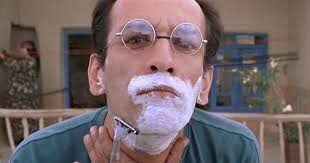

Behzad recites a poem in the film , a poem by Furugh
Farrukhzad (1935-67), one of the most extraordinary Persian or Iranian female
poets of the twentieth century, which gives the film its title and which treats
the central conflict in the film, “life in the face of death.” In Iran, people
at all social levels know poetry and quote it to each other constantly, for all
sorts of reasons Poetry and Sufism. Both are useful coordinates for anyone
trying to get a fix on the intent behind this gorgeous, semi-opaque film, The
Wind Will Carry Us

This film is remarkable in its sustained pace, perspective,
and ability to focus so sharply on a single character without revealing too
much of that character, allowing him to retain a sense of mystery and
delightful ambiguity. In the title sequence of The Wind Will Carry Us absences
define presences in numerous ways. In fact, many major characters in the film
-- including Mrs. Malek, Youssef, and all three members of Behzad's crew -- are
never seen. Most of the sequence unfolds in semidarkness.


The Wind Will Carry Us offers an intricately constructed
spatial world that's as breathtakingly beautiful, as various, and as cosmically
evocative as a Brueghel landscape -- a world teeming with diverse kinds of life
and activity -- and it teases us whenever we want to get to know this world
better, seducing and evading us at the same time. If you're open to the
possibility that the world is bigger than you typically give it credit for, and
you're willing to invest some effort in letting go of your usual way of seeing,
this film will be a revelation for you. (From Internet)


Abbas Kiarostami
June 22, 1940 - July
4, 2016
Abbas Kiarostami, the Iranian filmmaker who is widely
considered one of the world's greatest living directors has written and
directed some 41 movies since the early 1970s, and has been compared by critics
to such titans of international cinema as Ingmar Bergman and Akira Kurosawa.
In her survey of recent achievements in film, Susan Sontag
declared, “Iranian cinema has been the great revelation of the last decade.”
Surely one of those largely responsible for this phenomenon is the screenwriter
and director Abbas Kiarostami. Few new films draw comparisons to classics like
Mr. Bergman's "Wild Strawberries," Michelangelo Antonioni's "Red
Desert" or Jean-Luc Godard's "Contempt." Mr. Kiarostami's movies
not only evoke such parallels; they also seem to infuse the beleaguered
art-film traditions with fresh urgency.
Born in Tehran in 1940, Kiarostami worked as a commercial
artist and children’s book illustrator until he was invited to lead the
department of cinema at the Institute for the Intellectual Development of
Children and Young Adults. Given this background, it’s not surprising that many
of his projects feature children. Kiarostami is a graduate of Tehran
University’s Faculty of Fine Arts in Painting
Mr. Kiarostami's own filmmaking began at the end of the
1960's when the loose-knit movement later labeled the Iranian New Wave was just
gaining steam. One hallmark of Mr. Kiarostami's work is its esthetic
consistency. "Bread and Alley," the first short he made, in 1970, has
qualities that distinguish his films up to "Taste of Cherry": a
lyrical but concrete feel for the particulars of place and visual atmosphere; a
way of eliciting strikingly natural performances from nonactors; and stories in
which an anecdotal surface disguises a rich substratum of philosophical,
allegorical or social concerns.
Mr. Kiarostami did not consider leaving the country during
the Iranian revolution of 1978-79, he said, "because of a revolution going
on in my own house." His own marriage was failing. Pierre Rissient, an
executive with Ciby 2000, the French company that handles worldwide sales of
"Taste of Cherry," says that Mr. Kiarostami "proceeds the way
the Greek philosophers like Heraclitus do, or Chinese figures like Laotzu, or
Japanese Zen poets like Basho -- the poetry is completely linked with
philosophy."
The protagonists of his films are the ordinary people who
surround us. Their lives represent no more and no less of what constitute ours.
Their presence in films provides us with an opportunity to think about the everydayness
of our existence and relationships; an opportunity to see them as a mirror that
reflects the depth of our human feelings and thoughts.
Abbas Kiarostami's films seek to uncover the deepest human
emotions in the most ordinary events in life. His works are a demonstration of
the significance and relevance of these emotions to the restless, captive, and
tormented individuals of the twentieth century.
Everything in Kiarostami's films speaks to the matter at
hand. His films direct the spectator toward central human problems. He has
deeply-held ideas and feelings. He wants to say certain things about life. So
he doesn't waste his time or ours. Nothing has been done merely for effect, to
impress the spectator, to enhance the director's reputation. There aren't so
many artists like that around, unfortunately.
Kiarastomi passed away in Paris on 4th July thus
year. He was later buried in a private ceremony in northern Tehran. Thousands
of Iranians bid tearful farewell to their country’s greatest filmmaker.


Jun 15, 2016
19th June 2016; Pavel Lungin's THE ISLAND

THE
ISLAND
A film by Pavel Lungin
2006/ Russia/ 112 minutes
5.45 pm / Perks Mini Theater
http://konangalfilmsociety.blogspot.in/

Russian
Orthodox monk Anatoly lives on a remote island in the frigid White Sea, where
he is tormented by guilt from a cowardly “sin” committed years ago under Nazi
coercion. Anatoly shovels coal
briquettes and pushes wheelbarrows across rickety planks to repent for his
iniquities. He considers himself as “stained” by sin, and accordingly neglects
his body till it is as unkempt as his soul.


Anatoly doesn’t bathe (despite his soot-coated
accommodations), much to the dismay of his fellow monks. The sailor-turned-saint hopes said reason
will cleanse him of sin when his time to leave the world does come. Other monks—including superior Father
Filaret—find Anatoly an obnoxious prankster who speaks in riddles and “cultivates
superstition” among laypeople.

The Island is
a study of forgiveness (of oneself and others) whose title—poet John Donne
might agree—references one man’s inner isolation as well as his geographic
remoteness. And while arctic environs
are harsh, director Pavel Lounguine collages some beautiful imagery (all
symbolic) here—from craggy rocks and lichen-covered hills to raging waters and
charred timbers. (From Internet)


Pavel Lungin
Pavel
Semyonovich Lungin s a Russian film director.
Lungin worked primarily as a scriptwriter until given the opportunity to
direct Taxi Blues at age 40. Lungin was awarded the Best Director Prize at 1990
Cannes Film Festival for the film Taxi Blues starring Pyotr Mamonov. That same
year he took up residence in France, while making films in and about Russia with
French producers. Two years later, his next film Luna Park would also compete
at the 1992 Cannes Film Festival. In 1993 he was a member of the jury at the
18th Moscow International Film Festival.
Lungin’s last
film Ostrov (The Island, 2006) is a penetrating drama of sublimation of the
soul. According to the official site of Lungin Studio, in the mid October the
film-director finished another feature film under the title Cruelty. In 2007
Lungin is going to release Vetka Sireni (Lilacs), a life story of Sergei
Rachmaninoff.


Jun 1, 2016
5th June 2016; Kenloach's KESS

KES
A film by Ken Loach
1969 /UK / 110 mins
5th June
2016
5.45 pm / Perks Mini
theater
http://konangalfilmsociety.blogspot.in/


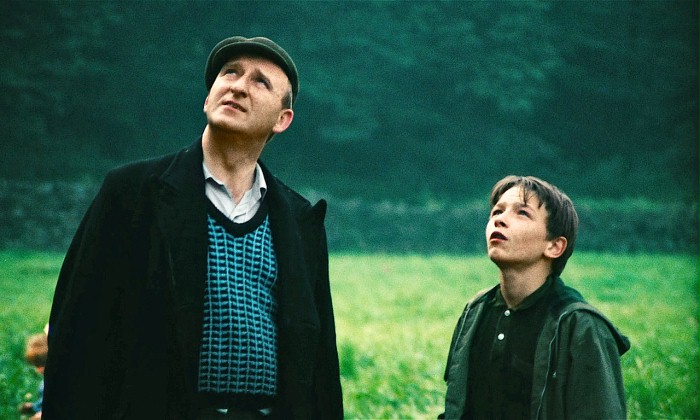
The film follows Billy as he tries to make his way through
the grim and at times quite aggressive world of his downtrodden, working-class
English town, seeking solace in his time with Kes, finding a refuge from the
hostilities of family strife, torment at school, and an otherwise stagnant
existence; shots of the bird soaring freely through the overcast skies stand as
sharp contrasts and perhaps as sources of envy for the boy who seems to find
abuse and confinement at every turn.


Contrasting the desolation and spiritual poverty of Billy's
oppressively confining environment against his liberating, almost meditative ritual of kestrel training in the open field, Loach creates a sublimely transitory, yet indelible image of natural communion, existential purpose, and transcendence.


KEN LOACH
Kenneth Loach (born June 17, 1936, Nuneaton, Warwickshire,
England) British film director whose works are considered landmarks of social
realism. Loach studied law at St. Peter’s College, Oxford, but while there he
became interested in acting. After graduating in 1957, he spent two years in
the Royal Air Force and then began a career in the dramatic arts.
Loach continued to address social issues on television and
later in theatrical releases as well. In the 1960s Loach directed several
docudramas for a television series called The Wednesday Play. One of the
productions, Cathy Come Home (1966), explored the disintegration of a
working-class family and examined the intertwined issues of unemployment and
homelessness. In doing so, it helped bring the discussion of homelessness into
the British mainstream. He has been honored with awards and praises for all over the world ever since.
One can but admire Loach for relentlessly sticking to his
task, repeatedly championing the underdog by revealing the hardships and
struggles of those at the bottom of the social hierarchy. Few directors have
been as consistent in their themes and their filmic style, or as principled in
their politics, as Loach has in a career spanning five decades. Without doubt
he is Britain's foremost political filmmaker.

May 18, 2016
22nd May 2016 ; Chaitanya Tamhane's 'COURT'

COURT
A film by Chaitanya Tamhane
2014 / Maharashtra/ Marathi / 116
minutes
3 Supplements (5 minutes
each) on ‘COURT’ will be screened
One in
the beginning and rest after the film

A study in
class, bureaucracy, and censorial stupidity, young film maker Chaitanya
Tamhane's debut feature, Court, plants viewers in the plastic chairs of an
Indian court of law as 69-year-old protest singer Narayan Kamble (Vira
Sathidar) is tried for a crime he didn't commit. 

A well- to-do
activist lawyer (Vivek Gomber, who has also produced the film) represents
Kamble in court while the public prosecutor (Geetanjali Kulkarni) fights tooth
and nail to ensure he stays in jail. At one point she even cites archaic laws
to claim that the elderly singer is a threat to the sovereignty of India. The
defense lawyer knows very well that these laws are antiquated and irrelevant,
but apart from being patient and carrying on the fight, there is precious
little he can do.

Beyond
criticism of India’s judiciary, the director implicitly implicates the
country’s education system, which creates professionals skilled in rote
learning yet completely lacking in independent thinking. Where the trial scenes
use the legal system’s ponderous rules to hang itself, sequences showing the
lawyers outside working hours reveal, via exceptionally nuanced observations,
the sorts of influences and lives led by the two sides.

“Court” ends
up being a great courtroom drama: it treats the audience as both witness and
jury and lays out a sprawling argument for them to ponder over. It’s hard to
shake this one off long after the credits have rolled.
(
Source:Internet)

Chaitanya
Tamhane
Born in
Mumbai in 1987, Chaitanya Tamhane is an English literature graduate from
Mithibai College of Arts. He has written and directed a feature-length
documentary titled FOUR STEP PLAN (2006), chronicling the trends of plagiarism
in Indian cinema. His first full-length play as a writer-director, Grey
Elephants in Denmark opened to critical acclaim in Mumbai and had several
successful shows at prestigious venues. SIX STRANDS (2010), his first fictional
short film was screened at various international film festivals including
Rotterdam International Film Festival, Clermont Ferrand International Film
Festival, Edinburgh International Film Festival, Slamdance, and many others.
Chaitanya’s
debut feature film, COURT (2014), premiered at the 71st Venice Film
Festival, where it won the Lion of the Future award for best debut and the
Orizzonti award for Best film. Since
then, the film has gone on to win 16 international awards at various
prestigious film festivals. He was recently featured in Forbes India‘s list of
30 young Indian achievers under the age of 30.
FILMOGRAPHY
COURT /
Feature / 2014
SIX STRANDS /
Short / 2010
FOUR STEP
PLAN / Documentary / 2006
Apr 19, 2016
24th April 2016 ; Wim Wender's WINGS OF DESIRE

WINGS OF DESIRE
A film by Wim Wenders
1987/ Germany/ 129
min
24.04.16 /5.45pm /
Perks mini Theater
http://konangalfilmsociety.blogspot.in/

Wim Wender's celestial tribute to life, love, Berlin,
filmmaking, angels and the poetry of Rainer Maria Rilke, among many things. .Seen
through the (black-and-white) lens of veteran French cinematographer Henri
Alekan and reflected in the gentle eyes of Wenders' star angel Bruno Ganz,
"Wings" is a soaring vision that appeals to the senses and the
spirit.

The angels in “Wings of Desire” are not merely guardian
angels, placed on Earth to look after human beings. They are witnesses, and
they have been watching for a long time--since the beginning. The film evokes a
mood of reverie, elegy and meditation. It doesn’t rush headlong into plot, but
has the patience of its angels. It suggests what it would be like to see
everything but not participate in it.

We follow two angels: Damiel (Bruno Ganz) and Cassiel (Otto
Sander). They listen to the thoughts of an old Holocaust victim, and of parents
worried about their son, and of the passengers on trams and the people in the
streets; it’s like turning the dial and hearing snatches of many radio
programs. the angel Damiel decides that he must become human.He falls in love
with the trapeze artist.

"Wings," like most Heaven-and-Earth movies, ties
up its resolution with romantic ribbons but, in Wenders' eyes, such a conclusion
is the crowning union of life's dual opposites, the sensual and the spiritual,
German's East and West -- as well as its Nazi past and occupied and uncertain
present . . . It's also one of the best endings you can hope for in a movie.
And "Wings" is one of the best movies you can see. (Source: Internet)


Wim Wenders
Born in Dusseldorf in Germany just after the end of World
War II, German film director Wim Wenders grew up with an insatiable appetite
for movies. After studying medicine and philosophy in his native country,
Wenders took up art study in and then returned to his homeland to attend
Munich's Academy of Film and Television. Wenders began his career writing film
criticism before directing a few short subjects of his own; in 1970 he and
several other young filmmakers formed a production-distribution firm,
Filmverlag Der Autoren. Summer in the City (1970) was Wenders' first feature
film, but it was his 1973 adaptation of Nathaniel Hawthorne's The Scarlet
Letter that first brought him attention outside Germany.
Wenders began his "road movie" cycle, inspired by
such American pictures as Easy Rider (1970) and Two Lane Blacktop (1971). Three
films in this genre followed in quick succession: Alice in the Cities (1974),
The Wrong Move (1975) and Kings of the Road (1976).
Wenders' American-financed
films Hammett (1980) and Paris, Texas (1983) were remarkable in their evocation
of time and place.Wenders' return to German filmmaking was rewarded in 1987
with the release of Wings of Desire.
Apr 7, 2016
10th April 2016; Gett: The Trial of Viviane Amsalem

Gett: The Trial of Viviane Amsalem
A film by Ronit and Shlomi Elkabetz
2014 / Israel/ 115 minutes
5.45 pm / 10th April / Perks Mini
Theater
http://konangalfilmsociety.blogspot.in/

“Gett, The Trial of
Viviane Amsalem” is the story of a woman wronged by men and God, if finally, in
a sense, redeemed by cinema. Gett is the Hebrew word for a legal divorce
document in Jewish law. This is the ordeal of a woman’s attempt to divorce her
husband under the strict religious laws of Israel. There’s no such thing as
civil divorce in Israel, where, even today, the termination of a marriage
cannot be granted — or even enforced, regardless of grounds — without the
husband’s consent.

Shot entirely in the
limited space of a courtroom and using uniquely subjective visual aesthetic,
“Gett, The Trial of Viviane Amsalem” is Ronit and Shlomi Elkabetz’s third
feature film as a directing team. Ronit Elkabetz also stars in the film as
Viviane, a character they developed based on their mother’s life.

Viviane — brought to
powerful life by Ronit Elkabetz with currents of humility and hauteur — is at
once a fleshed-out character, a political metaphor, a shout to heaven and
earth. Despite a part requiring long periods of silence, her character’s
emotions are as visible — and as changeable — as clouds passing in the sky.

The film depicts the
last two years of struggle during which the adamant three-rabbi court tries
every means to convince her to remake the couple. The action takes place almost
entirely in two rooms, a Jerusalem Bet Din (Rabbinical Court) and its waiting
room. Despite the seemingly uncinematic
nature of this inert, even claustrophobic scenario, the film mesmerizes,
utterly. It’s at once a feminist film, obviously, and a larger story about
diminishing the ultra-Orthodox (Haredi) authority and influence in Israeli
life.


Ronit Elkabetz & Shlomi Elkabetz
Israeli film makers sister-brother duo Ronit and Shlomi Elkabetz
have made three films together.
Ronit Elkabetz actress
/ film maker was the oldest of four children, with three younger siblings who
were all brothers. Her younger brother Shlomi, became a director whom she
worked with on their trilogy on the life of Viviane Amsalem.Her acting career
started in 1991. n May 2010, Ronit Elkabetz received the France Culture award
at the Cannes Film Festival, a prize awarded to filmmakers for quality work and
social involvement. The judges described her as a "woman teeming with
passion and erotica, who can even play the queen of Egypt
Shlomi Elkabetz was
born in 1972 in Be'er Sheva,Israel. After completing his military service, he
decided he wanted to work in film. He traveled in the Far East and went on to
New York, where he remained for seven years. He wrote prose and plays, and also
acted; at a certain stage he and Ronit began to write the screenplay for
"To Take a Wife," incorporating into it autobiographical elements. In
2000 he returned to Israel. The film, which came out five years later, won
various prizes, including the Audience Award at the Venice Film Festival.
Subscribe to:
Posts (Atom)