Aug 11, 2013

18th April 2013; TRIBUTE TO RITUPARNO GHOSH


Tribute To
RITUPARNO GHOSH
(1963 – 2013)

Screening of two films
UNISHE APRIL 
& 
ABOHOMAN
(Bengali with English subtitles)

18th August 2013, Sunday; 3.30pm to 8.30 pm
Convension Hall, PSG Institue of Management, Peelamedu
All are Welome; Admission Free
Presented by
Aruvi & Konangal Film Society

RITUPARNO GHOSH
August 31, 1963 - 30 May 2013

Ad and feature film maker, actor and director Rituparno Ghosh pushed the boundaries of Indian film-making, exploring personal relationships and issues of identity in a series of award winning films in Bengali, Hindi and English. From Unishe April in 1995 to the semi-biographical Chitrangada in 2013, he leaves behind a connoisseur’s collection.
A meticulous screenwriter-director whose films blended the classical literary traditions of his native Bengal with a new-age sensibility and craft that transcended the confines of region, Rituparno Ghosh was one of the most provocative voices of contemporary Indian cinema.
In a tragically brief but hugely eventful career, Ghosh made light of many divides through the means of his immaculately crafted films and on the strength of his own unique identity: art and commerce, regional and national, heterosexual and gay.
He was a rare Kolkata-based Bengali filmmaker who found ready acceptance among the biggest stars of mainstream Mumbai cinema.  More importantly, Ghosh was peerlessly gutsy in the manner in which he addressed issues of alternative sexuality in a series of three films made within a year of each other — Kaushik Ganguly’s Just Another Love Story (2011), Sanjoy Nag’s Memories in March (2011) and Chitrangada — The Crowning Wish (2012).
Rituparno was candid in openly challenging established social norms. Director Gautam Ghosh remarks," Rituparno stands out as one who stood for what he believed in. This is what I really appreciate in him … the confidence he had in his own point of view no matter what; a quiet but firmly independent spirit that found reflection in his various interactions, not to speak of his films.”
In less than two decades, Ghosh made nearly 20 films, the last being the incomplete Satyanweshi (Seeker of Truth), his take on an adventure of the fictional sleuth Byomkesh Bakshi that he finished shooting days before his death.
Born on August 31, 1963, Ghosh studied economics at Kolkata’s Jadavpur University. He learnt the ropes from his documentary filmmaker-father, Sunil Ghosh, before branching out on his own in the world of advertising.  Ghosh’s directorial debut was the nondescript children’s film Hirer Angti (The Diamond Ring), made in the early 1990s but released only in 1994. It was with the Bergmanesque Unishe April (April 19) that he burst on the scene.
Ghosh left a deep imprint with everything he did as a man and a filmmaker. There has never been, and is unlikely to be, anyone quite like him in Indian cinema. Within the short period of time he was among us, he has inspired us to think independently, express our views without fear and to hold an intense emotional-spiritual bond with everyone around us. May his soul rest in peace.
(Excerpts from  tribute article  by Arun Chatopadhyay)


UNISHE APRIL
(1994/Col/133 min)

Rituparna Ghosh truly arrived on the national scene with Unishe April.  it won Best Film and Best Actress (Debashree Roy) at the 1994 National Awards.
Sarojini, a dancer utterly devoted to her craft, keeps her daughter Aditi at arm’s length. Aditi, having lost her father to a heart attack and her mother to dance, is the bhadralok version of a rebellious teen: she is studying to be a doctor, and gets on her mother’s nerves by being excessively polite. Early on in Unishe April, Sarojini learns that she’s been selected for a prestigious award, resulting in her making immediate travel plans. This triggers off Aditi’s long-repressed feelings of abandonment, and when her mother unexpectedly returns that night, the resentment spills over.
Ghosh displays great assuredness for someone at the start of his filmmaking career. He patiently layers long, dialogue-heavy scenes one onto another, until the cumulative effect starts to show its power. At times one wishes that the visual flourishes – like the beautiful first shot where the camera pans away from the dancers, or the silhouette of Aditi lit by a single candle - were more frequent. The performances, however, keep one from straying. Roy gives Aditi a complexity often missing in such roles – her change in demeanour from the time she demands that her boyfriend call her long-distance to her break-down when he does, underlines the illusory nature of control. And Aparna Sen goes from affected to affecting as her character’s past is illuminated. Films made in this country often have teary endings, but few earn them the way this one does..   


ABOHOMAN
2009/Col/ 118 Min
ABOHOMAAN means “Like Weather” – something that’s Eternal and yet never Constant. Like weather that’s interspersed by streaks of sunlight and sudden bursts of rain, life is never a uniform journey of either happiness or grief. Ritu Da presented the same ephemeral quality of life through the non-linear reels of his film that traces the life of an ageing filmmaker and the repercussions of his ‘scandalous’ affair with a young actress, on his life and his family.
The point to be noted here is that though the word ‘scandal’ has been used many a time during the course of the film, there is nothing really blasphemous about the relation. In fact, what could have been another film about infidelity from Ritu Da’s armoury turns out to be a subtle tale of an artist and his muse – reflecting on the fact that our society is often myopic enough to misconstrue this relation to being an amorous one.
The story seamlessly links three layers of incidents: the aftermath of Aniket Mazumder’s death, his earlier days with his family and the straining relation between him and his wife Dipti & son Apratim, and his pioneering film “Noti Binodini” that starred debut actress Shikha, escalating her career to fame and nurturing rumours of Aniket’s affair with Shikha.
Abohomaan remains one of his more “original” works – where he could wield his creativity to the full extent and come out with flying colours. When you make films about relationships repeatedly, it gets very difficult to ensure that you don’t get repetitive. And here’s a man presenting an absolutely fresh perspective about inter-character duels – a view so fresh and so appealing that you wonder why people don’t think so much about relationships as he does!
(Review by Souvik Gupta )

Aug 1, 2013

3rd August 2013; LEENA MANIMEKALI 's Mathamma & Goddesses


Mathamma & Goddesses
Two documentary films by
TAMIL STUDIO’S 2013 LENIN AWARD WINNER
 LEENA MANIMEKALI
3rd August; 6 pm.  Perks Mini Theater

 
Mathamma (2003)
16  minute documentary capturing a peculiar practice of devoting the girl children to the deity of the folks of Arundhatiyar community in Mangattucheri village near Arokonam, Chennai. Mathamma triggered a successful video participatory movement, which demanded the immediate government intervention, securing protection to women who were exploited in the name of "culture". Film braved against the defamation cases filed by few political outfits alleging it as a disgrace to the community's pride and traditions and facilitated as a tool for advocacy by gender and women rights movements.
Women in Director's Chair Film Festival, Chicago, 2004, World Socialist Youth Forum, Venezuala, 2005, CDIT National Video Film Festival, Trivandrum, 2003, Kolkata International Film festival, 2004
Goddesses (2008)
Notes from the lives of three extra ordinary women – a funeral singer; a fisherwoman; a graveyard workerHere is the story of three ordinary women who live extra ordinary lives surviving darkest of times and gone against society's norms to live and work according to the rules they have set for themselves.
Lakshmi, a professional 'funeral singer': She visits death houses with a troop of drummers and for a measly pay, she wails and laments and shares the grief of the other mourners. The throb of the drums and her ankle bells resonate in the house long after she has left.

Krishnaveni, the ‘grave-digger’: Dead unknown earn her the daily meal. Veni accepts unclaimed bodies from the local Police and gives them a decent burial or cremation, digging and maintaining the graves herself.
Sethuraku, the ‘fisherwoman’: What is normally considered as taboo for women is confidently done by this lady. She goes out to sea, every morning with a few fellow fisherwomen to collect fish and prawns, singing to welcome the day.

Nominated for Horizon Award, Munich International Film festival, 2008,
Mention,
 IAWRT International Documentary Film Competition, Women Building Peace, Nairobi, Kenya 2007,
Jury Award,
 John Abraham National Awards for Cinema Of Resistance, SIGNS 2007, Trivandrum, Kerala.
Best Documentary, National Competition,
 One Billion Eyes Documentary Film Festival 2008
Official Selection, International Competition,
 Tri Continental Film Festival, South Africa 2008
Official Selection, International Factual Competition,
 Roma Fiction Film Festival, Rome, 2008
Official Selection, National Competition,
 International Video Film Festival of Kerala, 2008
Nomination,
 Asia Pacific Awards, Brisbane, Australia, 2008
Official Selection,
 Birds Eye View Film Festival, London, March 2009
Official Selection,
 Belgrade Documentary Film Festival, May 2009


Leena Manimekalai

Leena Manimekalai is an independant Filmmaker,Poet and actor based in Chennai, Tamil Nadu. She has nine documentary films and a feature film to her credits. She has acted in several of her movies and has published three anthologies of poems. She is also a much acclaimed street theatre artist. Kanavupattarai is her publication house through which she has published 25 titles on world cinema and literature.
Leena was born in Maharajapuram, Virudhunagar, Tamil Nadu, India. She lost her father Prof.Dr. R. Raghupathy at a very early age and was brought up by her mother Rama. She attended Kamaraj University, where she obtained a graduate degree in engineering.
In her quest to contribute and raring to go, she has penetrated her land, state and nationwide, screening her films in more than thousand and odd forums and spaces.Women Movements, Mass Movements, Dalit Movements, Grassroot NGO's, Civil Rights Societies, Educational Institutions, Film Societies, Film Festivals etc. across the states have showed her films initiating a participatory dialogue and interventions.And she is able to relate across the line and cadre with humility and modesty having had the privilege of invitation screenings in international platforms and conferences across United States, UK, France, Germany, Switzerland, Norway, South Africa, Kenya, Finland, Venezuela, Japan, Singapore, Malaysia, Sri Lanka, Belgrade etc..
 After a brief period as an apprentice Director with mainstream filmmakers and an extensive experience as a Television Producer and Anchor, she debuted in 2001 with the short documentary film Mathamma.  Her other films too deal with the issues of the marginalized. Parai is a film on violence against Dalit women. She is road with her films across thousands of villages serving her videos a tool for participatory dialogue with the masses on compelling issues.Break the Shackles is about the effects of globalisation on rural Tamil villages. Love Lost is about changing relationships in urban space.  Leena was inspired to do this project while she was serving as a volunteer in tsunami-hit regions of Tamil Nadu doing art therapy workshops for children. Altar is a documentary intervention on child marriage customs prevailing in the Kambalathu Naicker community in the central parts of Tamil Nadu. Goddesses follows the lives of three extraordinary women who go against norms to succeed in usually male-oriented careers: a fisherwoman, a gravedigger and a funeral singer. A Hole In The Bucket takes a look at the dynamics of water crisis in the city of Chennai in the context of families with different income levels. A Hole in the Bucket was showcased at International Water Symposium, Stockholm, 2007.
Her first feature film Sengadal completed production in 2011. The film shows how the ethnic war in Sri Lanka had affected the lives of fishermen in Dhanushkodi. The censor board has initially refused clearance certificate to the film, stating that it made denigrating political remarks about the governments of Sri Lanka and India, and uses unparliamentary words.She had appealed to the Appellate Tribunal authorities and contested the case legally for several months and finally got it cleared by July 2011 without any cuts.
(Wikipedia)

Jul 29, 2013

30th June ; Art Documentary: Caravaggio & Picasso

Contemplate and Konangal
Art documentary films of two great masters
Caravaggio & Picasso
30th July  , Tuesday,; 1 pm to 3 pm
PSG Arts and Sciene College, Peelamedu

 
Caravaggio

The importance of Caravaggio in 17th century painting is undeniable. He has been described as the greatest Italian painter of his time. His innovative  departure from the idealised style of the 16th century, when painting religious themes, brought much criticism, but was influential in the development of   many artists to come.
Cravaggio, birth name Michelangelo Merisi, left his birth town of Caravaggio in the north of Italy to study as an apprentice in nearby Milan. In 1593 he moved to Rome, impatient to use his talents on the biggest stage possible.

Caravaggio's approach to painting was unconventional. He avoided the standard method of making copies of old sculptures and instead took the more direct  approach of painting directly onto canvas without drawing first. He also used people from the street as his models. His dramatic painting was enhanced with  intense and theatrical lighting.
Caravaggio's fate was sealed when in 1606 he killed a man in a duel. He fled to Naples where he attempted to paint his way out of trouble, he became a  Knight, but was then imprisoned in Malta and then finally he moved to Sicily. He was pardoned for murder in 1610, but he died of a fever attempting to  return to Rome. This documentary is presented by renowned art historian Simon Schama.


Picasso

Picasso,  one of the greatest  icons  of modern art who co-created such styles as Cubism and Surrealism, was also among most innovative, influential, and  prolific artists of all time. He was born on October 6, 1881, in Malaga, Spain. Constantly updating his style from the Blue Period, to the Rose Period, to the African-influenced Period, to Cubism, to Realism and Surrealism he was a  pioneer with a hand in every art movement of the 20th century.


The life of Pablo Picasso is an exciting story of rebellion, riches, women and great art. In this episode of a four-part series dedicated to Modern Art,  journalist Alastair Sooke travels through France, Spain and the US to see some of the artist's great works and recount tales from his life story.   

Talking to architects, fashion experts and artists, he investigates how Picasso's influence, particularly that of his Cubist work, continues to pervade  modern life today, in the shape of buildings, interior design, clothes and of course contemporary art.

Jul 10, 2013

14th July 2013 ; Rafi Pitts' THE HUNTER

The Hunter
A Film by Rafi Pitts
2010/ Iran/ Col/ 90 minutes
14 th July 2013; 5.45pm
Perks Mini Theater

Directed by, written by and starring Iranian born filmmaker Rafi Pitts 2010's The Hunter follows the exploits of a man named Ali Alavi (Pitts) who makes a living as a night watchman at an automobile manufacturing plant. His job is not particularly exciting but he has a bit of a past (we learn that he did a stint in prison) and he is at least content with it. He gets his only real happiness from his home life where he shares his spare time with his loving wife and young daughter. 
The Hunter's first hour is a remarkable and nearly pilotless visual essay. The film grows more obvious, when Ali finds himself pursued by the police. Imagine then his terror when Ali comes home from work one day and finds that his wife and daughter have gone missing. What follows are the actions of frustrated Ali which leads to his capture by the police and the drama between the two cops who capture him. 
Pitts plays his lead character with very little dialogue, instead using body language and facial expressions to convey emotion, particularly sadness and at times even some very raw desperation. This style of acting suits him, his face seems at times to be made of stone, more a sculpture made of granite than anything made of flesh and blood. He does a great job of playing a man hardened not only by the loss of the only two people who mattered in his life but also of a man hardened and quite fed up with the political system that surrounds him and which has proven ineffectual. 


Dark not only thematically but visually as well, The Hunter is a very nicely shot film. Potts knows what he's doing both in front of and behind the camera, as the film moves at a good pace and is well structured and edited quite efficiently. The film is challenging, intelligent and technically accomplished and it builds nicely to a conclusion that is not only surprising but also entirely appropriate. 


Rafi Pitts
Rafi Pitts was born in Mashad, Iran. Rafi spent his childhood in Tehran, where he lived in a basement flat underneath a post-production studio. He describes himself as having been a 'very bad' child actor, starting in films at the age of eight. He came to England (his father is English) in 1981 during the Iran Iraq war. He graduated in 1991 from the Polytechnic of Central London with a BA (Hons) degree in Film and Photography.His first short film, In Exile (1991) was presented the same year at the London International Film Festival. In the 90's Pitts moved to Paris and worked on films by Leos Carax, Jacques Doillon and Jean-Luc Godard.
Educated in France and England, Rafi Pitts belongs to the new wave of Iranian cinema, which received numerous prestigious prizes in the international festival circuit. In 1996 he had the opportunity to film in Iran and describes himself as having been the first film director (in exile) to do so since the Revolution in 1979. His first feature Season Five (1997) was the first Franco-Iranian coproduction since the Revolution.
In 2006, he was nominated for Golden Bear award of Berlin Film Festival for his movie, It's Winter. His 2010 film The Hunter was nominated for the Golden Bear at the 60th Berlin International Film Festival.

Jun 19, 2013

23rd June 2013; Jean renoir's THE RULES OF THE GAME

The Rules of the Game
A film Jean Renoir
France/1939/ 110 min
23rd June ; 5.45pm 
Perks Mini Threater


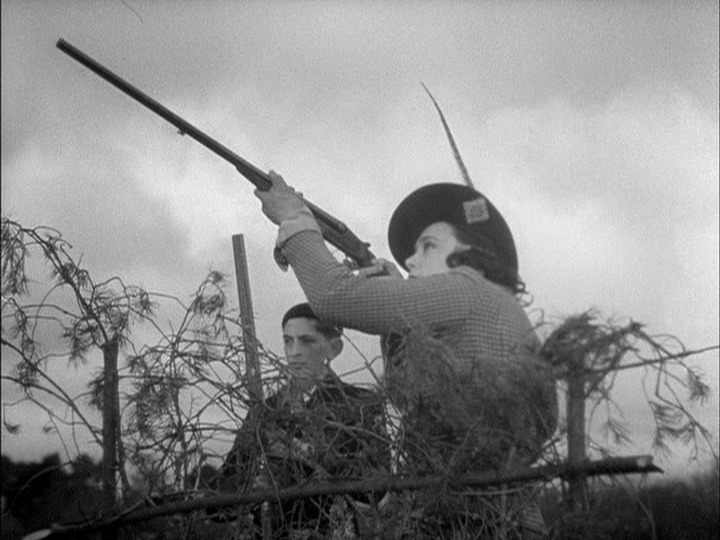
There are about a dozen genuine miracles in the history of cinema, and one of them is Jean Renoir's supreme 1939 tragi-comedy The Rules of the Game.  The Rules of the Game follows the amorous exploits of a group of aristocrats invited to a hunting party at a French château. Their hectic intrigues find an uncanny echo in the affairs of their servants, upstairs and downstairs comically crossing paths on the way to a tragic conclusion.
The movie takes the superficial form of a country house farce, at which wives and husbands, lovers and adulterers, masters and servants, sneak down hallways, pop up in each other's bedrooms and pretend that they are all proper representatives of a well-ordered society.
The film's dazzlingly labyrinthine script never mentions the coming war, yet its menace permeates a milieu that seems to have lost all moral compass, and where the ideal of happiness had been sacrificed to one of mere amusement. And amuse themselves these people do—along with us.
Their spineless yet sympathetic host, the wealthy, Jewish Marquis de la Chesnaye (brilliantly played by Marcel Dalio), when he's not attempting to rid himself of a cumbersome mistress, entertains himself with mechanical toys—player pianos, artificial warbling birds—that mirror his own vacuity. Meanwhile his beautiful, foreign-born wife must contend with the adoration of a dashing aviator (Roland Toutain)—a romantic hero thrust into a society devoid of illusions.

Shades of an 18th-century French farce—yet who can forget, in the thrilling scene of the hunt when white-robed servants beat the trees to flush out the game, that within a few years similar forests would be hunted for partisans and Jews? Renoir's artistic sensitivity seems to have endowed him with a kind of second sight.

The Rules of the Game provoked something like a riot at its Parisian premiere. The film was cut twice, and its original negative was destroyed by Allied bombing. Now it has been  completely  restored  from a master print.
(Source: Internet)


Jean Renoir
1894-1979

Son of the famous Impressionist painter Pierre Auguste, Jean Renoir had a happy childhood. Pierre Renoir was his brother, and Claude Renoir was his nephew. After the end of World War I, where he won the Croix de Guerre, he moved from scriptwriting to filmmaking. He married Catherine Hessling, for whom he began to make movies; he wanted to make a star of her. His next partner was Marguerite Renoir, whom he never married, although she took his name. He left France in 1941 during the German invasion of France during World War II and became a naturalized US citizen.
As a director and actor, he made more than forty films from the silent era to the end of the 1960s. As an author, he wrote the definitive biography of his father, Renoir, My Father (1962). Renoir exerted immense influence on subsequent auteur directors, including among others Orson Welles, Satyajit Ray, and François Truffaut. Best remembered for such cinematic landmarks as Grand Illusion (1937) and The Rules of the Game (1939), Renoir is considered one of the major figures of French and international film history.
Renoir's films were underestimated when they first came out. They were unconventional, complex, and so energetic and technically daring that few noticed their intricate structure. They were often dismissed as rough, not fully achieved artistically. The generation that came to the cinema in the '60s and '70s (perhaps the richest and most diverse era in European cinema) recognised Renoir as an ancestor who had already made the kind of films they admired or were setting out to make themselves, and justly hailed them as masterpieces.

Jun 5, 2013

9th June 2013; Hou Hsiao-hsien's A Summer at Grandpa's

[Enter Post Title Here


A Summer at Grandpa's
A film by Hou Hsiao-hsien
1984 / Taiwan/ Col/ 102 mins
9th June 2013; 5.45 pm
Perks Mini Theater

A Summer at Grandpa's (1984), follows events in the lives of the story's adult characters from a child's limited point of view, demanding that the spectator alone make sense of what's onscreen, just as the young protagonist does. The child's slow education becomes an allegory for the process of gradual understanding in which the viewer engages.
Shot in a summer palette of greens and blues, and everywhere evoking the gentleness of nostalgic pastoralism, Hou's film subtly demonstrates how the violence, desire, and strife of living, thinly veiled by the conventions of adult society, are nonetheless impressed on the protagonists.
In A Summer at Grandpa's, director Hou Hsiao-hsien uses the techniques he developed in his earlier work with young actors to create an entire narrative following two child protagonists as they learn about the complexities and problems of adulthood. Based on the childhood experience of Hou's frequent collaborator, Chu T'ien-wen, the film follows Tung-tung and his sister, Ting-ting, as they are sent to the country home of their mother’s father while their mother lies ill in hospital.

Tung-tung is beginning to learn to communicate his feelings and interpretations in the letters he writes to his parents, even if they sometimes overwhelm him. “So many things happen each day that I can't keep track,” he tells them. “I'll tell you later if they come back to my mind.” As spectators, we are often similarly overwhelmed, but Hou's film places demands on our powers of observation, insisting that we, like Tung-tung, attend to the minutiae, ironies, and deeper meanings it offers us. (Source:Internet)


Hou Hsiao-hsien

Hou Hsiao Hsien , born April 8, 1947) is a Taiwanese actor, singer, producer and director. He is a leading figure of Taiwan's New Wave cinema movement. Director Hou Hsiao Hsien, in a 1988 New York Film Festival World Critics Poll, was voted one of three directors who would most likely shape cinema in the coming decades. He has since become one of the most respected, influential directors working in cinema today. In spite of his international renown, his films have focused exclusively on his native Taiwan, offering finely textured human dramas that deal with the subtleties of family relationships against the backdrop of the island's turbulent, often bloody history.
 All of his movies deal in some manner with questions of personal and national identity, particularly, "What does it mean to be Taiwanese?" In a country that has been colonized first by the Japanese and then by Chiang Kai-Shek's repressive Nationalist Government, this question is pregnant with political connotations.