Aug 1, 2013

3rd August 2013; LEENA MANIMEKALI 's Mathamma & Goddesses


Mathamma & Goddesses
Two documentary films by
TAMIL STUDIO’S 2013 LENIN AWARD WINNER
 LEENA MANIMEKALI
3rd August; 6 pm.  Perks Mini Theater

 
Mathamma (2003)
16  minute documentary capturing a peculiar practice of devoting the girl children to the deity of the folks of Arundhatiyar community in Mangattucheri village near Arokonam, Chennai. Mathamma triggered a successful video participatory movement, which demanded the immediate government intervention, securing protection to women who were exploited in the name of "culture". Film braved against the defamation cases filed by few political outfits alleging it as a disgrace to the community's pride and traditions and facilitated as a tool for advocacy by gender and women rights movements.
Women in Director's Chair Film Festival, Chicago, 2004, World Socialist Youth Forum, Venezuala, 2005, CDIT National Video Film Festival, Trivandrum, 2003, Kolkata International Film festival, 2004
Goddesses (2008)
Notes from the lives of three extra ordinary women – a funeral singer; a fisherwoman; a graveyard workerHere is the story of three ordinary women who live extra ordinary lives surviving darkest of times and gone against society's norms to live and work according to the rules they have set for themselves.
Lakshmi, a professional 'funeral singer': She visits death houses with a troop of drummers and for a measly pay, she wails and laments and shares the grief of the other mourners. The throb of the drums and her ankle bells resonate in the house long after she has left.

Krishnaveni, the ‘grave-digger’: Dead unknown earn her the daily meal. Veni accepts unclaimed bodies from the local Police and gives them a decent burial or cremation, digging and maintaining the graves herself.
Sethuraku, the ‘fisherwoman’: What is normally considered as taboo for women is confidently done by this lady. She goes out to sea, every morning with a few fellow fisherwomen to collect fish and prawns, singing to welcome the day.

Nominated for Horizon Award, Munich International Film festival, 2008,
Mention,
 IAWRT International Documentary Film Competition, Women Building Peace, Nairobi, Kenya 2007,
Jury Award,
 John Abraham National Awards for Cinema Of Resistance, SIGNS 2007, Trivandrum, Kerala.
Best Documentary, National Competition,
 One Billion Eyes Documentary Film Festival 2008
Official Selection, International Competition,
 Tri Continental Film Festival, South Africa 2008
Official Selection, International Factual Competition,
 Roma Fiction Film Festival, Rome, 2008
Official Selection, National Competition,
 International Video Film Festival of Kerala, 2008
Nomination,
 Asia Pacific Awards, Brisbane, Australia, 2008
Official Selection,
 Birds Eye View Film Festival, London, March 2009
Official Selection,
 Belgrade Documentary Film Festival, May 2009


Leena Manimekalai

Leena Manimekalai is an independant Filmmaker,Poet and actor based in Chennai, Tamil Nadu. She has nine documentary films and a feature film to her credits. She has acted in several of her movies and has published three anthologies of poems. She is also a much acclaimed street theatre artist. Kanavupattarai is her publication house through which she has published 25 titles on world cinema and literature.
Leena was born in Maharajapuram, Virudhunagar, Tamil Nadu, India. She lost her father Prof.Dr. R. Raghupathy at a very early age and was brought up by her mother Rama. She attended Kamaraj University, where she obtained a graduate degree in engineering.
In her quest to contribute and raring to go, she has penetrated her land, state and nationwide, screening her films in more than thousand and odd forums and spaces.Women Movements, Mass Movements, Dalit Movements, Grassroot NGO's, Civil Rights Societies, Educational Institutions, Film Societies, Film Festivals etc. across the states have showed her films initiating a participatory dialogue and interventions.And she is able to relate across the line and cadre with humility and modesty having had the privilege of invitation screenings in international platforms and conferences across United States, UK, France, Germany, Switzerland, Norway, South Africa, Kenya, Finland, Venezuela, Japan, Singapore, Malaysia, Sri Lanka, Belgrade etc..
 After a brief period as an apprentice Director with mainstream filmmakers and an extensive experience as a Television Producer and Anchor, she debuted in 2001 with the short documentary film Mathamma.  Her other films too deal with the issues of the marginalized. Parai is a film on violence against Dalit women. She is road with her films across thousands of villages serving her videos a tool for participatory dialogue with the masses on compelling issues.Break the Shackles is about the effects of globalisation on rural Tamil villages. Love Lost is about changing relationships in urban space.  Leena was inspired to do this project while she was serving as a volunteer in tsunami-hit regions of Tamil Nadu doing art therapy workshops for children. Altar is a documentary intervention on child marriage customs prevailing in the Kambalathu Naicker community in the central parts of Tamil Nadu. Goddesses follows the lives of three extraordinary women who go against norms to succeed in usually male-oriented careers: a fisherwoman, a gravedigger and a funeral singer. A Hole In The Bucket takes a look at the dynamics of water crisis in the city of Chennai in the context of families with different income levels. A Hole in the Bucket was showcased at International Water Symposium, Stockholm, 2007.
Her first feature film Sengadal completed production in 2011. The film shows how the ethnic war in Sri Lanka had affected the lives of fishermen in Dhanushkodi. The censor board has initially refused clearance certificate to the film, stating that it made denigrating political remarks about the governments of Sri Lanka and India, and uses unparliamentary words.She had appealed to the Appellate Tribunal authorities and contested the case legally for several months and finally got it cleared by July 2011 without any cuts.
(Wikipedia)

Jul 29, 2013

30th June ; Art Documentary: Caravaggio & Picasso

Contemplate and Konangal
Art documentary films of two great masters
Caravaggio & Picasso
30th July  , Tuesday,; 1 pm to 3 pm
PSG Arts and Sciene College, Peelamedu

 
Caravaggio

The importance of Caravaggio in 17th century painting is undeniable. He has been described as the greatest Italian painter of his time. His innovative  departure from the idealised style of the 16th century, when painting religious themes, brought much criticism, but was influential in the development of   many artists to come.
Cravaggio, birth name Michelangelo Merisi, left his birth town of Caravaggio in the north of Italy to study as an apprentice in nearby Milan. In 1593 he moved to Rome, impatient to use his talents on the biggest stage possible.

Caravaggio's approach to painting was unconventional. He avoided the standard method of making copies of old sculptures and instead took the more direct  approach of painting directly onto canvas without drawing first. He also used people from the street as his models. His dramatic painting was enhanced with  intense and theatrical lighting.
Caravaggio's fate was sealed when in 1606 he killed a man in a duel. He fled to Naples where he attempted to paint his way out of trouble, he became a  Knight, but was then imprisoned in Malta and then finally he moved to Sicily. He was pardoned for murder in 1610, but he died of a fever attempting to  return to Rome. This documentary is presented by renowned art historian Simon Schama.


Picasso

Picasso,  one of the greatest  icons  of modern art who co-created such styles as Cubism and Surrealism, was also among most innovative, influential, and  prolific artists of all time. He was born on October 6, 1881, in Malaga, Spain. Constantly updating his style from the Blue Period, to the Rose Period, to the African-influenced Period, to Cubism, to Realism and Surrealism he was a  pioneer with a hand in every art movement of the 20th century.


The life of Pablo Picasso is an exciting story of rebellion, riches, women and great art. In this episode of a four-part series dedicated to Modern Art,  journalist Alastair Sooke travels through France, Spain and the US to see some of the artist's great works and recount tales from his life story.   

Talking to architects, fashion experts and artists, he investigates how Picasso's influence, particularly that of his Cubist work, continues to pervade  modern life today, in the shape of buildings, interior design, clothes and of course contemporary art.

Jul 10, 2013

14th July 2013 ; Rafi Pitts' THE HUNTER

The Hunter
A Film by Rafi Pitts
2010/ Iran/ Col/ 90 minutes
14 th July 2013; 5.45pm
Perks Mini Theater

Directed by, written by and starring Iranian born filmmaker Rafi Pitts 2010's The Hunter follows the exploits of a man named Ali Alavi (Pitts) who makes a living as a night watchman at an automobile manufacturing plant. His job is not particularly exciting but he has a bit of a past (we learn that he did a stint in prison) and he is at least content with it. He gets his only real happiness from his home life where he shares his spare time with his loving wife and young daughter. 
The Hunter's first hour is a remarkable and nearly pilotless visual essay. The film grows more obvious, when Ali finds himself pursued by the police. Imagine then his terror when Ali comes home from work one day and finds that his wife and daughter have gone missing. What follows are the actions of frustrated Ali which leads to his capture by the police and the drama between the two cops who capture him. 
Pitts plays his lead character with very little dialogue, instead using body language and facial expressions to convey emotion, particularly sadness and at times even some very raw desperation. This style of acting suits him, his face seems at times to be made of stone, more a sculpture made of granite than anything made of flesh and blood. He does a great job of playing a man hardened not only by the loss of the only two people who mattered in his life but also of a man hardened and quite fed up with the political system that surrounds him and which has proven ineffectual. 


Dark not only thematically but visually as well, The Hunter is a very nicely shot film. Potts knows what he's doing both in front of and behind the camera, as the film moves at a good pace and is well structured and edited quite efficiently. The film is challenging, intelligent and technically accomplished and it builds nicely to a conclusion that is not only surprising but also entirely appropriate. 


Rafi Pitts
Rafi Pitts was born in Mashad, Iran. Rafi spent his childhood in Tehran, where he lived in a basement flat underneath a post-production studio. He describes himself as having been a 'very bad' child actor, starting in films at the age of eight. He came to England (his father is English) in 1981 during the Iran Iraq war. He graduated in 1991 from the Polytechnic of Central London with a BA (Hons) degree in Film and Photography.His first short film, In Exile (1991) was presented the same year at the London International Film Festival. In the 90's Pitts moved to Paris and worked on films by Leos Carax, Jacques Doillon and Jean-Luc Godard.
Educated in France and England, Rafi Pitts belongs to the new wave of Iranian cinema, which received numerous prestigious prizes in the international festival circuit. In 1996 he had the opportunity to film in Iran and describes himself as having been the first film director (in exile) to do so since the Revolution in 1979. His first feature Season Five (1997) was the first Franco-Iranian coproduction since the Revolution.
In 2006, he was nominated for Golden Bear award of Berlin Film Festival for his movie, It's Winter. His 2010 film The Hunter was nominated for the Golden Bear at the 60th Berlin International Film Festival.

Jun 19, 2013

23rd June 2013; Jean renoir's THE RULES OF THE GAME

The Rules of the Game
A film Jean Renoir
France/1939/ 110 min
23rd June ; 5.45pm 
Perks Mini Threater


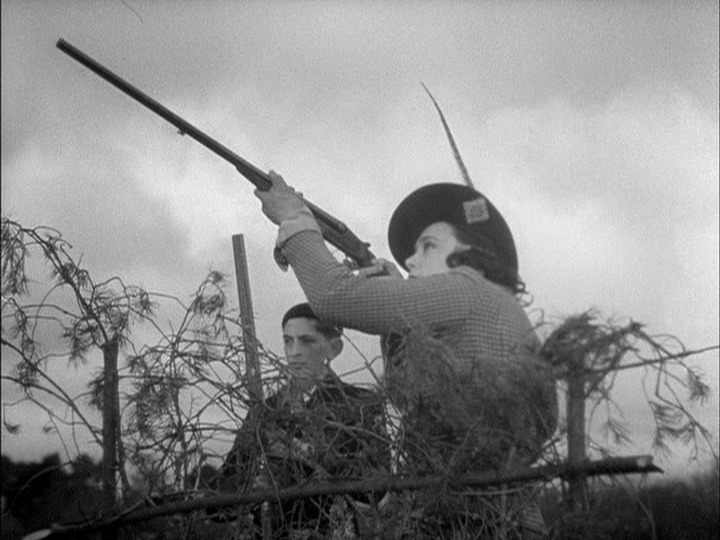
There are about a dozen genuine miracles in the history of cinema, and one of them is Jean Renoir's supreme 1939 tragi-comedy The Rules of the Game.  The Rules of the Game follows the amorous exploits of a group of aristocrats invited to a hunting party at a French château. Their hectic intrigues find an uncanny echo in the affairs of their servants, upstairs and downstairs comically crossing paths on the way to a tragic conclusion.
The movie takes the superficial form of a country house farce, at which wives and husbands, lovers and adulterers, masters and servants, sneak down hallways, pop up in each other's bedrooms and pretend that they are all proper representatives of a well-ordered society.
The film's dazzlingly labyrinthine script never mentions the coming war, yet its menace permeates a milieu that seems to have lost all moral compass, and where the ideal of happiness had been sacrificed to one of mere amusement. And amuse themselves these people do—along with us.
Their spineless yet sympathetic host, the wealthy, Jewish Marquis de la Chesnaye (brilliantly played by Marcel Dalio), when he's not attempting to rid himself of a cumbersome mistress, entertains himself with mechanical toys—player pianos, artificial warbling birds—that mirror his own vacuity. Meanwhile his beautiful, foreign-born wife must contend with the adoration of a dashing aviator (Roland Toutain)—a romantic hero thrust into a society devoid of illusions.

Shades of an 18th-century French farce—yet who can forget, in the thrilling scene of the hunt when white-robed servants beat the trees to flush out the game, that within a few years similar forests would be hunted for partisans and Jews? Renoir's artistic sensitivity seems to have endowed him with a kind of second sight.

The Rules of the Game provoked something like a riot at its Parisian premiere. The film was cut twice, and its original negative was destroyed by Allied bombing. Now it has been  completely  restored  from a master print.
(Source: Internet)


Jean Renoir
1894-1979

Son of the famous Impressionist painter Pierre Auguste, Jean Renoir had a happy childhood. Pierre Renoir was his brother, and Claude Renoir was his nephew. After the end of World War I, where he won the Croix de Guerre, he moved from scriptwriting to filmmaking. He married Catherine Hessling, for whom he began to make movies; he wanted to make a star of her. His next partner was Marguerite Renoir, whom he never married, although she took his name. He left France in 1941 during the German invasion of France during World War II and became a naturalized US citizen.
As a director and actor, he made more than forty films from the silent era to the end of the 1960s. As an author, he wrote the definitive biography of his father, Renoir, My Father (1962). Renoir exerted immense influence on subsequent auteur directors, including among others Orson Welles, Satyajit Ray, and François Truffaut. Best remembered for such cinematic landmarks as Grand Illusion (1937) and The Rules of the Game (1939), Renoir is considered one of the major figures of French and international film history.
Renoir's films were underestimated when they first came out. They were unconventional, complex, and so energetic and technically daring that few noticed their intricate structure. They were often dismissed as rough, not fully achieved artistically. The generation that came to the cinema in the '60s and '70s (perhaps the richest and most diverse era in European cinema) recognised Renoir as an ancestor who had already made the kind of films they admired or were setting out to make themselves, and justly hailed them as masterpieces.

Jun 5, 2013

9th June 2013; Hou Hsiao-hsien's A Summer at Grandpa's

[Enter Post Title Here


A Summer at Grandpa's
A film by Hou Hsiao-hsien
1984 / Taiwan/ Col/ 102 mins
9th June 2013; 5.45 pm
Perks Mini Theater

A Summer at Grandpa's (1984), follows events in the lives of the story's adult characters from a child's limited point of view, demanding that the spectator alone make sense of what's onscreen, just as the young protagonist does. The child's slow education becomes an allegory for the process of gradual understanding in which the viewer engages.
Shot in a summer palette of greens and blues, and everywhere evoking the gentleness of nostalgic pastoralism, Hou's film subtly demonstrates how the violence, desire, and strife of living, thinly veiled by the conventions of adult society, are nonetheless impressed on the protagonists.
In A Summer at Grandpa's, director Hou Hsiao-hsien uses the techniques he developed in his earlier work with young actors to create an entire narrative following two child protagonists as they learn about the complexities and problems of adulthood. Based on the childhood experience of Hou's frequent collaborator, Chu T'ien-wen, the film follows Tung-tung and his sister, Ting-ting, as they are sent to the country home of their mother’s father while their mother lies ill in hospital.

Tung-tung is beginning to learn to communicate his feelings and interpretations in the letters he writes to his parents, even if they sometimes overwhelm him. “So many things happen each day that I can't keep track,” he tells them. “I'll tell you later if they come back to my mind.” As spectators, we are often similarly overwhelmed, but Hou's film places demands on our powers of observation, insisting that we, like Tung-tung, attend to the minutiae, ironies, and deeper meanings it offers us. (Source:Internet)


Hou Hsiao-hsien

Hou Hsiao Hsien , born April 8, 1947) is a Taiwanese actor, singer, producer and director. He is a leading figure of Taiwan's New Wave cinema movement. Director Hou Hsiao Hsien, in a 1988 New York Film Festival World Critics Poll, was voted one of three directors who would most likely shape cinema in the coming decades. He has since become one of the most respected, influential directors working in cinema today. In spite of his international renown, his films have focused exclusively on his native Taiwan, offering finely textured human dramas that deal with the subtleties of family relationships against the backdrop of the island's turbulent, often bloody history.
 All of his movies deal in some manner with questions of personal and national identity, particularly, "What does it mean to be Taiwanese?" In a country that has been colonized first by the Japanese and then by Chiang Kai-Shek's repressive Nationalist Government, this question is pregnant with political connotations.


May 14, 2013

19th May 2013; Henri-Georges Clouzot's WAGES OF FEAR


The Wages of Fear
A film by Henri-Georges Clouzot
Year 1956; Runtime: 141 mins
19th May 2013; 5.45pm
Perks Mini Theater


One of cinema’s most revered thrillers,  The Wages of Fear is the acknowledged masterpiece of the brilliant French director Henri-Georges Clouzot (1907-77). Clouzot’s sixth film and the predecessor to his terror classic Diabolique, it was voted the Grand Prize at Cannes in 1953 and Best Film of 1954 by the British Film Academy.
The film's extended suspense sequences deserve a place among the great stretches of cinema. Desperate men, broke and stranded in a backwater of Latin America, sign up on a suicidal mission to drive two truckloads of nitroglycerin 300 miles down a hazardous road. They could be blown to pieces at any instant, and in the film's most famous scene Clouzot requires them to turn their trucks around on a rickety, half-finished timber platform high above a mountain gorge.
Their journey also requires them to use some of the nitroglycerin to blow up a massive boulder in the road, and at the end, after a pipeline ruptures, a truck has to pass through a pool of oil that seems to tar them with the ignominy of their task.
The movie is heart-stopping once the two trucks begin their torturous 300-mile journey to a blazing oil well. The cinematographer, Armand Thirard, pins each team of men into its claustrophobic truck cab, where every jolt and bump in the road causes them to wince, waiting for a death that, if it comes, will happen so suddenly they will never know it.

The journey, which comprises the second half of the film, is heartstopping. Georges Auric’s score and Armand Thirard’s cinematography, which dramatically opposes light and shadow, add to the tension. And Clouzot’s editing style “based on constant shocks,” punctuates the narrative perfectly. Consequently, as the New York Times critic Bosley Crowther wrote, “You sit there waiting for the theater to explode.”


Henri-Georges Clouzot

Like so many others, Clouzot found his chance to move from scriptwriting to directing during the Occupation, a time when there was a paucity of directors in France. His first effort, L'Assassin habite au 21, was a safe film. Its script followed two similar films he had written which had been well-received by audiences. These witty police dramas were exercises in style and cleverness, befitting the epoch. Le Corbeau, made the next year, was in contrast a shattering film, unquestionably hitting hard at the society of the war years.

In the mid-1950s when The Wages of Fear and Diabolique gave him a reputation as a French Hitchcock, interested in the mechanics of suspense. In France, however, these films, especially Diabolique, were seen as only well-made studio products. His 1960 La vérité, starring Brigitte Bardot, was designed to win him favor in the youth culture of the time, which was obsessed by New Wave life and movies. While the film outgrossed its New Wave competition, its cloyingly paternalistic style showed how far Clouzot was from the spontaneity of the New Wave. The cafe scenes in the film are insincere, and the inevitable indictment of society rings false.


May 7, 2013

12th May 2013; Michael Haneke's AMOUR


AMOUR (LOVE)
A film by Michael Haneke
2012/ France, Austria/127 min
12th May ; 5.45 pm ; Perks Mini theater
http://konangalfilmsociety.blogspot.in/

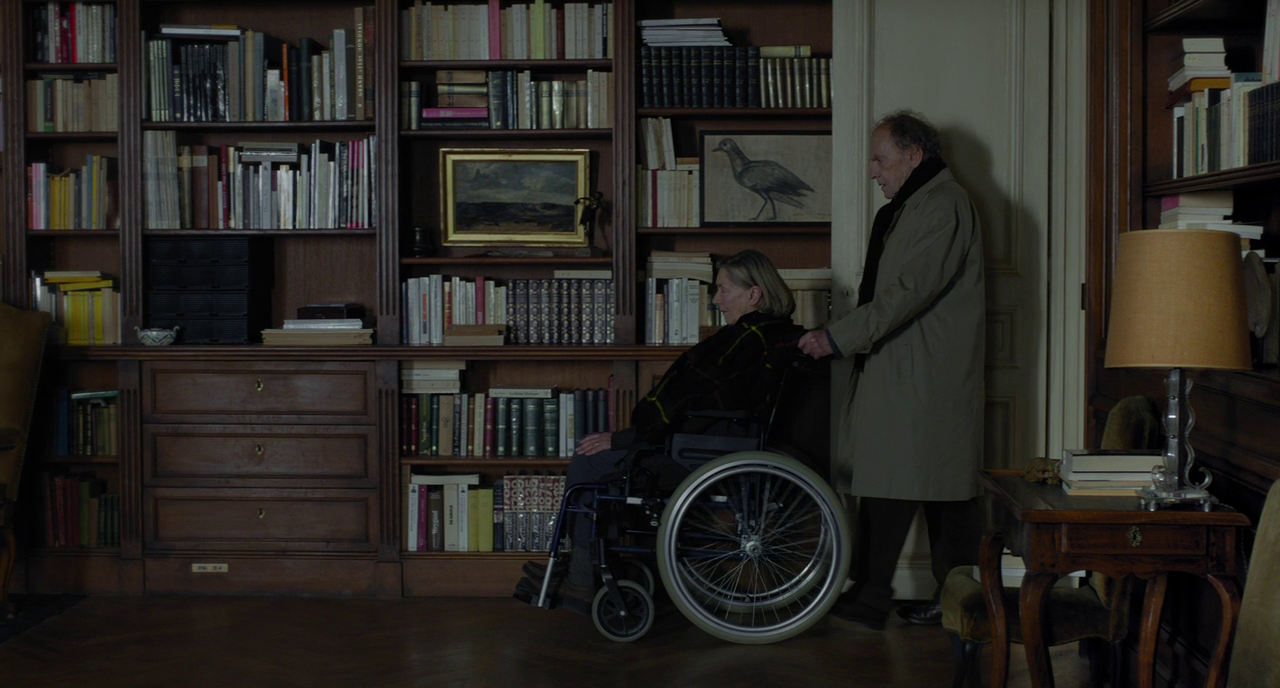
Austrian filmmaker Michael Haneke’s meticulous, superbly crafted portrait of an elderly couple facing the end of life chronicles a chapter that many viewers either have experienced or are confronting themselves.
“Amour” is a tribute to two aging legends of the French screen and the cinematic tradition they represent. Both actors give complicated and heartbreaking performances, but Riva’s unstinting portrayal of a composed and generous woman who knows that everything – her mental clarity, her physical control and life itself – will soon be stripped from her is absolutely unforgettable.
“Amour,” while relentless, has compassion not only for the couple’s struggles and isolation, but also for the fumbling of outsiders. Other people mean well, but they’re from a world where death remains offstage. Haneke leaves us with more questions than answers, but I will agree with him that there is no note of irony in his title.
This is an unforgettable love story set at the close of day, as tragic and beautiful in its way as “Tristan und Isolde,” and a portrait of the impossible beauty and fragility of life that will yield new experiences to every viewer and every viewing.


Michael Haneke

Born  in Munich in March 1942, Haneke spent his early years in a working class suburb of Vienna before an early attempt at fame as an actor and pianist. Failing to achieve early success, Haneke attended the University of Vienna to study philosophy and psychology, and became a film critic and stage director before making his eventual debut as a television director with After Liverpool in 1973. Setting in motion a television career specializing in literary adaptations and small screen films, Haneke would work successfully in that medium until his feature debut with The Seventh Continent in 1989.Laced with the theme of muted emotions resulting in stark violence that would become his calling card.

Haneke took the modern obsession with cinematic violence to a level rarely attempted in 1997, with the tale of a happy family relentlessly tortured in Funny Games. Violence is not fun in Haneke's world and this is where his optimism comes into play. Haneke took home the Grand Prize at the 2001 Cannes Film Festival for The Piano Teacher, a compelling tale of sexual repression that also won that film's stars, Benoit Magimel and Isabelle Huppert, the Best Actor and Actress awards at the festival.He earned some of the strongest reviews of his career for the 2005 thriller Cache.

In 2007 he remade his film Funny Games in English with a cast that included Naomi Watts, Tim Roth, and Michael Pitt. He scored another international hit with 2009's The White Ribbon, and had arguably his biggest American success in 2012 when his film Amour garnered Oscar nominations for Best Picture, Best Actress, Best Screenplay, and Best Director, and won the coveted award for Best Foreign Language Film 


May 1, 2013

4th April 2013; Art Documentary : The World's Most Expensive Paintings


Contemplate and Konangal


Screening of Documentary on Art


The World’s Most Expensive Paintings
A BBC documentary – Duration 1 hour.
4th May 2013; 5.45 pm
Contemplate Art Gallery


Art critic and journalist Alastair Sooke explores the remarkable stories behind the Top Ten Most Valuable Paintings in the World. What are the ten most expensive paintings to have been sold at auction? Why do some pay millions for a painting? Who are the buyers? Why is art so valuable?
In seeking the answers to some of these questions, Alastair uncovers stories of scandal, war, exile, revolution, paranoia, and economic turmoil - stories which range from the Holocaust to the discreet banks of Zurich and the boom of Japan in the 1980s.

Alastair Sooke tracks down the ten most expensive paintings to sell at auction, and investigates the stories behind the astronomic prices art can reach. Gaining access to the glittering world of the super-rich, Sooke discovers why the planet's richest people want to spend their millions on art.
Featuring works by Picasso, Monet, Renoir, Van Gogh, Klimt and Rubens, Sooke enters a world of secrecy and rivalry, passion and power. Highlights include a visit to the art-crammed home of millionaire author Lord Jeffery Archer; a rare interview with the man at the heart of the sale of the most expensive old master of all time; privileged access to auctioneers Christie's; and a glimpse of the world of the Russian oligarchs.These revelatory journeys allow Sooke to present an eye-opening view of the super wealthy, and their motivations as collectors of the world's great art treasures