
Sep 25, 2012


Sep 18, 2012
22nd Sept 2012; Art Documentary :- Art of Persuasion- How Art made The World - Episode 3
Contemplate and Konangal present
Documentary on Art

The Art of Persuasion
(BBC How Art Made the World –Episode 3)
22nd Sept 2012; 5.45pm
Runtime 55 minutes
Contemplate Art Gallery
Avanashi Road , Opp PSG Krishnammal College, Coimbatore

The Art of Persuasion - The power of images
A lively and provocative investigation into the far-reaching influence of art on society
The leaders of most modern countries exploit a powerful political tool - the power of images. These techniques, in fact, were invented thousands of years ago by the leaders of the Ancient World. But how do politicians actually use images to persuade us - often without us even knowing? How did they do it thousands of years ago?

An ancient gravesite near Stonehenge revealed an important man buried with beautifully crafted gold ornaments - probably the only such gold objects in Britain at the time. This gold, so impossibly rare, would have dazzled the locals, creating the image of a leader. So clearly it was learned early on in human history that art as personal adornment enhanced your status.

In other parts of the ancient world, however, many leaders had vast empires with many disparate conquered people to rule, and possessing fine jewelry was not enough to get their kingly message across. Darius the Great, King of the Persians, came up with the first art political logo, with Alexander the Great later expanding on the concept by imprinting his face on coins that flooded his empire.

Augustus of Rome, forty years before Christ, fabricated the first political lie by creating a series of statute portraits that made him appear to be a man of the people, while ruthlessly exterminating the competition. Modern politicians use techniques similar to those invented by rulers of old, but instead of paint and marble, they use digital technology. But whatever the final form, people remain as vulnerable now as ever to the persuasive power of art. Modern politicians use political techniques invented by rulers of old, but instead of paint and marble, they use digital technology.

Sep 12, 2012
16th Sept 2012: Nuri Bilge Ceylan's Once Upon a Time in Anatolia

A film by Nuri Bilge Ceylan
Turkey/2011/Col/150 mins
16th Sept 2012; 5.45pm
Perks Mini Theater
http://konangalfilmsociety.blogspot.in/


(Source:Internet)


Born in Bakırköy, Istanbul on 26 January 1959, Nuri Bilge Ceylan spent his childhood in Yenice, his father's hometown in the North Aegean province of Çanakkale. His father, an agricultural engineer. In 1976, having graduated from high school, Nuri Bilge began studying chemical engineering at Istanbul Technical University. In 1978, then switched courses to electrical engineering at Boğaziçi University.
The university's extensive library and music archive played a significant role in fuelling his passion for the visual arts and classical music in particular. Meanwhile, the elective film studies course he took with Üstün Barışta and the film club's special screenings did much to reinforce his love of cinema, which had taken root earlier during showings at the Cinémathèque in Istanbul's Taksim.
His travels in the east and west first in London, then in Kathmandu lasted months and on return to Turkey he had to do his military service. After that he started studying film at Mimar Sinan University andtook commercial photographs as a means of livelihood.He began by acting in a short film and then bought the Arriflex 2B camera. By the end of 1993, he began shooting the short film KOZA (Cocoon), which became the first Turkish short to be selected to be sreened at Cannes in May 1995 and.
Three full-length feature films followed.They have also been described by some as his 'provincial trilogy': KASABA (The Small Town, 1997), MAYIS SIKINTISI (Clouds of May, 1999) and UZAK (Distant, 2002). In all of these films, Ceylan enlisted his close friends, relatives and family as actors and took on just about every technical role himself. When UZAK, the final film of the trilogy, won the Grand Prix at the 2003 Cannes Film Festival, Ceylan suddenly became an internationally recognized.
In 2006 Climates was premiered at the Cannes Film Festival, and also got the FIPRESCI Prize. The lead roles in this film were shared by Nuri Bilge and his wife Ebru Ceylan. Competing at the 61st Cannes Film Festival with his 2008 film Three Monkeys, Nuri Bilge won the Best Director award. In 2009, the director returned to Cannes, this time as a member of the main competition jury. In 2011, his film "ONCE UPON A TIME IN ANATOLIA" won the Grand Prix again at Cannes Film Festival.
Aug 29, 2012
2nd Sept 2012; Ingmar Bergman's SUMMER INTERLUDE

Summer Interlude
A film by Ingmar Bergman
Sweden/1951/ 96 minutes
Perks Mini Theater; 2nd September 2012; 5.45pm

Touching on many of the themes that would define the rest of his legendary career—isolation, performance, the inescapability of the past—Ingmar Bergman’s tenth film was a gentle drift toward true mastery. In one of the director’s great early female roles, Maj-Britt Nilsson beguiles as an accomplished ballet dancer haunted by her tragic youthful affair with a shy, handsome student.

The film opens up with Marie receiving a package containing a diary. She is so moved by its emergence that shortly after decides to take a trip to the archipelago near Stockholm where she first met Henrik.As Marie remembers Henrik the film moves back and forth and shows how her life has changed.

As a ballerina, Marie has accomplished everything she ever wanted. But the truth is different. After Henrik, Marie could not love again. Her career would keep her mind busy and for a while she would forget about the pain.

The tenderness of their tentative lovemaking serves as a contrast with the older Marie's experience of disappointment. The film, Bergman's first with a female protagonist, marked a new maturity in the young Bergman’s filmmaking. The famous French director and critic Jean-Luc Godard once described Summer Interlude as "the most beautiful of films."A film that the director considered a creative turning point, Summer Interlude (Sommarlek) is a reverie about life and death that unites Bergman’s love of theater and cinema. (Source: Internet)


Ingmar Bergman
Universally regarded as one of the great masters of modern cinema, Bergman has often concerned himself with spiritual and psychological conflicts. His work has evolved in distinct stages over four decades, while his visual style-intense, intimate, complex-has explored the vicissitudes of passion with a mesmerizing cinematic rhetoric. His prolific output tends to return to and elaborate on recurrent images, subjects and techniques.
Ingmar Bergman was born on July 14, 1918, in Uppsala, Sweden. In 1937 Bergman entered the University of Stockholm, where he became an active member of the student theatrical group. In 1942, after a brilliant production of William Shakespeare's Macbeth, the aspiring director was appointed to the Swedish Royal Opera. In the years following he divided his talents equally between stage and film efforts.
In 1945 Bergman directed his first film, Crisis, the story of an unhappy love affair which ends in suicide. Several films followed closely, but in 1956 Bergman reached the peak of critical and popular praise with The Seventh Seal. It was followed by masterpieces like Wild Strawberries, Persona, Cries and Whispers etc. In addition to film, he directed over 70 plays.
Although apparently not influenced by other filmmakers, with the possible exception of Carl Dreyer, Bergman himself has had a wide-ranging influence on a generation of filmmakers. A unique and powerful presence, his genius has made an extraordinary contribution to the art of the cinema. He died peacefully in his sleep, at his home on Fårö island, on 30 July 2007, at the age of eighty-nine.
(Source: Internet)
Aug 7, 2012
12th August 2012; Asghar Farhadi's A Separation

A SEPARATION
Written, produced, and directed by Asghar Farhadi
Cinematography by Mahmoud Kalari
Edited by Hayedeh Safiyari
Iran, 2011, color, 123 min.
Persian with English subtitles
Perks Mini Theater
12th Aug 2012 ; 5.45pm
One of the perennial and most fruitful subjects of cinema is relationships, especially those of married couples. Regardless of ethnicity, religion, class, location, or gender, most couples will have problems where the regrettable solution seems to be separation, divorce, or disappearance. Iranian director Asghar Farhadi’s protagonists, Nader and Simin, have reached such an impasse. After 14 years of marriage, Simin wants to take their 13-year-old daughter and emigrate to another country with or without her husband, to a place where she and Termeh can seek greater opportunities as women.Written, produced, and directed by Asghar Farhadi
Cinematography by Mahmoud Kalari
Edited by Hayedeh Safiyari
Iran, 2011, color, 123 min.
Persian with English subtitles
Perks Mini Theater
12th Aug 2012 ; 5.45pm
 Besides being satisfied with his job and social position already, Nader has to take care of his incapacitated father and consequently refuses to leave Iran. Termeh refuses to join her mother, who definitely will not leave Iran without her daughter. Thus, they have reached an impasse, which could be replicated within practically any country, especially for the “Sandwich Generation” which finds itself taking care of both school-age children and elderly parents. Thus, A SEPARATION is a global film which can speak to all audiences.
 However, when Simin secures a woman to come clean the house and watch after the elderly, usually bed-ridden father with Alzheimer’s, then aspects of Islamic culture become critical to the story and create all manner of unfamiliar but haunting conflicts and complications. Nader returns one day to find his father tied to the bed and Razieh absent. She has a good reason for this, but Nader doesn't know it and neither do we. He fires her. Meantime she suffers a miscarriage and her husband sues Nader for causing it by pushing her down.
 The writer-director, Asghar Farhadi, tells his story with a fair and even hand. His only agenda seems to be to express empathy. Although the judge may be tending against our own sympathies, we understand why he does so and may be correct to do so. That a director can make such a sympathetic film in such a troubled time is a tribute to his strength of character.
 In conclusion, Farhadi has purposely left his film without one. He states very intriguingly and provokingly: “I don’t think it’s important for the audience to know my intention. I’d rather they left the cinema with questions. I believe that the world today needs more questions than answers. Answers prevent you from questioning, from thinking. From the opening scene, I aimed to set this up. The film’s first question is whether an Iranian child has a better future in his or her own country or abroad. There is no set answer. My wish is that this film will make you ask yourselves questions, such as these ones.”


Asghar Farhadi
Asghar Farhadi was born in Isfahan, Iran in 1972. Whilst at school he became interested in writing, drama and the cinema, took courses at the Iranian Young Cinema Society and started his career as a filmmaker by making super 8mm and 16mm films.
He graduated with a Master’s Degree in Film Direction from Tehran University in 1998.
During his studies, he not only wrote and directed student plays, but also wrote plays for national radio and directed for television with such shows as the hit series Tale of a City.
In 2001, Farhadi wrote the screenplay for Ebrahim Hatamikia’s box-office and critical success Low heights.
His directorial debut was with 2003’s Dancing in the Dust. This film went on to participate in the Moscow Film Festival, where it won both the Best Leading Actor and Film Critics awards.
Farhadi made his second feature film, Beautiful City, in 2004 which won the Best feature film award at the Warsaw Film Festival 2004, the India International Film Festival and Moscow’s Faces of Love Film Festival. “Chahar shanbeh souri / Fireworks Wednesday”, his third feature, award winner at the Locarno International Film Festival 2006, has also been successful in other international festivals. The film has been released in both Europe and the USA.
On 19 December 2011, he was announced as being on the jury for the 62nd Berlin International Film Festival, scheduled to be held in February 2012. On 15 January 2012, his movie Nader and Simin, A Separation won the Golden Globe for the Best Foreign Language Film.The film was also the official Iranian submission for the Best Foreign Language Film at the 2012 Academy Awards where apart from getting nominated[7] in this category, it also received a nomination in the Best Original Screenplay category. On the 26 February 2012, Nader and Simin, A Separation became the first Iranian movie to have received an Oscar for the best foreign language film at the 84th edition of the Academy Awards. This marked Farhadi as the first Iranian to have won an Academy Award in any of the competitive categories.
Jul 31, 2012
5th Aug 2012; Thamizh Studio screens Amshan Kumar's Subramania Bharathi & Oruthi
THAMIZH STUDIO
Presents
Lenin Award winner
Amshan Kumar’s two films
SUBRAMANIA BHARATHI
&
ORUTHI
5th August 2012; 5 pm
Perks Mini Theater
Thamizh Studio is a frontline film movement in Chennai. Their 2012 Lenin award for best filmmaker goes to Amshan Kumar. Prior to the awards function which will be held at Chennai on 15th August 2012 , Amshan Kumar’s two films are being shown in major cities of Tamilnadu.
Subramania Bharati:

The story is set in the late nineteenth century. Sevani, a dalit girl is in love with an upper caste boy Ellappan.Both are shepherds. Plans are afoot to get Ellappan married within his own caste.
 John Williams, an English Revenue Divisional Officer arrives in the village to probe into the claim of the Zamindar that people do not pay tax. He comes to know through Sevani that the season was good , people pay tax regularly which the Zamindar has misappropriated for his pleasurable ends.
John Williams effectively intervens and brings permanent relief to villagers through tax reforms.The villagers know that this has become possible due to Sevani but they are helpless to fulfill her single wish of uniting her with her lover.Sevani is finally left with the quill pen that changed the destiny of her people. The film was shown in Indian Panorma and thereafter in several International film festivals. It won the Best film award from Government of Puduchery and Tamil Association of New Jersey, USA.
(Screenings supported and arranged in Coimbatore by Konangal Film Society )


He has conducted film appreciation courses to various age groups and gives lectures to visual communication and Mass Media students in Tamilnadu. Also he co-edited Salanam, a film magazine that was devoted to the study of serious efforts in world cinema. As one who is fond of developing film culture since his college days, he has been associating with and founding film societies like Trichy Cine Forum which was one of the earliest in Tamilnadu and Darshana in Coimbatore. In 2005 he participated in a seminar on ‘Parallel Film Movement in India’ in Kuala Lumpur.
He has directed more than 25 documentaries. His documentary Subramania Bharati the great Tamil poet that won various awards including the Best Documentary Award from Cinesangam, London, Nobel Laureate C.V.Raman, Third Theatre of Bengali Playwright and director Badal Sircar, Ashokamitran, Modern Art in Tamilnadu and Reaching the Unreached are some of his documentaries that have been widely appreciated. His most recent documentary is `Manakkal S.Rangarajan: Carnatic Musician of the Era`
‘Oruthi’ his feature film based on a story written by Sahitya Akademi award winner Ki.Rajanarayanan, was shown in Indian Panorama of International Film Festival of India in 2003 and won the Puducherry State Award for the Best Film and award from Tamil Association of New Jersey, USA.
‘Pesum Porchithram’ his anthology of articles on films was published in October 2007. It was released by Phalke Award winner Adoor Gopalakrishnan at the Chennai International Film Festival in December 2007.
He headed the panel of juries for the Vimbam International Short Film Festival held in London in November 2010.
Amshan Kumar is a post graduate in English Literature and regularly writes on film and other subjects in various Tamil and English magazines. He lives in Chennai.
Subramania Bharati:
Documentary.1999. Script .Indira Parthasarathy. Camera.P.S.Dharan. Music.L.Vaidyanathan.Editing.Gautam.Produced by N.Muruganandam.
Direction.Amshan Kumar.
 Subramania Bharati (1882-1921), the renaissance figure of modern Tamil Litreature was born in Ettayapuram, South India.As asingle major force he revolutionized Tamil poetry with great lyrical beauty and brought it closer to people as never before.He was drawn early in his life towards mainstream nationalism and his journalistic writings incensed the British government. Bharati was a true modern championing the cause of nationalism, casteless society and equality for women. He was a unique spiritualist and expressed profound compassion for all living beings.
This is the first full length documentary on Bharati that gives an account of his life and the turbulent times he lived in. Filming is done in Chennai, Madurai, Ettayapuram, Tirunelveli, Pondicherry and Benares, the places associated with his life. Two elderly persons who had acquaintance with him have recounted their memories in this.The documentary has won several awards.

Oruthi2003/91minutes
Story.Ki.Rajanarayanan. Camera.P.S.Dharan. Editing.Satish-Harsha. Music.L.Vaidyanathan.
Produced by. Thara and Gopal Rajaram. Screenplay, dialogues and direction. Amshan Kumar
Cast:Poorvaja, Bharati Mani, Thomas Ober and Ganesh Babu.
Produced by. Thara and Gopal Rajaram. Screenplay, dialogues and direction. Amshan Kumar
Cast:Poorvaja, Bharati Mani, Thomas Ober and Ganesh Babu.
The story is set in the late nineteenth century. Sevani, a dalit girl is in love with an upper caste boy Ellappan.Both are shepherds. Plans are afoot to get Ellappan married within his own caste.
 John Williams, an English Revenue Divisional Officer arrives in the village to probe into the claim of the Zamindar that people do not pay tax. He comes to know through Sevani that the season was good , people pay tax regularly which the Zamindar has misappropriated for his pleasurable ends.
John Williams effectively intervens and brings permanent relief to villagers through tax reforms.The villagers know that this has become possible due to Sevani but they are helpless to fulfill her single wish of uniting her with her lover.Sevani is finally left with the quill pen that changed the destiny of her people.
 The film was shown in Indian Panorma and thereafter in several International film festivals. It won the Best film award from Government of Puduchery and Tamil Association of New Jersey, USA.
(Screenings supported and arranged in Coimbatore by Konangal Film Society )

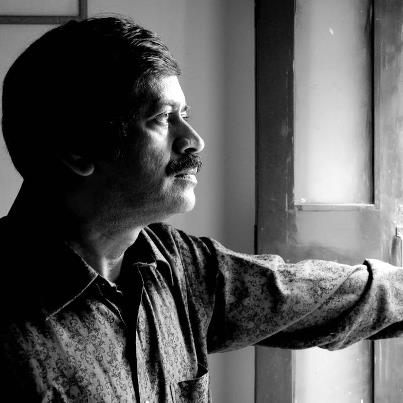
Amshan Kumar
Amshan Kumar is a film maker and writer. His first book EHUTHUM PREGNIYUM published in 1980 deals with topics on writing and philosophy. His book ‘Cinema Rasanai’ written in 1990 in Tamil on film appreciation is the first book of its kind. It is prescribed as a text in many universities in Tamilnadu, Puducherry and Batticaloa in Sri Lanka.He has conducted film appreciation courses to various age groups and gives lectures to visual communication and Mass Media students in Tamilnadu. Also he co-edited Salanam, a film magazine that was devoted to the study of serious efforts in world cinema. As one who is fond of developing film culture since his college days, he has been associating with and founding film societies like Trichy Cine Forum which was one of the earliest in Tamilnadu and Darshana in Coimbatore. In 2005 he participated in a seminar on ‘Parallel Film Movement in India’ in Kuala Lumpur.
He has directed more than 25 documentaries. His documentary Subramania Bharati the great Tamil poet that won various awards including the Best Documentary Award from Cinesangam, London, Nobel Laureate C.V.Raman, Third Theatre of Bengali Playwright and director Badal Sircar, Ashokamitran, Modern Art in Tamilnadu and Reaching the Unreached are some of his documentaries that have been widely appreciated. His most recent documentary is `Manakkal S.Rangarajan: Carnatic Musician of the Era`
‘Oruthi’ his feature film based on a story written by Sahitya Akademi award winner Ki.Rajanarayanan, was shown in Indian Panorama of International Film Festival of India in 2003 and won the Puducherry State Award for the Best Film and award from Tamil Association of New Jersey, USA.
‘Pesum Porchithram’ his anthology of articles on films was published in October 2007. It was released by Phalke Award winner Adoor Gopalakrishnan at the Chennai International Film Festival in December 2007.
He headed the panel of juries for the Vimbam International Short Film Festival held in London in November 2010.
Amshan Kumar is a post graduate in English Literature and regularly writes on film and other subjects in various Tamil and English magazines. He lives in Chennai.
Jul 18, 2012
22nd July 2012; Dardenne brothers' The Kid With a Bike

The Kid with a Bike
A film by Dardenne brothers
Year : 2011
French with English subtitles
Runtime: 83 minutes
22nd July 2012; 5.45pm
Perks Mini Theater

A film by Dardenne brothers
Year : 2011
French with English subtitles
Runtime: 83 minutes
22nd July 2012; 5.45pm
Perks Mini Theater

Winner of the Grand Jury Prize at Cannes 2011, "The Kid With a Bike" is another empathetic film by Jean-Pierre and Luc Dardenne, the brothers from Belgium who have strong sympathy for alienated children and young people, and who avoid melodrama and sensation in telling their stories so movingly.  There are two things that could go seriously wrong in young Cyril's life, but they don't quite happen. The Dardennes don't wring us out like that. They prefer the drama of ordinary life, in which for a boy like Cyril, things don't easily go right. In straightforward, realistic scenes, they show a boy who fears he has been thrown away, but persists in feeling that his father only lost him and will be happy to find him again.
 Tightly edited and exciting, not a second is wasted, and every scene has a purpose. Their characters are constantly in motion, both physically and emotionally: In “The Kid With a Bike,” 11-year-old Cyril (Thomas Doret) is somewhere between a human turbine and a wild animal, with so much energy and desire in his preadolescent frame he can’t possibly contain it. Cinematographer Alain Marcoen’s camera flows alongside the characters, but never in a way that focuses your attention on technique.
 Dardennes are more focused on the redemptive possibilities of their Dostoevskian universe than on its bleak pits of despair. Cyril makes bad decisions and falls in love with the wrong substitute parent, but he’s the toughest kid you’d ever want to meet, better than most grownups at admitting his mistakes and adjusting to reality.
 The film is only 87 minutes long, lean and efficient, intent on Cyril. It doesn't "explain" him, because he is all there to be seen: his need, his abandonment, his reckless determination, his unprotected youth.
(Source:Internet)
 Dardenne Brothers
Brothers Jean-Pierre Dardenne (21 April 1951) and Luc Dardenne (10 March 1954) born in Liège Belgium, are a filmmaking duo. They write, produce and direct their films together.
The Dardennes began making narrative and documentary films in the late 1970s, but they first came to international attention in the mid-1990s with La Promesse (The Promise). They won their first major international film prize when Rosetta won the Palme d'Or at the 1999 Cannes Film Festival. All their films since have played at the Cannes main competition and won one of the major prizes. Over the course of their 12-year careers, they have won more awards than any other filmmakers in the history of the Cannes Film Festival.
In 2002, Olivier Gourmet won Best Actor at Cannes for the Dardennes' Le Fils (The Son) In 2005, they won the Palme d'Or a second time for their film L’Enfant (The Child), putting them in an elite club of only 7 with the likes of Francis Ford Coppola. Their film, Le silence de Lorna (Lorna's Silence), won Best Screenplay at the 2008 Cannes Film Festival and was released in Europe in the fall. Their latest film The Kid with a Bike won the Grand Prix at the 2011 Cannes Film Festival.[2] Jean-Pierre has been announced as the jury president for the Cinéfoundation and Short Films sections of the 2012 Cannes Film Festival.
 There are two things that could go seriously wrong in young Cyril's life, but they don't quite happen. The Dardennes don't wring us out like that. They prefer the drama of ordinary life, in which for a boy like Cyril, things don't easily go right. In straightforward, realistic scenes, they show a boy who fears he has been thrown away, but persists in feeling that his father only lost him and will be happy to find him again.
 Tightly edited and exciting, not a second is wasted, and every scene has a purpose. Their characters are constantly in motion, both physically and emotionally: In “The Kid With a Bike,” 11-year-old Cyril (Thomas Doret) is somewhere between a human turbine and a wild animal, with so much energy and desire in his preadolescent frame he can’t possibly contain it. Cinematographer Alain Marcoen’s camera flows alongside the characters, but never in a way that focuses your attention on technique.
 Dardennes are more focused on the redemptive possibilities of their Dostoevskian universe than on its bleak pits of despair. Cyril makes bad decisions and falls in love with the wrong substitute parent, but he’s the toughest kid you’d ever want to meet, better than most grownups at admitting his mistakes and adjusting to reality.
 The film is only 87 minutes long, lean and efficient, intent on Cyril. It doesn't "explain" him, because he is all there to be seen: his need, his abandonment, his reckless determination, his unprotected youth.
(Source:Internet)

 Dardenne Brothers
The Dardennes began making narrative and documentary films in the late 1970s, but they first came to international attention in the mid-1990s with La Promesse (The Promise). They won their first major international film prize when Rosetta won the Palme d'Or at the 1999 Cannes Film Festival. All their films since have played at the Cannes main competition and won one of the major prizes. Over the course of their 12-year careers, they have won more awards than any other filmmakers in the history of the Cannes Film Festival.
In 2002, Olivier Gourmet won Best Actor at Cannes for the Dardennes' Le Fils (The Son) In 2005, they won the Palme d'Or a second time for their film L’Enfant (The Child), putting them in an elite club of only 7 with the likes of Francis Ford Coppola. Their film, Le silence de Lorna (Lorna's Silence), won Best Screenplay at the 2008 Cannes Film Festival and was released in Europe in the fall. Their latest film The Kid with a Bike won the Grand Prix at the 2011 Cannes Film Festival.[2] Jean-Pierre has been announced as the jury president for the Cinéfoundation and Short Films sections of the 2012 Cannes Film Festival.
Jul 11, 2012
15th July 2012; Mani Kaul's DUVIDHA

DUVIDHA
A film by Mani Kaul
Year: 1973
Run time : 82 minutes
Hindi with English subtitles
15th July 2012; 5.45pm
Perks Mini Theater
A film by Mani Kaul
Year: 1973
Run time : 82 minutes
Hindi with English subtitles
15th July 2012; 5.45pm
Perks Mini Theater

Kaul’s most acclaimed film Duvidha (1973) opens with a rather flat, Godardian image of a woman in a red saree standing in front of a white wall, staring determinedly into the camera, as high-pitched Rajasthani ethnic vocals grace the audio. Like the frozen image of Truffaut’s juvenile delinquent, it suggests a predicament addressed to the audience. Based a folk tale, Duvidha speaks of a love that is beyond time and space. The presence of the ghost, which falls in love with the new bride, is not an exotic delicacy served to us but a given. And so is the ‘story’, which is read out verbatim to us by the narrator, freeing the film from the burden of storytelling, so to speak, instead allowing it to experiment with the imagery.
 Employing a number of photographs, freeze frames, jump cuts and replays, which illustrate the film’s central notion of temporal and geographical dislocation (and save on the budget) and manipulating time like an accordion player,Kaul weaves a narrative where the past, the present and the future are always in conversation. (The ghost is simply referred to as ‘Bhoot’ (ghost), which is, of course, the word for ‘past’ as well).
 The predicament of the title, then, involves a choice between the spiritual and the material, the bride’s past and future, her childhood and adulthood, her freedom and honour and her love and security.Bewitchingly shot like a Dovzhenko film (and composed like Cézanne‘s still lifes), and impressively designed, with a simple yet striking interplay of red and white, Duvidha builds on both Kaul’s feminist leanings and highly personalized aesthetic.
(From: seventhart.com)

Mani Kaul is undoubtedly the Indian filmmaker who, along with Kumar Shahani, has succeeded in radically overhauling the relationship of image to form, of speech to narrative, with the objective of creating a ‘purely cinematic object’ that is above all visual and formal. He was born Rabindranath Kaul in Jodhpur in Rajasthan in 1942 into a family hailing from Kashmir. His uncle was the well-known actor-director Mahesh Kaul. Mani joined the Film and Television Institute of India (FTII), Pune initially as an acting student but then switched over to the direction course at the institute. He graduated from the FTII in 1966.
Mani’s first film Uski Roti (1969) was one of the key films of the ‘New Indian Cinema’ or the Indian New Wave. The film created shock waves when it was released as viewers did not know what quite to make of it due to its complete departure from all Indian Cinema earlier in terms of technique, form and narrative. The film is ‘adapted’ from a short story by renowned Hindi author Mohan Rakesh and is widely regarded as the first formal experiment in Indian Cinema. While the original story used conventional stereotypes for its characters and situations, the film creates an internal yet distanced kind of feel reminiscent of the the great French Filmmaker, Robert Bresson. The film was financed by the Film Finance Corporation (FFC) responsible for initiating the New Indian Cinema with Bhuvan Shome (1969) and Uski Roti. It was violently attacked in the popular press for dispensing with standard cinematic norms and equally defended by India’s aesthetically sensitive intelligentsia.
(Source: Internet)
 The presence of the ghost, which falls in love with the new bride, is not an exotic delicacy served to us but a given. And so is the ‘story’, which is read out verbatim to us by the narrator, freeing the film from the burden of storytelling, so to speak, instead allowing it to experiment with the imagery.
 Employing a number of photographs, freeze frames, jump cuts and replays, which illustrate the film’s central notion of temporal and geographical dislocation (and save on the budget) and manipulating time like an accordion player,Kaul weaves a narrative where the past, the present and the future are always in conversation. (The ghost is simply referred to as ‘Bhoot’ (ghost), which is, of course, the word for ‘past’ as well).
 The predicament of the title, then, involves a choice between the spiritual and the material, the bride’s past and future, her childhood and adulthood, her freedom and honour and her love and security.Bewitchingly shot like a Dovzhenko film (and composed like Cézanne‘s still lifes), and impressively designed, with a simple yet striking interplay of red and white, Duvidha builds on both Kaul’s feminist leanings and highly personalized aesthetic.
(From: seventhart.com)


MANI KAUL
(25 December 1944 – 6 July 2011)
Those who think of Indian cinema as the glitz of Bollywood on the one hand and the eloquent classicism of Satyajit Ray on the other miss a third important strand, manifested best by the radical director Mani Kaul. Kaul was a totally uncompromising film-maker who never sought popularity but pursued his own concerns, influenced by Ritwik Ghatak, his Bengali teacher and a great director in his own right, and by Robert Bresson and Andrei Tarkovsky among the foreign giants of the cinema.(25 December 1944 – 6 July 2011)
Mani Kaul is undoubtedly the Indian filmmaker who, along with Kumar Shahani, has succeeded in radically overhauling the relationship of image to form, of speech to narrative, with the objective of creating a ‘purely cinematic object’ that is above all visual and formal. He was born Rabindranath Kaul in Jodhpur in Rajasthan in 1942 into a family hailing from Kashmir. His uncle was the well-known actor-director Mahesh Kaul. Mani joined the Film and Television Institute of India (FTII), Pune initially as an acting student but then switched over to the direction course at the institute. He graduated from the FTII in 1966.
Mani’s first film Uski Roti (1969) was one of the key films of the ‘New Indian Cinema’ or the Indian New Wave. The film created shock waves when it was released as viewers did not know what quite to make of it due to its complete departure from all Indian Cinema earlier in terms of technique, form and narrative. The film is ‘adapted’ from a short story by renowned Hindi author Mohan Rakesh and is widely regarded as the first formal experiment in Indian Cinema. While the original story used conventional stereotypes for its characters and situations, the film creates an internal yet distanced kind of feel reminiscent of the the great French Filmmaker, Robert Bresson. The film was financed by the Film Finance Corporation (FFC) responsible for initiating the New Indian Cinema with Bhuvan Shome (1969) and Uski Roti. It was violently attacked in the popular press for dispensing with standard cinematic norms and equally defended by India’s aesthetically sensitive intelligentsia.
(Source: Internet)
Subscribe to:
Posts (Atom)