Oct 24, 2011

30th Oct 2011; Costa Gavras's MISSING

Missing
A Film by Costa Gavras
Year 1982
English with English sub titles
30th Oct 2011; 5.45pm
Perks Mini Theater
Perks School

Costa-Gavras ("State Of Siege"/"Z"/"The Sleeping Car Murder") directs a powerful, influential and tense political thriller based on a true story of the execution of a left-wing young journalist during Chile's military coup in 1973, supposedly because he knew something that would involve his government in the coup. The controversial film unabashedly tells about the covert US involvement in the 1973 military coup of the democratically elected socialist Chilean president, Salvador Allende, something denied by the Nixon administration. It's based on lawyer Thomas Hauser's book The Execution Of Charles Horman, and is tautly and passionately co-written by Costa-Gavras and Donald Stewart.

It's the first English speaking Hollywood film made by Costa-Gavras. Jack Lemmon gives one of his best performances ever, earning him an Oscar nomination for best actor. It did win an Academy Award for Best Adapted Screenplay. The film was shot in Mexico.
Conservative Christian Science New York businessman Ed Horman (Jack Lemmon) travels to Santiago, Chile, when his counterculture daughter-in-law Beth Horman (Sissy Spacek) informs him her spirited offbeat writer and filmmaker husband Charlie (John Shea) is inexplicably missing after the bloody right-wing military coup in September and the American Embassy is not helpful.
What's haunting is the violent street scenes and the excessive force mounted by the ominous military patrols, as they crackdown on curfew violators and known political rivals in a mind-boggling brutal fashion. They act like fascists, bolstered by their unreported American advisers, intimidating the population to the point that even during an earthquake the citizens fear going outside and violating the curfew.
Few films impact real life like do the films of Costa-Gavras. This one rattled the US government so much, that upon the film's release in 1982 the then-Secretary of State Alexander Haig, appointed by President Reagan, was forced to issue indisputable denials of the film's allegations--a statement only believed by the gullible. (Source:Internet)


Costa-Gavras

Costa-Gavras,( born 12 February 1933) is a Greek filmmaker, who lives and works in France, best known for films with overt political themes, most famously the fast-paced thriller, Z (1969). Most of his movies were made in French; starting with Missing (1982), several were made in English.

Gavras was born in, Arcadia. His family spent the Second World War in a village in the Peloponnese, and moved to Athens after the war Costa Gavras went to France, where he began his studies of law in 1951.

Costa Gavras is known for merging controversial political issues with the entertainment value of commercial cinema. Law and justice, oppression, legal/illegal violence, and torture are common subjects in his work, especially relevant to his earlier films. Costa Gavras is an expert of the “statement” picture. In most cases, the targets of Gavras's work have been right-of-center movements and regimes, including Greek conservatives in and out of the military in Z, and authoritarian governments that ruled much of Latin America during the height of the Cold War, as in State of Siege and Missing.

In a broader sense, this emphasis continues with Amen. given its focus on the conservative leadership of the Catholic Church during the 1940s. In this political context, L'Aveu (The Confession) provides the exception, dealing as it does with oppression on the part of a Communist regime during the Stalinist period.

Oct 11, 2011

15th Oct 2011; Art Documentary - Hieronymous Bosch

CONTEMPLATE & KONANGAL
present
Documentaries on Art


Hieronymus Bosch
The Garden of Earthly Delights
15th Oct 2011 ; 5.45m pm
Contemplate Art Gallery
Opp. PSG Krishnammal College Avanashi Road
Hieronymus Bosch, (born 1450, 's-Hertogenbosch, Brabant [now in the Netherlands]—died Aug. 9, 1516, 's-Hertogenbosch) brilliant and original northern European painter of the late Middle Ages whose work reveals an unusual iconography of a complex and individual style. Although at first recognized as a highly imaginative “creator of devils” and a powerful inventor of seeming nonsense full of satirical meaning, Bosch demonstrated insight into the depths of the mind and an ability to depict symbols of life and creation.

The Documentary:
In the second programme of his new series on Renaissance painting, artist and writer Matthew Collings steps into the mysterious invented world of The Garden of Earthly Delights by Hieronymus Bosch, painted c.1505.

This imposing work, full of strange and fantastical details, contains one of the most famous images in all of art: a man with a tree for a body, who gazes out at us from the section of the painting representing hell. The tree-man's face is generally thought to be the artist's self-portrait but, like almost everything else about Hieronymus Bosch - including the meaning of this, his most famous painting - no one knows for sure.
Using the latest high-resolution digital technology, Matthew Collings is able to explore this extraordinary painting in minute detail and unravel some of the arcane messages that Bosch has woven into it through his use of symbols and unsettling inversions of scale - giant birds drop fruit into the mouths of nude humans, slithering creatures invade paradise, a devil-bird devours a man whole.
Just as the images in Bosch's painting were unusual for the Renaissance, his technique was also unconventional for the time. Bosch worked quickly with gloopy blobs of thick paint to conjure up the fine details of a fish's eye or the spines on the back of a porcupine from a few brushstrokes. The liveliness of Bosch's technique is one of the qualities that makes his painting seem strangely modern.
The Garden of Earthly Delights reflects the new way of thinking about the world that the Renaissance ushered in - ideas about free will and morality that challenged the old religious order and which posed a question: perhaps heaven and hell are not places your soul might end up in, but states of being that are always inside you? (Source – BBC)

Oct 2, 2011

9th Oct 2011; Wong Kar-wai's Days Of Being Wild


Days of Being Wild
A Film by Wong Kar Wai
Year ; 1990
Country : Hong Kong
Runtime:94 minutes
9th Oct 2011; 5.45pm
PERKS MINI THEATER
Perks School

With his second feature, Days of Being Wild (1990), Wong Kar Wai clearly established his own unique style of cinematic expression. A cult was born. The story is essentially a relentless visual examination of unrequited longing, missed connections, and loneliness, and the events presented are centered around the life of Yuddy York (Leslie Cheung), a self-centred playboy who takes pleasure in manipulating others.
A shy shop assistant Lizhen falls in love with him. But Yuddy is a moody, fickle man in a strange love-hate relationship with his foster mother (Rebecca Pan), an aging Hong Kong prostitute, and is obsessed with finding his real mother, a Filipino. He soon ditches Lizhen and, in his callous, serial way, takes up with the somewhat comical drama queen Leung Fung-Ying. Then he leaves her also to go o Philipaines to meet his mother.
Wong Kar-wai creates a spare and elegant film on chance, fate, and unrequited longing in Days of Being Wild. Using a meticulously crafted mise-en-scene of damp streets, soaking summer rains, green reflected city lights, and saturated blue hues of the evening sky, Wong creates a pervasive, melancholic atmosphere to reflect each characters' wandering and sense of incompletion.
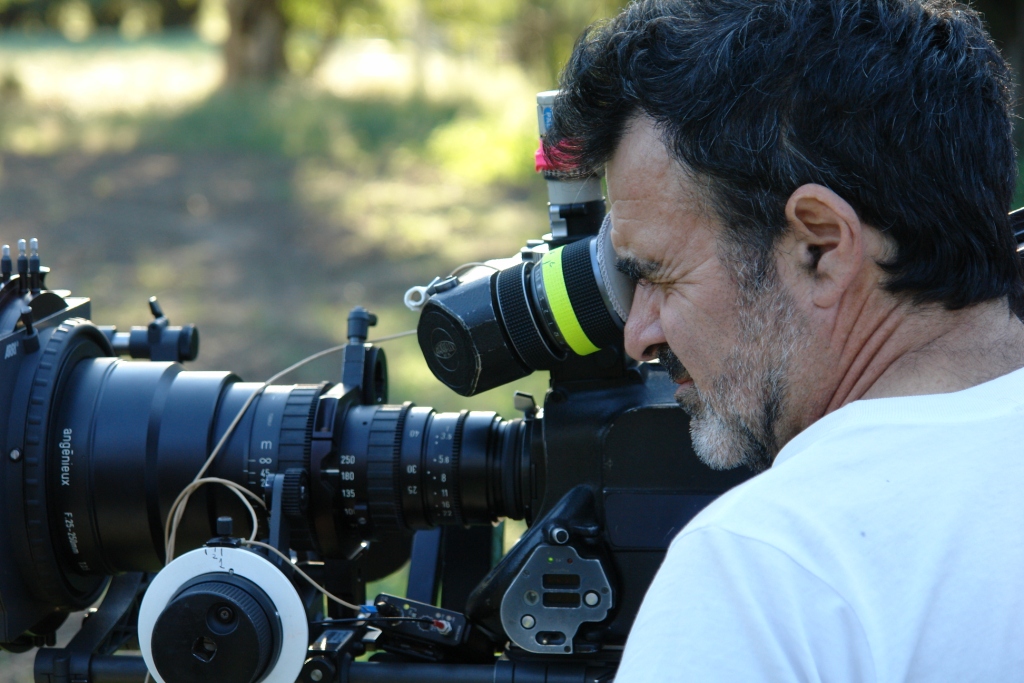
Like Rainer Werner Fassbinder, Wong is a genius of artistic resourcefulness, making much out of spare locations. And like Fassbinder, he finds an elusive, painful humanity in these small, cramped places. This makes the emotions even more concentrated. Almost everything in "Days of Being Wild" is filmed in claustrophobic rooms, hallways or street corners.
There's a sort of no-budget, corralled intensity to everything. He tells much with a little. A few passing shots of palm trees and the presence of a single fan in one room, for example, are all he uses (and needs) to convey a permeating humidity and steaminess.

This sultriness is precisely the right atmosphere for the gorgeous matinee idols in the movie. Leslie Cheung suggests an Asian, sleepy-eyed Peter Sarsgaard, forever combing his hair in front of mirrors. And Maggie Cheung has an incredible porcelain-doll beauty, her hair falling continually over her face. You could watch faces like these doing anything.
(Source - Internet)


Wong Kar-wai

Wong Kar-wai is undeniably an auteur of striking and salient cinema, standing apart from much mainstream Hong Kong cinema. Wong belongs to the mid-1980s Second New Wave of Hong Kong filmmakers who continued to develop the innovative and fresh aesthetic initiated by the original New Wave. The Second Wave, which includes directors such as Eddie Fong, Stanley Kwan and Clara Law.

After obtaining a diploma in graphic design from the Hong Kong Polytechnic School in 1980, Wong become a television production assistant. Following work on several television drama series, he began working as a scriptwriter for television and then later for films. Wong’s directorial debut As Tears Go By (1988) marked his unique visual style and was screened as part of the ‘Critics’ Week’ at the 1989 Cannes International Film Festival. Wong’s next film Days of Being Wild, which featured several of Hong Kong’s beautiful and popular young stars, won five Hong Kong Film Awards, including Best Film and Best Director.

His following effort, Ashes of Time (1994), varied greatly in genre, successfully subverting the conventions of the period martial-arts drama. During a break in the post-production of Ashes of Time, Wong made Chungking Express (1994), which later became a cult hit. Following this came Fallen Angels, which received considerable critical success when it was premiered at the 1995 Toronto Film Festival. In 1997, Happy Together premiered at the Cannes Film Festival where it garnered a Best Director Award for Wong. In 2000, Wong’s In The Mood For Love was also awarded Cannes accolades, including Best Actor for Tony Leung Chiu-wai and the Technical Prize.

With In the Mood for Love, the focus centres on the jilted figures of Chow Mo-wan (Tony Leung Chiu-wai) and Su Li-zhen (Maggie Cheung Man-yuk). Their isolation and longing is transformed into a melange of intersecting paths and poignantly shared moments in which the possibility of a soulful connection is entertained. Again, Wong’s arbitrary rhetoric finds expression in the poetic and brightly drenched tones of his unique filmic aesthetic, and his much-loved themes of loneliness, isolation, and longing rise to the surface. However, whilst In the Mood for Love incorporates all of his usual stylistic and thematic traits, it also ascends to a new level where the cultural significance of Wong’s setting is explored in greater detail.
(Source - Internet)

Sep 5, 2011

11th Sept 2011; Fritz Lang's M

M
A Film by Fritz Lang
Year : 1931
Country : Germany
Runtime:110 minutes
German with English sub titles
11 Sept 2011; 5.45 pm
Perks Mini Theater

A 15 minutes documentary on M will follow the main screening.

M, filmed in only six weeks, is far and away Fritz Lang’s most popular film and his own personal favourite. It tells the story of a pathological child-killer, superbly played by Peter Lorre. It’s hard to believe that M was made in 1931. If we allow for the fact that it’s in black and white, it is more engaging to the eye, more incisive in its irony, more firm in its grasp of social complications than most of the films that come along today.
The film's story was inspired by the career of a serial killer in Dusseldorf. In "M,'' Franz Becker preys on children -- offering them candy and friendship, and then killing them. The murders are all offscreen, and Lang suggests the first one with a classic montage including the little victim's empty dinner plate, her mother calling frantically down an empty spiral staircase, and her balloon--bought for her by the killer--caught in electric wires.
Certainly "M'' is a portrait of a diseased society, one that seems even more decadent than the other portraits of Berlin in the 1930s; its characters have no virtues and lack even attractive vices. In other stories of the time we see nightclubs, champagne, sex and perversion. When "M'' visits a bar, it is to show closeups of greasy sausages, spilled beer, rotten cheese and stale cigar butts.
The letter M with which he is tagged—for Mörder, German for “murderer”—guarantees that, under the wit and satire, a dark current flows. The killer, Hans Beckert, is presented in the film with a certain amount of sympathy for the way in which he is the helpless victim of his own pathology.
Because of Lang’s sensitive treatment of the killer, his characteristic fatalistic development of events gains a rare tragic intensity.


Fritz Lang

Fritz Lang (December 5, 1890 – August 2, 1976) was an Austrian-American filmmaker, screenwriter, and occasional film producer and actor. One of the best known émigrés from Germany's school of Expressionism, he was dubbed the "Master of Darkness" by the British Film Institute. His most famous films are the groundbreaking Metropolis (the world's most expensive silent film at the time of its release) and M, made before he moved to the United States, his iconic precursor to the film noir genre.

Lang was born in Vienna.After finishing school, Lang briefly attended the Technical University of Vienna, where he studied civil engineering and eventually switched to art. In 1910 he left Vienna to see the world, At the outbreak of World War I, Lang returned to Vienna and volunteered for military service in the Austrian army and fought in Russia and Romania, where he was wounded three times.

Lang soon started to work as a director at the German film studio Ufa, and later Nero-Film, just as the Expressionist movement was building. Lang's wife co-wrote all of his movies from 1921 through 1933., including 1922's Dr. Dr. Mabuse the Gambler, he first in the Dr. Mabuse trilogy, 1924's Die Nibelungen, the famed 1927 masterpiece Metropolis, and the 1931 classic, M, his first "talking" picture.

Whereas Lang was worried about the advent of the Nazi regime, partly because of his Jewish heritage, his wife and screen writer Thea von Harbou had started to sympathize with the Nazis in the early 1930s and joined the NSDAP in 1932. They soon divorced. Lang's fears would be realized following his departure from Austria,Upon his arrival in Hollywood in 1936.

Lang made twenty-one features in the next twenty-one years, working in a variety of genres at every major studio in Hollywood, occasionally producing his films as an independent. Lang found it harder to find congenial production conditions in Hollywood and his advancing age left him less inclined to grapple with American backers. While his career had ended without fanfare, his American and later German works were championed by the critics of the Cahiers du cinéma. Lang died in 1976.

Aug 30, 2011

4th Sept 2011; Carlos Sarin's The Window


The Window (2008)
A film by Carlos Sorin
Country: Argentina
Year :2008
Run time :85 minutes
Spanish with English subtitles
4th Sept 2011;5.45pm
PERKS MINI THEATER
The Window (2008) is a gentle masterpiece of cinema written and directed by Carlos Sorin. It is about living and dying and how, hopefully, we all can approach that last day on earth. Filmed in Argentina's Patagonia by cinematographer Julian Apezteguia with an emphasis on sunshine and landscape this little film humbly presents the final day of living of 80-year-old writer Antonio (Antonio Larreta) . This is a big day for Don Antonio. His son, a noted European pianist whom he hasn't seen in years, is coming to visit him, and the housekeepers are buzzing about preparing for the prodigal son's return.

In The Window the images are not heavy and portentous, but play as a background soundtrack to the sensory impressions and ambiance within the confined spaces of a man's last day on earth. Sorin's plot less film deals with the light and not the shadows, and with an airy leisure and humor that belies the melancholy and foretold destiny of a dying old man.
Sorin infuses his film with visual landscapes both interior and exterior and deconstructs the final day from dawn to dusk with the symphony of life -- chirping birds, the wind, discordant notes from a piano tuner, even water in the pipes as someone takes a shower. Life is all around Don Antonio and Sorin lets him see and hear it all.
Employing simple camera setups, he lets the spectacular Argentine light fill the house and wash over the surrounding fields. What interests Sorin isn’t emotion, really, but process. When the processes are mundane - tuning a piano, taking Don Antonio’s blood pressure - he manages to make them engrossing. And when the process isn’t at all mundane - the surrendering of life - Sorin handles it with impressive circumspection.
Death for Don Antonio is a reluctantly willing journey of transcendence where cinematic images (a key, a 40-year-old Champagne bottle, a first edition, a toy soldier) become the remaining sparks of precious remaining hours of life. Significantly, at the end of the film, when the old man dies, the last image and sound is of a scratchy and faded film running to its end as if projected through an old camera.

Carlos Sorin
Carlos Sorin is an Argentinian film director, screenplay writer, cinematographer, and film producer. At the age of six, Carlos Sorín got a hand-crank projector with comic strip tapes made of paper. In those times television was not very common, and instantly, from the moment when he switched off the lights, closed the windows and projected the images onto a sheet hung on the wall, he was sure that cinema was going to be his future.

When he was 8 years old, he got another projector capable of showing 16mm movies, and one year later, he received a motorized projector. At the age of 14 he worked with the first camera, a 16mm rope-Kodak. Later on, as the years went by, the motorized Bolex, the Arriflex, Aatons and finally the 4K digital cameras arrived. For him, there was no doubt that technology was the way of entrance into cinema. When he left the film university Escuela de Cine de la Universidad de La Plata he became camera assistant, and only a little later director of photography. After ten years in this job, he successfully became a director of commercials—a job he exercised for too many years.

In 1986, he made his first theatrical motion picture, La Pelicula del Rey (A King and his Movie), which was awarded the Silver Lion at the Venice Film Festival, and the Goya Award of the Spanish Film Academy for the Best Foreign Film, among many other awards. Encouraged by these accolades, he rapidly launched himself into the making of his second movie, Eversmile New Jersey, a film that became an experience of failure. After this failure, he began directing commercials again.
In 2002, when he was ready to settle an open personal account with cinema, he directed and produced Historias Mínimas (Intimate Stories). The film won an innumerable series of international awards (among others the Special Prize of the Jury at San Sebastian 2002 and 8 Silver Condors) and opened the door again to other opportunities.

At that point in time, he finally gave up his career making commercials in order to concentrate on directing dry cinema. In 2004, he directed Bombon, El Perro (Bombon, the Dog) (FIPRESCI award in San Sebastian 2004) – a worldwide theatrical success – and in 2006 El Camino de San Diego (The Road to San Diego). In 2008 he directed The Window.


Aug 21, 2011

28th Aug 2011; Sydney Lumet's Fail-Safe

Fail-Safe
A film by Sydney Lumet
Country :USA
Year: 1965
Runtime: 112 minutes
28th Aug 2011
Perks Mini Theater

A 16 minutes documentary on Failsafe with
Sydney Lumet and others will be shown.


Based on the novel "Fail-Safe" by Eugene Burdick and Harvey Wheeler, Sidney Lumet directed this shocking masterpiece of cold-war realism. Fail-Safe was and remains a real crackerjack of a film. It is an uncompromising look at the folly of total reliance on machines at a time when the smallest error can have catastrophic consequences.
Today, we live in an age when the world has taken a small step back from the game of nuclear brinksmanship that characterized the 1950s and '60s, although the threat of isolated nuclear terrorism is still very real. Even in such a climate, the situation portrayed in Fail-Safe still seems frighteningly possible, so at the time of its original release, one can only imagine its effect on thinking people.
Due to astronomically unfortunate computer error, a flight of Strategic Air Command (SAC) bombers originating in Alaska carry 2 nuclear warheads past what is known as the 'fail-safe' point. With Russian military jamming their communication they cannot be recalled. They are headed toward Moscow to drop their bombs and complete their mission. The options of stopping them are both limited and extremely time sensitive.
Henry Fonda portrays the President of the United States in a role he wears like a tailor made suit. Attempts to abort the mission fail and the President is left with no more options... aside from the unthinkable.
Communicating with the aptly crippled Secretary of Defense, various military personnel, visiting political scientist Groeteschele (Walter Matthau) and the Russian Premier (through his his translator 'Buck' played by Larry Hagman) a most impossible, totally unacceptable decision is absolutely believably concluded.
Stunning is an understatement. This is without question, the best Cold-war film ever made. The performances are outstanding, the messages are both subtle and coldly obvious with a conclusion as eviscerating as any. A great film to introduce to friends as so few people have seen it before.
(Source : Internet)


Sidney Lumet

Sidney Lumet is nevertheless a master of cinema. Known for his technical knowledge and his skill at getting first-rate performances from his actors--and for shooting most of his films in his beloved New York--Lumet has made over 40 movies, often emotional, but seldom overly sentimental. He often tells intelligent, complex stories. His politics are somewhat left-leaning and he often treats socially relevant themes in his films.

As social criticism, Sidney Lumet addresses throughout his long career on numerous issues related to American society - on corrupt police (Serpico, 1973, The Prince of New York, 1981 and in the Night Falls on Manhattan (1997)), on television (A Dog Day Afternoon, 1975 ), on Justice ( Twelve Angry Men In 1957, The Verdict, 1982 ) on MacCarthyism (Daniel, 1983), on alcoholism (Lendemain From Crime, 1986) and on racism (Counter-survey, 1990).

Born on June 25, 1924, in Philadelphia, the son of actor Baruch Lumet and dancer Eugenia Wermus Lumet, he made his stage debut at age four at the Yiddish Art Theater in New York. He played many roles on Broadway in the 1930s (such as "Dead End"), and his acting debut in films came in One Third of a Nation (1939). In 1947 he started an off-Broadway acting troupe that included such future stars as Yul Brynner and Eli Wallach, and other former members of Lee Strasberg's Actors Studio who had become unsatisfied with Strasberg's concepts.

Lumet made his stage directing debut in 1955. He made his feature film directing debut with the critical and financial hit 12 Angry Men (1957), which won the Golden Bear at the Berlin Film Festival and earned Academy Award nominations for Best Picture, Director and Adapted
Screenplay, and is justly regarded as one of the most auspicious directorial debuts in film history.

Lumet has made over 40 movies, which earned nearly 50 Oscar nominations. In 1993 he received the D.W. Griffith Award of theDirectors Guild of America and in 2005 a well-deserved Honorary Academy Award. He died at the age of 86 on 9th April 2011.