Oct 24, 2010

Documentaries on Art


DOCUMENTARIES ON ART


Art 21
Place & contemporary art
&
REMBRANDT’S
Art & Technique

30th Oct 2010 , Saturday; 5.45 pm
Contemplate Art Gallery
1 Floor Rajshree Ford Buildings,
Avanashi Road
(Opp. Krishnammal College)
http://www.contemplate.co.in
http://konangalfilmsociety.blogspot.com

Contemplate: is an initiative that will incubate art events, collaborations with artists and art organizations to mount unique platforms, support workshops to encourage new dialogues and creating forums and opportunities for cultural exposure.

Konangal film society has been active since 2003 in Coimbatore. Apart from screening world cinema, screening of documentaries on art once every month was part of regular screening schedule of Konangal.

This is the second of the series of art documentaries that will be screened once every month jointly by Contemplate and Konangal. These documentaries will cover a broad range of disciplines of Art , from classic , to contemporary .

PART ONE


Art 21
Place & contemporary art

How does contemporary art address the idea of place? How do artists working today reveal and question commonly held assumptions about land, home, and national identity? The Art in the Twenty-First Century documentary “Place” explores these questions.


Richard Serra

The first featured artist in the “Place” hour is Richard Serra. The segment follows Serra as he guides the viewer through several massive installations he has done in New York, San Francisco, and Bilbao, Spain. Having worked with metal for the past forty years, Serra creates sculptures shape and stretch steel like rubber, carving intimate moments out of public spaces. "I was surprised that people who had absolutely no information about sculpture were able to enter into these pieces," says the artist. "The experience for them was fulfilling because, in some sense, it was startling, it was new, because they couldn't locate themselves."

Sally Mann

The documentary shifts to Lexington, Virginia where Sally Mann is working in her studio on a new series of "dog bone" photographs. “What I like about these dog bones is their ambiguity. I mean, I love that aspect of photography, the mendacity of photography. It’s got to have some kind of peculiarity in it or it’s not interesting to me.” The work-ethic of Sally Mann, whose intricate photographic techniques record the historical scars and romanticism of the South, is as she takes photos both in her studio and outdoors. The farm where Mann lives and works becomes a meaningful backdrop as her inspired process of capturing it on film is revealed.


Part 2


REMBRANDT
The Great Master’s
Art & Technique

Rembrandt ( July 15, 1606 – October 4, 1669) was a Dutch painter and etcher. He is one of the greatest painters and print makers in European art history and the most important in Dutch history. His contributions to art came in a period that historians call the Dutch Golden Age.

Konangal had already screened on 18th May 2009, two one hour documentaries – one on Rembrandt by Simon Schama and one on Rembrandt’s masterpiece Night Watch.

We will be showing chapters looking at Rembrandt's work and his painting and etchnique techniques. This is the best part of this documentary . It's a slideshow of his work, showing examples you've seen and others you're unlikely to have seen.

Oct 11, 2010

17th Oct 2010; DEPARTURES

Departures
A film by Yojiro Takita
Year: 2008
Country :Japan
Runtime:130 min
Japanese with English subtitles
17th Oct 2010 ; 5.45pm
Perks Mini Theater, Perks school
http://konangalfilmsociety.blogspot.com/

Advised age limit 16 years and above


Departures" is a gentle film about a quiet man in conflict with his world, his father, himself. It is also about death and its rituals. Yet the film manages to be anything but dark; whimsy and sweet irony are laced throughout, a warmhearted blend.
Daigo, it's central character, is a cello player of great dedication but middling talent, a member of a Tokyo orchestra playing to half-filled houses while he dreams big classical dreams. The demons inside Daigo (Masahiro Motoki) are quiet too. They don't so much rage as roughhouse around inside of him.
When the orchestra falls on hard times and Daigo finds himself out of a job, his dreams are the first thing to go. Then the beloved cello, soon after the apartment in the city. Stripped of everything, including his dignity, he finally begins the journey back home with his wife, Mika.
There are powerful themes in "Departures," of failure and lost fathers, but Japanese director Yojiro Takita and screenwriter Kundo Koyama handle them gently too, creating a Minimalist painting of a film that uses the sweeping solitude of the countryside, the steamy intimacy of the public baths and the close quarters of Daigo's home to give us a measure of his moods. Takita is blessed with actors who move lightly, gracefully within this landscape.
Based on the novel Coffinman by Shinmon Aoki, the film offers a moving rumination on the link between the living and the dead along with a fascinating portrait of life in rural Japan and traditions gradually being discarded by the young. It’s also funny as hell in places.
In this film, Kore-eda's "After Life" and of course Kurosawa's great "Ikiru," the Japanese reveal a deep and unsensational acceptance of death. It is not a time for weeping and the gnashing of teeth. It is an observation that a life has been left for the contemplation of the survivors.


Yojiro Takita

Takita's film career stated as assistant director at Hiroshi Mukai's Sushi Productions in 1976 with his directorial debut in 1981 and directing over twenty films. Takita feature film Komikku Zasshi Naka Irani was featured at the New York Film Festival in 1986. His filmography includes The Yen Family, We are not Alone, The Exam and Secret. His special effects fantasy Onmyoji and Onmyoji 2 were box office hits as well as his historical drama When the Last Sword is Drawn. The latest films include Ashura and The Battery.

Sep 27, 2010

3rd Oct 2010; Billy Wilder'sSunset Boulevard


Sunset Boulevard

A film by Billy Wilder
Year: 1950
Country: USA
English with English sub titles
Run time :110 min
3rd Oct 2010; 5.45pm
Perks Mini Theater, Perks School

Billy Wilder's "Sunset Boulevard'' is the portrait of a forgotten silent star, living in exile in her grotesque mansion, screening her old films, dreaming of a comeback. But it's also a love story, and the love keeps it from becoming simply a waxworks or a freak show.

Gloria Swanson gives her greatest performance as the silent star Norma Desmond, with her grasping talons, her theatrical mannerisms, her grandiose delusions. William Holden tactfully inhabits the tricky role of the writer half her age, who allows himself to be kept by her. But the performance that holds the film together, that gives it emotional resonance and makes it real in spite of its gothic flamboyance, is by Erich von Stroheim, as Norma's faithful butler Max.

The movie cuts close to the bone, drawing so directly from life that many of the silent stars at the movie's premiere recognized personal details. In no character, not even Norma, does it cut closer than with Max von Mayerling, a once-great silent director, now reduced to working as the butler of the woman he once directed--and was married to. There are unmistakable parallels with von Stroheim, who directed Swanson in "Queen Kelly'' (1928).
In one of the greatest of all film performances, Swanson's Norma Desmond skates close to the edge of parody; Swanson takes enormous chances with theatrical sneers and swoops and posturings, holding Norma at the edge of madness for most of the picture, before letting her slip over.
We might not take her seriously. That's where Max comes in. Because he believes, because he has devoted his life to her shrine, we believe. His love convinces us there must be something worth loving in Norma, and that in turn helps explain how Joe can accept her.
Sunset Blvd. is considered by some to be a black satire, by others to be film noir, and by others as a character-centered drama. To an extent, all of these categorizations are correct, since elements of the three are present in the text. What everyone can agree upon, however, is that this is the greatest film about Hollywood ever put on celluloid by Hollywood.
(Source:Internet)


Billy Wilder
(1906 -2002)

From the late 1930s to the early 1960s, Billy Wilder dominated Hollywood’s Golden Age. With over fifty films and six Academy Awards to his credit, he is one of Hollywood’s all-time greatest directors, producers and screenwriters. His films range from stark melodrama, like DOUBLE INDEMNITY (1944), THE LOST WEEKEND (1945) and SUNSET BOULEVARD (1950), to antic farce, such as THE SEVEN YEAR ITCH (1955) and SOME LIKE IT HOT (1959), to satiric comedy, like A FOREIGN AFFAIR (1948) and THE APARTMENT (1960). Billy Wilder has had a powerful creative influence on both the experimental and traditional film industries in America.

He was born Samuel Wilder on June 22, 1906 in Sucha, then part of the Austro-Hungarian Empire. His father, Max Wilder, who died in 1926, ran a chain of railway cafes. His mother Eugenia had spent several years in the United States in her youth. She nicknamed her younger son “Billy” because of her fascination with legendary American hero, Buffalo Bill. Wilder briefly studied law in Vienna before obtaining a newspaper job writing interviews, crime and sports stories, and hard-hitting personal profiles. In 1926, Wilder’s interests led him to a publicity job with the American jazz bandleader Paul Whiteman in Berlin. He remained in Berlin writing for the city’s largest tabloid.

He remained in Germany co-writing and directing films until the rise of the Nazis forced him to move to France, and ultimately to the United States. Wilder arrived in Hollywood in 1934 with virtually no money and little knowledge of English.

He worked on and off until 1938, when he began a long and fruitful collaboration with Charles Brackett. Their partnership, which lasted twelve years, produced a succession of box office hits. The 1950s saw Wilder produce several films alone ncluding STALAG 17 (1953) and THE SEVEN YEAR ITCH, before teaming up with the writer/producer I.A.L. Diamond in 1957. The two would collaborate for over twenty years, producing such major hits as WITNESS FOR THE PROSECUTION (1954), SOME LIKE IT HOT and THE APARTMENT.

Often running into criticism for his presentation of taboo topics such as alcoholism and prostitution, the high quality of the films redeemed him in the eyes of both the public and the industry. Of the many great stars he directed, Marilyn Monroe, Marlene Dietrich, Shirley MacLaine, Jimmy Stewart and Jack Lemmon are only a few.

Wilder’s films remain an important part of American culture, and he is viewed as one of Hollywood’s greatest successes.
(Source:Internet)

Aug 31, 2010

5th Sept 2010 ; The Ascent

The Ascent
A film by Larisa Shepitko
Year:1977
Country: Russia
Russian with English subtitles
Runtime:111 mins
5th Sept 2010 ; 5.45pm
Perks Mini Theatre, Perks School

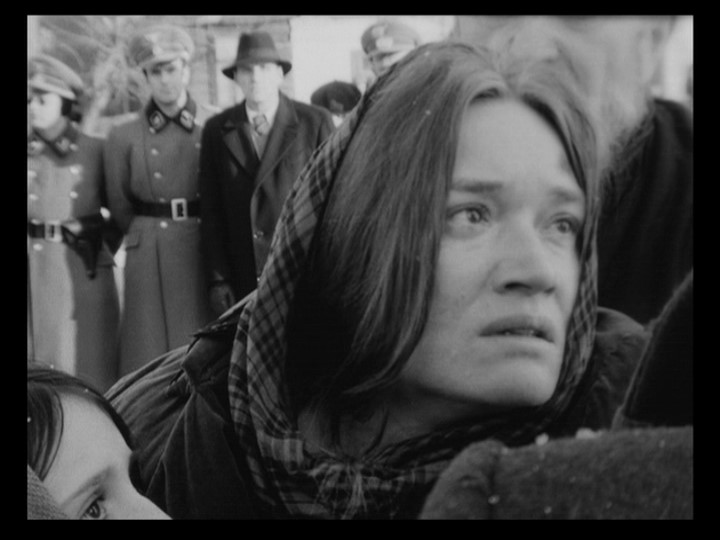
Survival and sacrifice are at the forefront of Larisa Shepitko’s World War II drama “The Ascent” – only fitting since the film, at once simple, at the next complex, is ultimately an allegorical portrait of Christ and Judas in a world turned topsy-turvy by the senseless strife and slaughter during the German invasion and occupation of Belarus.
For the Ukrainian-born Shepitko, herself a student of Master Ukrainian filmmaker Olexander Dovzhenko, it is clear why this story resonated with her and why she applied such staggering Dovzhenkian compositions to the picture. Coming from Ukraine, a country and culture that had been under the yoke of occupation and suppression almost from its very beginnings.
The story is a simple one. It is also both tragic and compelling. Ultimately, however, it is the simple narrative backbone that allows Shepitko to inspire an audience’s engagement in the proceedings as well as opportunities for contemplation and reflection both during and after seeing the film.
The Ascent follows the path of two peasant soldiers, cut off from their troop, who trudge through the snowy backwoods of Belarus seeking refuge among villagers. Their harrowing trek leads them on a journey of betrayal, heroism, and ultimate transcendence.
Shepitko’s emotionally overwhelming final film won the Golden Bear at the 1977 Berlin Film Festival and has been hailed around the world as the finest Soviet film of its decade. Set during World War II's darkest days .


Larisa Shepitko
1938 - 1979

The career of Larisa Shepitko, an icon of sixties and seventies Soviet cinema, was tragically cut short when she was killed in a car crash at age forty, just as she was emerging on the international scene. The body of work she left behind, though small, is masterful, and her genius for visually evoking characters' interior worlds is never more striking than in her two greatest works: Wings, an intimate yet exhilarating portrait of a female fighter pilot turned provincial headmistress, and The Ascent, a gripping, tragic wartime parable of betrayal and martyrdom. A true artist who had deftly used the Soviet film industry to make statements both personal and universal, Shepitko remains one of the greatest unsung filmmakers of all time.

Shepitko was married to another dominant figure of Soviet cinema, Elim Klimov, and died shortly before the completion of the latter's film Farewell which she was supposed to direct.

Aug 24, 2010

29th August 2010; De Sica's The Children Are Watching Us

The Children Are
Watching Us

A film by Vittorio De Sica
Year:1944
Country : Italy
Italian with English subtitles
Run time: 84 minutes
29th August 2010; 5.45pm
Perks Mini Theater, Perks School
Off Trichy Road
http://konangalfilmsociety.blogspot.com/

The child knows. Although just a diminutive four-year-old, utterly naive about the world around him, he senses--he knows--that something is not right with his parents.
Vittorio De Sica’s The Children Are Watching Us (I bambini ci guardano), a precursor to Italian neorealism that relates the heart-breaking account of a family’s dissolution and the destructive effect it has on the child perpetually caught in the middle.
Telling the story almost entirely from the point of view of the child (note how low the camera always is), De Sica exposes how the failings, hypocrisies, and selfishness of parents can render them not only useless in protecting and guiding their children, but actively hurtful.The child in question is Pricò, who is played with absolute conviction and tenderness by Luciano De Ambrosis.

There's always a sense of harsh movement in the film, lines of action isolating objects and characters into different stratums of the frame. A geometric, spider-like pattern emerges throughout, with little Pico caught in the center, gasping for breath like an ensnared animal, threatened from either side by all sorts of twin pressures.

No one feels this pressure more than Pico. In the film's single greatest scene, father and son lock eyes like hunter and prey, one asking the other for the information he already knows, the other resisting because he knows submission will completely devastate the family.
There is an elevator in the film that only goes up, a symbol of Andrea's lack of foresight. Similarly, De Sica's camera often travels forcefully in one direction away from his characters. During a wonderfully hypnotic beach scene, an effete gentleman with a little dog tries to seduce Nina with his eyes and the movement of the camera suggests the woman is being torn apart like a piece of taffy—on one side by her pleasure-seekingness, on the other by her dedication to her son, whom she holds in her hands trying to teach how to swim.
It is in the final scene that The Children Are Watching Us builds to its powerfully emotional climax. It is a heart-rending moment in which you feel a human connection being literally ripped away, making the film one of a handful that treats the difficulties of childhood with such a deft, tender hand as to avoid all sense of cloying sentimentality.

The Children Are Watching Us is a marvel of complex visual and emotional scope -this is the first neorealist gesture, a sign that the Italian film was about to grow up.


VITTORIO DE SICA

Vittoria De Sica, was one of the great directors of the postwar Italian neorealist movement, which represented a large, loud break with Hollywood tradition and dealt with life as it might exist outside sound stages.

As one of the world's most influential filmmakers, and as an actor who starred in some 150 movies, Vittorio De Sica built a remarkable film career that spanned half a century.
De Sica directed 34 feature films, for which he won numerous international prizes. He was honored with four Academy Awards: two Special Awards, preceding the creation of the Best Foreign Film category, for "Shoeshine" in 1947, and "The Bicycle Thief" in 1949, and Best Foreign Film Awards for "Yesterday, Today and Tomorrow" in 1964, and The Garden of the Finzi-Continis in 1971.

De Sica was born in 1902 in Sora, near Rome, and grew up in Naples in a middle-class family. His father, Umberto De Sica, a bank clerk with a penchant for show business, encouraged his good-looking son to pursue a stage career. At 16, he appeared in the film "The Clemenceau Affair." His career took off in the 1920s when he joined a local theater company and became a matinee idol. He later formed his own company, producing plays and co-starring with his first wife, Giuditta Rissone. At the same time, he made a name for himself as a suave leading man in Italian films, and became immensely popular with female audiences.

During World War II, De Sica turned to directing. His first four films were routine light productions in the tradition of the Italian cinema of the day. But his fifth, "The Children Are Watching Us," was a mature, perceptive, and deeply human work about the impact of adult folly on a child's innocent mind. The film marked the beginning of De Sica's collaboration with author and screenwriter Cesare Zavattini, a creative relationship that was to give the world two of the most significant films of the Italian neorealism movement, "Shoeshine" and "The Bicycle Thief."

To finance his directorial efforts, De Sica worked as an actor throughout his career. He turned almost exclusively to acting in the late 1950s, enjoying great popularity in the role of the rural police officer in Comencini's "Bread Love and Dreams" (1954), and in a subsequent comedy series of the same name co-starring Gina Lollobrigida.

He made a dramatic comeback with The Garden of the Finzi-Continis , produced by Arthur Cohn. The director's next movie was "A Brief Vacation" (1973), a moving film, also produced by Arthur Cohn, about a working-class Italian woman's first taste of freedom in a society dominated by males. His last film, "The Voyage" (1974), was based on a novella by Pirandello.Vittorio De Sica died in 1974 at the age of 72.


Aug 16, 2010

21st Aug 2010 ; Documentaries on Art - Van Gogh


DOCUMENTARIES ON ART


Vincent Van Gogh

21st August 2010 , Saturday; 5.45 pm
Contemplate Art Gallery
Rajshree Ford Buildings, Avanashi Road
(Opp. Krishnammal College)
http://www.contemplate.co.in
http://konangalfilmsociety.blogspot.com


Contemplate: is an initiative that will incubate art events, collaborations with artists and art organizations to mount unique platforms, support workshops to encourage new dialogues and creating forums and opportunities for cultural exposure.

Konangal film society has been active from 2003 in Coimbatore. Apart from screening world cinema, screening of documentaries on art once every month was part of regular screening schedule of Konangal.

This is the first of the series of art documentaries that will be screened once every month jointly by Contemplate and Konangal. These documentaries will cover a broad range of disciplines of Art , from classic , to contemporary .


Vincent Van Gogh

Vincent Van Gogh, ( March 30, 1853), generally considered the greatest Dutch painter and draughtsman after Rembrandt. With Cézanne and Gauguin the greatest of Post-Impressionist artists. He powerfully influenced the current of Expressionism in modern art. His work, all of it produced during a period of only 10 years, hauntingly conveys through its striking colour, coarse brushwork, and contoured forms the anguish of a mental illness that eventually resulted in suicide.

In 1869 van Gogh went to work in The Hague. In 1873 he was sent to the London and fell unsuccessfully in love with the daughter of the landlady. This was the first of several disastrous attempts to find happiness with a woman. His father was a Protestant pastor, and van Gogh first trained for the ministry, but he abandoned his studies in 1878 and went to work as a lay preacher among the impoverished miners of the grim Borinage district in Belgium.
From this time he worked at his new `mission' with single-minded frenzy, and although he often suffered from extreme poverty and undernourishment, his output in the ten remaining years of his life was prodigious: about 800 paintings and a similar number of drawings.
From 1881 to 1885 van Gogh lived in the Netherlands, sometimes in lodgings, supported by his devoted brother Theo, who regularly sent him money from his own small salary. In keeping with his humanitarian outlook he painted peasants and workers, the most famous picture from this period being The Potato Eaters Of this he wrote to Theo: `I have tried to emphasize that those people, eating their potatoes in the lamp-light have dug the earth with those very hands they put in the dish, and so it speaks of manual labour, and how they have honestly earned their food'.

In 1885 van Gogh moved to Antwerp, and in February 1886 he moved to Paris, where he met Pissarro, Degas, Gauguin, Seurat, and Toulouse-Lautrec. At this time his painting underwent a violent metamorphosis under the combined influence of Impressionism and Japanese woodcuts, losing its moralistic flavour of social realism. Van Gogh became obsessed by the symbolic and expressive values of colors and began to use them for this purpose rather than, as did the Impressionists, for the reproduction of visual appearances, atmosphere, and light. `Instead of trying to reproduce exactly what I have before my eyes,' he wrote, `I use color more arbitrarily so as to express myself more forcibly'.
In February 1888 van Gogh settled at Arles, where he painted more than 200 canvases in 15 months. During this time he sold no pictures, was in poverty, and suffered recurrent nervous crisis with hallucinations and depression. He became enthusiastic for the idea of founding an artists' co-operative at Arles and towards the end of the year he was joined by Gauguin. But as a result of a quarrel between them van Gogh suffered the crisis in which occurred the famous incident when he cut off his left ear (or part of it), an event commemorated in his Self-Portrait with Bandaged Ear .
In May 1889 he went at his own request into an asylum at St Rémy, near Arles, but continued during the year he spent there a frenzied production of tumultuous pictures such as Starry Night (MOMA, New York). He did 150 paintings besides drawings in the course of this year.
In 1889 Theo married and in May 1890 van Gogh moved to Auvers-sur-Oise to be near him, lodging with the patron and connoisseur Dr Paul Gachet. There followed another tremendous burst of strenuous activity and during the last 70 days of his life he painted 70 canvases. But his spiritual anguish and depression became more acute and on 29 July 1890 he died from the results of a self-inflicted bullet wound.
He sold only one painting during his lifetime (Red Vineyard at Arles; Pushkin Museum, Moscow), and was little known to the art world at the time of his death, but his fame grew rapidly thereafter. His influence on Expressionism, Fauvism and early abstraction was enormous, and it can be seen in many other aspects of 20th-century art. His stormy and dramatic life and his unswerving devotion to his ideals have made him one of the great cultural heroes of modern times, providing the most auspicious material for the 20th-century vogue in romanticized psychological biography.(Source:Internet)