Jan 21, 2014

26th Jan 2014; Anand Gandhi's SHIP OF THESEUS


The Ship of Theseus 
A film by Anand Ghandi
2013/India/Col / 139 minutes
26th Jan 2014; 5.15 pm
Perks Mini Theater

(Screening will start at 5.15 pm with a documentary of filmmaker Anand Gandhi’s interview on making of Ship of Theseus. Screening of interviews (documentaries) of cinematographer Pankaj Kumar, actor Neeraj Kabi and actor/producer Sohum Shah will follow the main film screening.)
The ship of Theseus is as old as conundrums go, harking back to the vessel in which the mythic Greek slayer of the Minotaur sailed. The poser as it was first recorded by Plutarch was: if the planks of the ship were replaced one after the other until nothing of the old timber was left on it, would the ship remain the same?
Ship of Theseus "tries to" ask if there is a beyond outside the body, the material world: if you were to create a man with different parts, would that still be a man (a life, rather, since the emphasis is not just on humans), or would something still be missing?
The narrative follows three separate characters: a young woman who has recently become blind as the result of a cornea infection and now remarkably spends her time as a borderline professional photographer, a monk with very strong core beliefs who is currently involved on the humanistic side of an animal rights court case and finally a young stock broker who seems oblivious to the world around him. We spend a lot of time with each of these characters, their stories presented in succession rather than interspersed throughout the film. 
 
At 139 minutes, Ship of Theseus is a handful once a moviegoer realizes the film is made up of three vignettes that will be connected by the time the credits roll.
Gandhi has done a remarkable job putting together a cast of characters who will openly challenge each other, even during crisis situations. The beliefs of the characters are never simply respected and tip-toed around – it would be nice to see more of this in the real world. If the characters in Theseus teach us anything it is that flexibility and self-doubt are modern day virtues which allow us make those important decisions that often need to be made.
 Only a few films provoke you to introspect and challenge your own convictions as Ship Of Theseus does. Ship of Theseus provokes us to question the beliefs we hold most dear, while at the same time humbling us, as our individual comprehension of the universe can never be more illuminating than a flashlight cutting through the darkness.
( Source : Internet)


ANAND GANDHI

Anand Gandhi was born on 26 September 1980 in Mumbai. He is an independent filmmaker and screenwriter based in Mumbai. He was initially involved in parallel theatre, where he wrote and directed several critically acclaimed plays.

His film directorial debut Right Here, Right Now (2003) achieved substantial critical acclaim. Right Here, Right Now is a 30-minute film that deals with the idea of cyclic causality. His second film Continuum (2006) was co-directed with Khushboo Ranka. Continuum is a montage of simple stories from everyday life, popular culture and folklore that explore "the continuum of life and death, of love and paranoia, of trade and value, of need and invention, of hunger and enlightenment".

Anand Gandhi's writing career began in 2000 with the emergence of the daily soap opera genre in India. He wrote dialogue for the first eighty-two episodes of a popular show called Kyunki Saas Bhi Kabhi Bahu Thi. Kyunki... and Kahaani Ghar Ghar Kii, for which he wrote screenplay, are the longest running TV shows in the history of Indian Television. He is often quoted for his disgust over the aesthetics of Indian television, including the shows he wrote for.

He moved away from his television career to write and direct highly acclaimed award-winning plays like Sugandhi, Pratyancha, Kshanotsav, Na and Janashtaru. Almost all his work has been produced for the alternative one-act theatre. He has written only one mainstream play, Chal Reverse Ma Jaiye. It achieved moderate success commercially and won the Transmedia Best Play award for 2005.

His first feature-length film, Ship of Theseus, premiered at the 2012 Toronto International Film Festival, where it was discovered as the "hidden gem of the year". It won the Best Film Award at the Transylvania International Film Festival, Best Cinematography Award at the Tokyo International Film Festival, the Jury Prize for Technical Excellence at the Mumbai Film Festival, Best Actress Award at the Dubai International Film Festival.It was given a Special Mention by the Sutherland Jury "for tickling our intellect and showing us rarely-seen facets of Indian life".Critic Derek Malcolm put it on the list of "films that changed our lives", made to celebrate the centenary of The Critics' Circle.

In July 2013, the Philosophy Department of the Mumbai University honoured him with a "Contribution to Jain Philosophy" award.


Dec 27, 2013

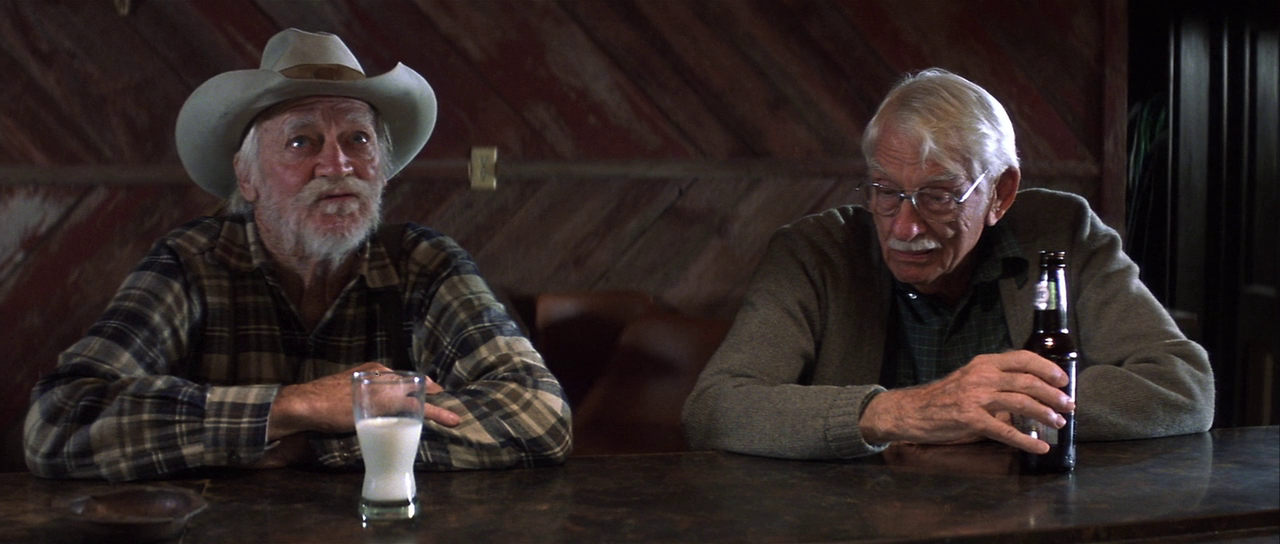
5th January 2014; David Lynch's The Straight Story


The Straight Story
A film by David Lynch
1999/ USA/Col/ 112 mins
5th Jan 2014; 5.45pm
Perks Mini Theater
http://konangalfilmsociety.blogspot.in/

Somewhere along the way, our world got itself in a damn hurry. And maybe more than any great American road movie it took an old man on a lawnmower to remind us that life's journey should never be rushed.

The first thing in director David Lynch's strange, tender film is a vast night sky winking with stars; but those stars died long ago. All we see now are fading memories, their light reaching us after a one-way trip along the cosmic interstate.
 
And so it goes for 73-year-old Alvin Straight. Looking up into the night, he remembers the estranged older brother he hasn't spoken to for 10 years. "I want to sit with him and look up at the stars, like we used to, so long ago," he'll tell a stranger later in the film.
 
When he hears his brother has had a stroke, Alvin realises their journey through time is nearly over. He can barely walk. His eyesight's too bad to drive a car. But he must make peace, must make the 270-mile trip from Iowa to his brother's house in Mount Zion, Wisconsin. Alvin hits the road, heading down the two-lane blacktop on the trip of a lifetime. At 10mph. On his lawnmower.
 Especially Alvin. Looking like a crumpled road map, actor Richard Farnsworth shows us a man who's learned that every moment of life is a gift. It's a majestic performance. Alvin's stubborn grace and casual dignity brings out the best in everyone he meets (a pregnant runaway, a hysterical driver who claims to have run over 14 deer). Through his marble-blue eyes and Lynch's camera, the ordinary world starts looking like a thing of wonder. Filming the midwest in its autumnal glory – wheat fields and sunsets, lightning and gentle rain – Lynch transforms a geriatric road trip into a gentle American parable that's quietly awestruck by life itself.
The emotion hits you like a left hook; you just don't see it coming. As Alvin shares his haunted memories of the second world war with a fellow veteran, The Straight Story delivers an anti-war message stronger than a thousand movies about conflict.
 
Suddenly, an old man on a lawnmower doesn't seem so strange. No stranger than it should be to learn that The Straight Story, shot along the route taken by the real Alvin Straight, is a true story. Of course it is.
 (Source: The Guardian)

DAVID LYNCH

Born in precisely the kind of small-town American setting so familiar from his films, David Lynch spent his childhood being shunted from one state to another as his research scientist father kept getting relocated. He attended various art schools, married, and fathered future director Jennifer Chambers Lynch shortly after he turned 21. That experience, plus attending art school in a particularly violent and run-down area of Philadelphia, inspired Eraserhead (1976), a film that he began in the early 1970s (after a couple of shorts) and which he would work on obsessively for five years. The final film was initially judged to be almost unreleasably weird, but thanks to the efforts of distributor Ben Barenholtz, it secured a cult following and enabled Lynch to make his first mainstream film (in an unlikely alliance with Mel Brooks), though Elephant Man, The (1980) was shot through with his unique sensibility. Its enormous critical and commercial success led to Dune (1984), a hugely expensive commercial disaster, but Lynch redeemed himself with Blue Velvet (1986), his most personal and original work since his debut. He subsequently won the top prize at the Cannes Film Festival with the dark, violent road movie Wild at Heart (1990), and achieved a huge cult following with his surreal TV series "Twin Peaks" (1990), which he adapted for the big screen, though his comedy series "On the Air" (1992) was less successful. He also draws comic strips and has devised multimedia stage events with regular composer Angelo Badalamenti.

From the beginning of his career, David Lynch quickly established himself as the Renaissance man of modern American filmmaking, an acclaimed and widely recognized writer-director as well as television producer, photographer, cartoonist, composer, and graphic artist. Walking the tightrope between the mainstream and the avant-garde with remarkable balance and skill, Lynch brought to the screen a singularly dark and disturbing view of reality, a nightmare world punctuated by defining moments of extreme violence, bizarre comedy, and strange beauty. More than any other arthouse filmmaker of his era, he enjoyed considerable mass acceptance and helped to redefine commercial tastes, honing a surrealistic aesthetic so visionary and deeply personal that the phrase "Lynchian" was coined simply to describe it.  (Source: Internet)


14th December 2013; Art Documentary : Vermeer's The Art of Painting


Contemplate and Konangal
Documentary on Art
‘Private Life of a Masterpiece-
Vermeer’s The Art of Painting’
14th December 2013; 5.45 pm
Contemplate Art Galley ,
Avanashi Rd, Opp. Krishnammal College

Johannes Vermeer was a Dutch Baroque painter who was specialized in painting domestic interior scenes of ordinary life. In his life he produced relatively few paintings (35 paintings), and thus left his family in debt at the time of his death. He painted few paintings as he worked slowly and with great care. Bright colours were common in his paintings, but sometimes he also used expensive pigments. However, he is renowned for his use of light. He is  now acknowledged as one of the greatest painters of the Dutch Golden Age.
This painting is called The Art of Painting, but it is also known as The Allegory of Painting or Painter in his studio. It is a famous 17th century oil on canvas painted by Jan Vermeer. Many experts in art believe that this work is an allegory of painting, and thus, the different titles. The painting has only two figures, the painter and his subject. The painter is thought to be a self-portrait of the artist, though the face is not visible. The subject is the Muse of History, Clio. The map in the background is of the Seven United Provinces of the Netherlands


In The Art of  Painting Vermeer gave more attention to light and textural effects at the rear of the room. Moreover, the light falling across Clio, the model’s hands, face and robe show the softness of Clio’s skin. The effect of light is also visible on the map, where the light models its form and reflects its aged appearance. Finally, another object captured by the light is the chandelier, where the sunlight reflecting off its polished surface makes it really beautiful. This light contracts in an amazing way with the dark parts of the chandelier.
The Art of Painting holds a special place within Vermeer's oeuvre. While it displays all the captivating characteristics of his artistic genius -- a carefully observed seventeenth-century Dutch interior illuminated by softly diffused light, exquisitely painted details, and a frozen moment imbued with psychological depth -- it stands apart from his other works in its imposing scale and pronounced allegorical character.

Nov 19, 2013

24th Nov 2013; Jan Troell's EVERLASTING MOMENTS


EVERLASTING MOMENTS
A film by Jan Troell
2008/Sweden/131 minutes/ Col
24th Nov; 5.45pm
Perks Mini Theater


'Everlasting Moments" presents a paradox: It's a small, graceful epic. Set in southern Sweden during the first decades of the 20th century, the movie picks one face out of the tenement crowd: Maria Larsson (Maria Heiskanen), impoverished, overworked, saddled with a brutish husband named Sigge (Mikael Persbrandt) and a growing gaggle of children. Then it hands her a still camera and watches as, to Maria's own great shock, her creative fires are lit.
 

"Everlasting Moments" is beautifully attuned to tectonic shifts in the culture even as it attends to this one small life. We see Maria's marriage and art through the eyes of her oldest daughter, Maja 
 The movie is  is about Maria, who is a strong woman, resilient, complex. She raises the children, works as a house cleaner, copes with the family's poverty. Once, when newly married, she won a camera in a lottery. Now she finds it and takes it to a photo shop to pawn it and buy food. Maria is not sophisticated and may have little education, but she is a deep and creative woman and an instinctively gifted photographer. She has no theory, but her choices of subjects and compositions are inspired. 
 "Everlasting Moments" is quiet, observant, and intensely moving whenever Heiskanen is on screen, and it has a valedictory sweep that feels like a summing up. Troell lovingly re-creates a time when socialism and Charlie Chaplin movies represented the ways forward, and he anchors his social panorama in the meek, stubborn stare of an unnoticed woman possessed with looking at everything.


(Source- Internet) 


Jan Troell

Before becoming one of Sweden's leading film directors in the mid-'60s, Jan Troell spent nine years as an elementary school educator. In the early '60s, he began making amateur films. One of them, Stad, the story of a boy looking for his lost turtle, was aired on television in 1960. In 1961, Troell began making television documentaries such as Baten/The Ship. He got his start in feature films working as an assistant for Bo Widerberg in 1962. He was first a cameraman for Widerberg and then a co-editor. In 1965, Troell contributed to the portmanteau film 4 x 4. The following year he made his feature-length directorial bow in 1966 with Here's Your Life. He has since become known as one of Sweden's best directors for such internationally acclaimed films as The Emigrants (1971) and The New Land (1972). Troell has also directed a couple of films in the U.S., including Zandy's Bride (1974).

After Everlasting Moments (2008) despite his age (he is currently 81), Troell has remained productive until the present day. His recent films include As White as in Snow (Så vit som en snö, 2001), based on the life of Swedish aviatrix Elsa Andersson, a documentary called Presence (Närvarande, 2003), and his latest film Everlasting Moments (Maria Larssons eviga ögonblick, 2008). His next feature film is called The Last Sentence (Dom över död man). It's a biographical film about the Swedish publicist Torgny Segerstedt and premiered in November 2012 at the Stockholm International Film Festival. At the same festival Troell was awarded the Lifetime Achievement Award.