Jun 19, 2013

23rd June 2013; Jean renoir's THE RULES OF THE GAME

The Rules of the Game
A film Jean Renoir
France/1939/ 110 min
23rd June ; 5.45pm 
Perks Mini Threater


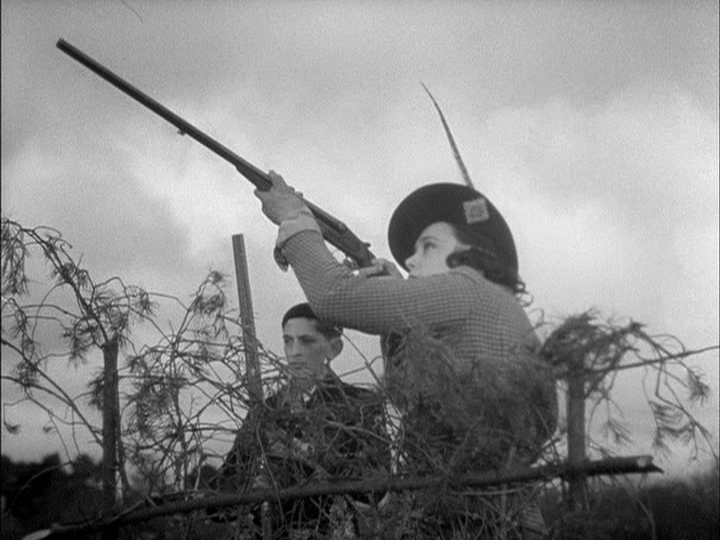
There are about a dozen genuine miracles in the history of cinema, and one of them is Jean Renoir's supreme 1939 tragi-comedy The Rules of the Game.  The Rules of the Game follows the amorous exploits of a group of aristocrats invited to a hunting party at a French château. Their hectic intrigues find an uncanny echo in the affairs of their servants, upstairs and downstairs comically crossing paths on the way to a tragic conclusion.
The movie takes the superficial form of a country house farce, at which wives and husbands, lovers and adulterers, masters and servants, sneak down hallways, pop up in each other's bedrooms and pretend that they are all proper representatives of a well-ordered society.
The film's dazzlingly labyrinthine script never mentions the coming war, yet its menace permeates a milieu that seems to have lost all moral compass, and where the ideal of happiness had been sacrificed to one of mere amusement. And amuse themselves these people do—along with us.
Their spineless yet sympathetic host, the wealthy, Jewish Marquis de la Chesnaye (brilliantly played by Marcel Dalio), when he's not attempting to rid himself of a cumbersome mistress, entertains himself with mechanical toys—player pianos, artificial warbling birds—that mirror his own vacuity. Meanwhile his beautiful, foreign-born wife must contend with the adoration of a dashing aviator (Roland Toutain)—a romantic hero thrust into a society devoid of illusions.

Shades of an 18th-century French farce—yet who can forget, in the thrilling scene of the hunt when white-robed servants beat the trees to flush out the game, that within a few years similar forests would be hunted for partisans and Jews? Renoir's artistic sensitivity seems to have endowed him with a kind of second sight.

The Rules of the Game provoked something like a riot at its Parisian premiere. The film was cut twice, and its original negative was destroyed by Allied bombing. Now it has been  completely  restored  from a master print.
(Source: Internet)


Jean Renoir
1894-1979

Son of the famous Impressionist painter Pierre Auguste, Jean Renoir had a happy childhood. Pierre Renoir was his brother, and Claude Renoir was his nephew. After the end of World War I, where he won the Croix de Guerre, he moved from scriptwriting to filmmaking. He married Catherine Hessling, for whom he began to make movies; he wanted to make a star of her. His next partner was Marguerite Renoir, whom he never married, although she took his name. He left France in 1941 during the German invasion of France during World War II and became a naturalized US citizen.
As a director and actor, he made more than forty films from the silent era to the end of the 1960s. As an author, he wrote the definitive biography of his father, Renoir, My Father (1962). Renoir exerted immense influence on subsequent auteur directors, including among others Orson Welles, Satyajit Ray, and François Truffaut. Best remembered for such cinematic landmarks as Grand Illusion (1937) and The Rules of the Game (1939), Renoir is considered one of the major figures of French and international film history.
Renoir's films were underestimated when they first came out. They were unconventional, complex, and so energetic and technically daring that few noticed their intricate structure. They were often dismissed as rough, not fully achieved artistically. The generation that came to the cinema in the '60s and '70s (perhaps the richest and most diverse era in European cinema) recognised Renoir as an ancestor who had already made the kind of films they admired or were setting out to make themselves, and justly hailed them as masterpieces.

Jun 5, 2013

9th June 2013; Hou Hsiao-hsien's A Summer at Grandpa's

[Enter Post Title Here


A Summer at Grandpa's
A film by Hou Hsiao-hsien
1984 / Taiwan/ Col/ 102 mins
9th June 2013; 5.45 pm
Perks Mini Theater

A Summer at Grandpa's (1984), follows events in the lives of the story's adult characters from a child's limited point of view, demanding that the spectator alone make sense of what's onscreen, just as the young protagonist does. The child's slow education becomes an allegory for the process of gradual understanding in which the viewer engages.
Shot in a summer palette of greens and blues, and everywhere evoking the gentleness of nostalgic pastoralism, Hou's film subtly demonstrates how the violence, desire, and strife of living, thinly veiled by the conventions of adult society, are nonetheless impressed on the protagonists.
In A Summer at Grandpa's, director Hou Hsiao-hsien uses the techniques he developed in his earlier work with young actors to create an entire narrative following two child protagonists as they learn about the complexities and problems of adulthood. Based on the childhood experience of Hou's frequent collaborator, Chu T'ien-wen, the film follows Tung-tung and his sister, Ting-ting, as they are sent to the country home of their mother’s father while their mother lies ill in hospital.

Tung-tung is beginning to learn to communicate his feelings and interpretations in the letters he writes to his parents, even if they sometimes overwhelm him. “So many things happen each day that I can't keep track,” he tells them. “I'll tell you later if they come back to my mind.” As spectators, we are often similarly overwhelmed, but Hou's film places demands on our powers of observation, insisting that we, like Tung-tung, attend to the minutiae, ironies, and deeper meanings it offers us. (Source:Internet)


Hou Hsiao-hsien

Hou Hsiao Hsien , born April 8, 1947) is a Taiwanese actor, singer, producer and director. He is a leading figure of Taiwan's New Wave cinema movement. Director Hou Hsiao Hsien, in a 1988 New York Film Festival World Critics Poll, was voted one of three directors who would most likely shape cinema in the coming decades. He has since become one of the most respected, influential directors working in cinema today. In spite of his international renown, his films have focused exclusively on his native Taiwan, offering finely textured human dramas that deal with the subtleties of family relationships against the backdrop of the island's turbulent, often bloody history.
 All of his movies deal in some manner with questions of personal and national identity, particularly, "What does it mean to be Taiwanese?" In a country that has been colonized first by the Japanese and then by Chiang Kai-Shek's repressive Nationalist Government, this question is pregnant with political connotations.


May 14, 2013

19th May 2013; Henri-Georges Clouzot's WAGES OF FEAR


The Wages of Fear
A film by Henri-Georges Clouzot
Year 1956; Runtime: 141 mins
19th May 2013; 5.45pm
Perks Mini Theater


One of cinema’s most revered thrillers,  The Wages of Fear is the acknowledged masterpiece of the brilliant French director Henri-Georges Clouzot (1907-77). Clouzot’s sixth film and the predecessor to his terror classic Diabolique, it was voted the Grand Prize at Cannes in 1953 and Best Film of 1954 by the British Film Academy.
The film's extended suspense sequences deserve a place among the great stretches of cinema. Desperate men, broke and stranded in a backwater of Latin America, sign up on a suicidal mission to drive two truckloads of nitroglycerin 300 miles down a hazardous road. They could be blown to pieces at any instant, and in the film's most famous scene Clouzot requires them to turn their trucks around on a rickety, half-finished timber platform high above a mountain gorge.
Their journey also requires them to use some of the nitroglycerin to blow up a massive boulder in the road, and at the end, after a pipeline ruptures, a truck has to pass through a pool of oil that seems to tar them with the ignominy of their task.
The movie is heart-stopping once the two trucks begin their torturous 300-mile journey to a blazing oil well. The cinematographer, Armand Thirard, pins each team of men into its claustrophobic truck cab, where every jolt and bump in the road causes them to wince, waiting for a death that, if it comes, will happen so suddenly they will never know it.

The journey, which comprises the second half of the film, is heartstopping. Georges Auric’s score and Armand Thirard’s cinematography, which dramatically opposes light and shadow, add to the tension. And Clouzot’s editing style “based on constant shocks,” punctuates the narrative perfectly. Consequently, as the New York Times critic Bosley Crowther wrote, “You sit there waiting for the theater to explode.”


Henri-Georges Clouzot

Like so many others, Clouzot found his chance to move from scriptwriting to directing during the Occupation, a time when there was a paucity of directors in France. His first effort, L'Assassin habite au 21, was a safe film. Its script followed two similar films he had written which had been well-received by audiences. These witty police dramas were exercises in style and cleverness, befitting the epoch. Le Corbeau, made the next year, was in contrast a shattering film, unquestionably hitting hard at the society of the war years.

In the mid-1950s when The Wages of Fear and Diabolique gave him a reputation as a French Hitchcock, interested in the mechanics of suspense. In France, however, these films, especially Diabolique, were seen as only well-made studio products. His 1960 La vérité, starring Brigitte Bardot, was designed to win him favor in the youth culture of the time, which was obsessed by New Wave life and movies. While the film outgrossed its New Wave competition, its cloyingly paternalistic style showed how far Clouzot was from the spontaneity of the New Wave. The cafe scenes in the film are insincere, and the inevitable indictment of society rings false.


May 7, 2013

12th May 2013; Michael Haneke's AMOUR


AMOUR (LOVE)
A film by Michael Haneke
2012/ France, Austria/127 min
12th May ; 5.45 pm ; Perks Mini theater
http://konangalfilmsociety.blogspot.in/

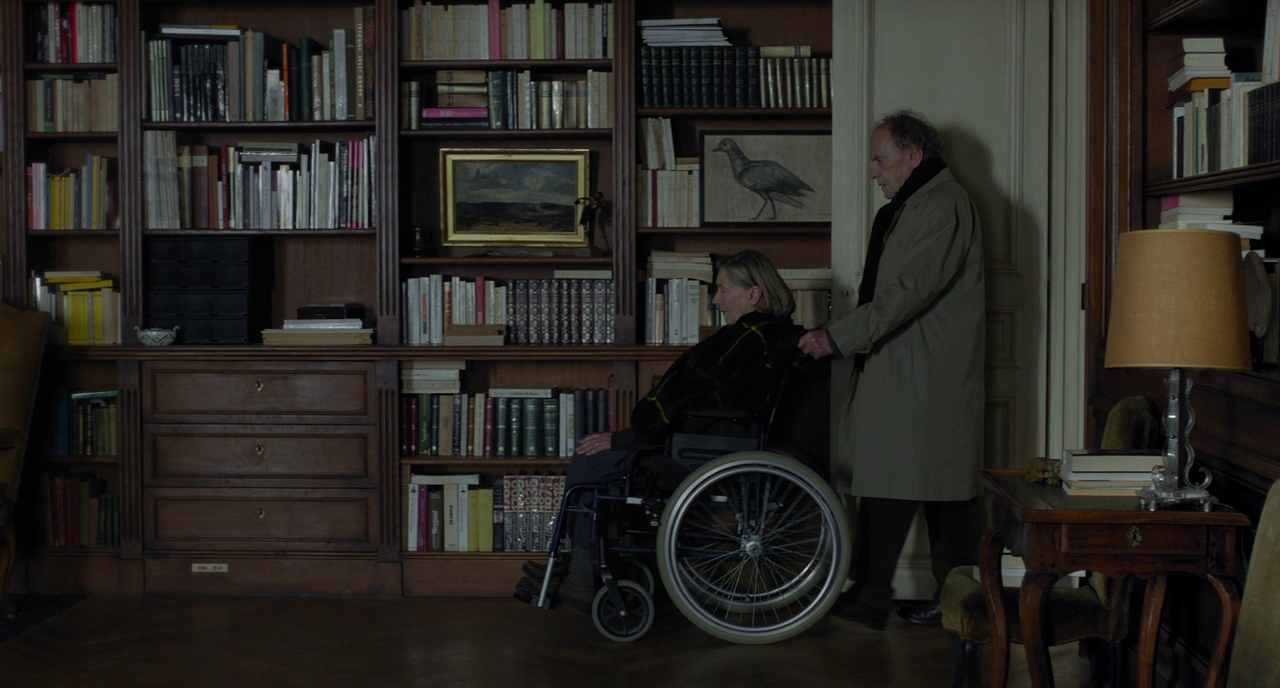
Austrian filmmaker Michael Haneke’s meticulous, superbly crafted portrait of an elderly couple facing the end of life chronicles a chapter that many viewers either have experienced or are confronting themselves.
“Amour” is a tribute to two aging legends of the French screen and the cinematic tradition they represent. Both actors give complicated and heartbreaking performances, but Riva’s unstinting portrayal of a composed and generous woman who knows that everything – her mental clarity, her physical control and life itself – will soon be stripped from her is absolutely unforgettable.
“Amour,” while relentless, has compassion not only for the couple’s struggles and isolation, but also for the fumbling of outsiders. Other people mean well, but they’re from a world where death remains offstage. Haneke leaves us with more questions than answers, but I will agree with him that there is no note of irony in his title.
This is an unforgettable love story set at the close of day, as tragic and beautiful in its way as “Tristan und Isolde,” and a portrait of the impossible beauty and fragility of life that will yield new experiences to every viewer and every viewing.


Michael Haneke

Born  in Munich in March 1942, Haneke spent his early years in a working class suburb of Vienna before an early attempt at fame as an actor and pianist. Failing to achieve early success, Haneke attended the University of Vienna to study philosophy and psychology, and became a film critic and stage director before making his eventual debut as a television director with After Liverpool in 1973. Setting in motion a television career specializing in literary adaptations and small screen films, Haneke would work successfully in that medium until his feature debut with The Seventh Continent in 1989.Laced with the theme of muted emotions resulting in stark violence that would become his calling card.

Haneke took the modern obsession with cinematic violence to a level rarely attempted in 1997, with the tale of a happy family relentlessly tortured in Funny Games. Violence is not fun in Haneke's world and this is where his optimism comes into play. Haneke took home the Grand Prize at the 2001 Cannes Film Festival for The Piano Teacher, a compelling tale of sexual repression that also won that film's stars, Benoit Magimel and Isabelle Huppert, the Best Actor and Actress awards at the festival.He earned some of the strongest reviews of his career for the 2005 thriller Cache.

In 2007 he remade his film Funny Games in English with a cast that included Naomi Watts, Tim Roth, and Michael Pitt. He scored another international hit with 2009's The White Ribbon, and had arguably his biggest American success in 2012 when his film Amour garnered Oscar nominations for Best Picture, Best Actress, Best Screenplay, and Best Director, and won the coveted award for Best Foreign Language Film 


May 1, 2013

4th April 2013; Art Documentary : The World's Most Expensive Paintings


Contemplate and Konangal


Screening of Documentary on Art


The World’s Most Expensive Paintings
A BBC documentary – Duration 1 hour.
4th May 2013; 5.45 pm
Contemplate Art Gallery


Art critic and journalist Alastair Sooke explores the remarkable stories behind the Top Ten Most Valuable Paintings in the World. What are the ten most expensive paintings to have been sold at auction? Why do some pay millions for a painting? Who are the buyers? Why is art so valuable?
In seeking the answers to some of these questions, Alastair uncovers stories of scandal, war, exile, revolution, paranoia, and economic turmoil - stories which range from the Holocaust to the discreet banks of Zurich and the boom of Japan in the 1980s.

Alastair Sooke tracks down the ten most expensive paintings to sell at auction, and investigates the stories behind the astronomic prices art can reach. Gaining access to the glittering world of the super-rich, Sooke discovers why the planet's richest people want to spend their millions on art.
Featuring works by Picasso, Monet, Renoir, Van Gogh, Klimt and Rubens, Sooke enters a world of secrecy and rivalry, passion and power. Highlights include a visit to the art-crammed home of millionaire author Lord Jeffery Archer; a rare interview with the man at the heart of the sale of the most expensive old master of all time; privileged access to auctioneers Christie's; and a glimpse of the world of the Russian oligarchs.These revelatory journeys allow Sooke to present an eye-opening view of the super wealthy, and their motivations as collectors of the world's great art treasures


Apr 24, 2013


Sawdust and Tinsel
A film by Ingmar Bergman
1953/ Sweden / 93 minutes/ B&W
28th April 2013; 5.45 pm
Perks Mini Theater
http://konangalfilmsociety.blogspot.in/
 Ingmar Bergman's thirteenth film is a landmark in the Swedish filmmaker's oeuvre; it's the beginning of a uniquely distinctive style that became known to the international community as a Bergman film. The Baroque style is adapted from the silent screen German expressionism cinema. It's a misanthropic melodrama that has a dim view of marriage and love, believing it only leads to humiliation. It has great performances and is a visual treat, but its masochistic storyline might not be for all tastes.
It's set at the turn-of-century Sweden. Aging, portly, traveling circus owner and ring master Albert Johansson (Ake Grönberg) is passing with his down-and-out troupe through a provincial town where his tobacco shop owner wife Agda (Annika Tretow) lives with his children. He hasn't seen her for three years and has since taken as a mistress his headstrong gypsy bareback rider, the much younger Anne (Harriet Andersson).

 Anne visits a rehearsal of the suave womanizing lead actor of a theater production, Frans (Hasse Ekman). She's humiliated  and  she has been taken for a fool. When Albert learns of her indiscretion, during the nighttime circus show he challenges Frans to a fight in the main ring and gets beaten up. The humiliated Albert thinks of shooting himself.
The memorable film explores such things as betrayal and Bergman's main theme of humiliation between the sexes. It's a scathing look at the human condition, and a key beginning to the filmmaker's vintage trademark films. Film unfolds  the happenings of a day – from the time the circus troupe pitches the tent to the packing up and leaving  the village with extraordinary visuals. In America, the film was titled The Naked Night; Sawdust and Tinsel is the British title.
(Source:Internet)


Ingmar Bergman

Universally regarded as one of the great masters of modern cinema, Bergman has often concerned himself with spiritual and psychological conflicts. His work has evolved in distinct stages over four decades, while his visual style-intense, intimate, complex-has explored the vicissitudes of passion with a mesmerizing cinematic rhetoric. His prolific output tends to return to and elaborate on recurrent images, subjects and techniques.
Ingmar Bergman was born on July 14, 1918, in Uppsala, Sweden. In 1937 Bergman entered the University of Stockholm, where he became an active member of the student theatrical group. In 1942, after a brilliant production of William Shakespeare's Macbeth, the aspiring director was appointed to the Swedish Royal Opera. In the years following he divided his talents equally between stage and film efforts.
In 1945 Bergman directed his first film, Crisis, the story of an unhappy love affair which ends in suicide. Several films followed closely, but in 1956 Bergman reached the peak of critical and popular praise with The Seventh Seal. It was followed by masterpieces like Wild Strawberries, Persona, Cries and Whispers etc. In addition to film, he directed over 70 plays.
Although apparently not influenced by other filmmakers, with the possible exception of Carl Dreyer, Bergman himself has had a wide-ranging influence on a generation of filmmakers. A unique and powerful presence, his genius has made an extraordinary contribution to the art of the cinema. He died peacefully in his sleep, at his home on Fårö island, on 30 July 2007, at the age of eighty-nine.
(Source: Internet)

Apr 16, 2013

20th April 3013; Documentary on Sculpture BERNINI


Contemplate  and Konangal
present

Documentary on Sculpture


Italian master

BERNINI


(from Power of Art BBC series by Simon Schama)
20th April 2013; 5.45pm
Contemplate Art Gallery
Rajshree Ford Bldg. , Avanashi Rd, Coimbatore


Born in Naples, Bernini was an exceptional talent from an early age and went on to dominate the art world of 17th century Rome. His work epitomised the Baroque style and his sculpture, church interiors and exteriors and town planning could be seen everywhere. He was also a painter, playwright, costume and theatre designer. 


Bernini worked under successive Popes; Pope Gregory XV made him a knight and Pope Urban VIII took him as his best friend. He was revered in his time until a jealous rage caused him to have the face of his mistress slashed after discovering her romance with his brother. His reputation fell further after his bell towers for the Cathedral of St Peter's started cracking in 1641. He redeemed himself and kick started his career again with arguably his most famous work, The Ecstasy of St Theresa, in 1652.


Simon Schama on Bernini :
"A century after the creation of The Ecstacy of St Theresa, a French art lover doing the Tour of Rome entered the Church of S. Maria della Vittoria in Rome, peered at the spectacle and said: "Well, if that's divine love, I know all about it". 
What Bernini's managed to make tangible is something that we all, if we're honest, know we hunger for, but before which we're properly tongue-tied. Something that has produced more bad writing, more excruciating moments of bad cinema, more appalling poems than anything else. No wonder when art historians look at this sculpture they tie themselves in knots to avoid saying the obvious, that is, that we're looking at the most intense convulsive drama of the body that any of us experience."


Mar 21, 2013


Beasts of the Southern Wild
A film by Benh Zeitlin
2012/USA/Col/Runtime 93 mins
24th March 2013; 5.45pm
Perks Mini Theater


The Bathtub is a place of myths and wonders, a broken down teardrop of Louisiana marsh and mud in "Beasts of the Southern Wild"and the setting for an extraordinary new drama whose fierceness, like its 6-year-old heroine Hushpuppy, grabs on and won't let go. This is the debut film of the young independent director Benh Zeitlin.
 The story begins on an ordinary day in Hushpuppy's life, played with a stunning tenacity by young Quvenzhane Wallis. She lives in a jerry-built shack in a backwater bayou. It's raised on stilts in deference to the water that can rise deadly and fast. There's no sign of a mother, though her presence will be felt at every turn. Her father, Wink (Dwight Henry, a New Orleans baker making an impressive acting debut), lives within shouting distance in the rusted out shell of a bus. It is a reflection of the relationship — there is love, but a certain distance as well.

 Most of the action takes place in the Bathtub, a tiny community of impoverished locals—black and white, some descended from Cajun or Indian fishermen—in South Louisiana's bayou country. Because the Bathtub lies outside the levee system, it will overflow in an impending hurricane, and Hushpuppy knows as well as everyone else that ramshackle homes and precious possessions will be swept away. "Any day now the fabric of the universe is comin' unraveled," she declares. 
Shot on a shoestring, Beasts is some kind of miracle, a tribute to the people who stay rooted to home against flood and forced evacuation. The shimmer of magic realism pervades the film, written by Zeitlin and playwright Lucy Alibar, and cinematographer Ben Richardson catches its grit and grace.
Sometimes miraculous films come into being, made by people you've never heard of, starring unknown faces, blindsiding you with creative genius. 
(Source:Internet)


Benh Zeitlin

Benh Zeitlin was born in Manhattan on  October 14, 1982 and raised in Sunnyside, Queens, New York City, and in the suburbs of Hastings-on-Hudson, NY. He is a graduate of Wesleyan University in Middletown, Connecticut. He was born to folklorists Mary Amanda Dargan and Steven Joel "Steve" Zeitlin, who founded City Lore in New York City.
In 2004, he cofounded the Court 13 independent collection of filmmakers, named after a neglected Wesleyan University squash court that Zeitlin and his friends used as a filming site. He moved to New Orleans while making his first short film, Glory at Sea, in 2008.
In 2012, his first feature, Beasts of the Southern Wild, won the Caméra d'Or award at the Cannes Film Festival, the Grand Jury Prize: Dramatic at the Sundance Film Festival, and the Grand Jury Prize at the Deauville American Film Festival. The film went on to earn the Los Angeles Film Festival's Audience Award for Best Narrative Feature and the Seattle International Film Festival's Golden Space Needle Award for Best Director.[12] Zeitlin was also given a Humanitarian Award for his work on the film at the Satellite Awards 2012.
For his directorial work and screenplay in Beasts, Zeitlin continues to collect additional independent film awards and nominations.